Sisay Daniel, Ewune Helen Ali, Muche Temesgen, Molla Wondwosen
School of Public Health, College of Health Science and Medicine, Dilla University, Dilla, P.O. Box 412, Ethiopia.
Department of Midwifery, College of Health Science and Medicine, Dilla University, Dilla, P.O. Box 412, Ethiopia.
Obstet Gynecol Int. 2022 Jun 25;2022:4480568. doi: 10.1155/2022/4480568. eCollection 2022.
Maternal mortality is unacceptably high. About 295,000 women died during and following pregnancy and childbirth in 2017. The vast majority of these deaths (94%) occurred in low-resource settings, and most could have been prevented.
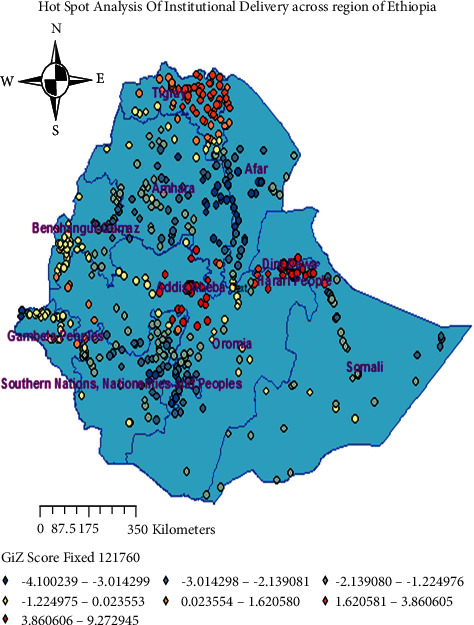
This research is based on a cross-sectional study using 2016 EDHS data. The analysis included 7,590 women who had given birth in the five years prior to the survey. Clusters with high and low hot spots with institutional delivery were found using SatScan spatial statistical analysis. A multilevel multivariable mixed-effect logistic regression was utilized to discover characteristics associated with institutional delivery.
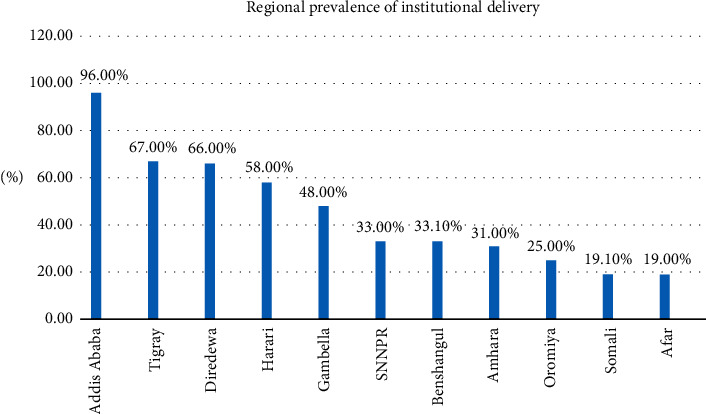
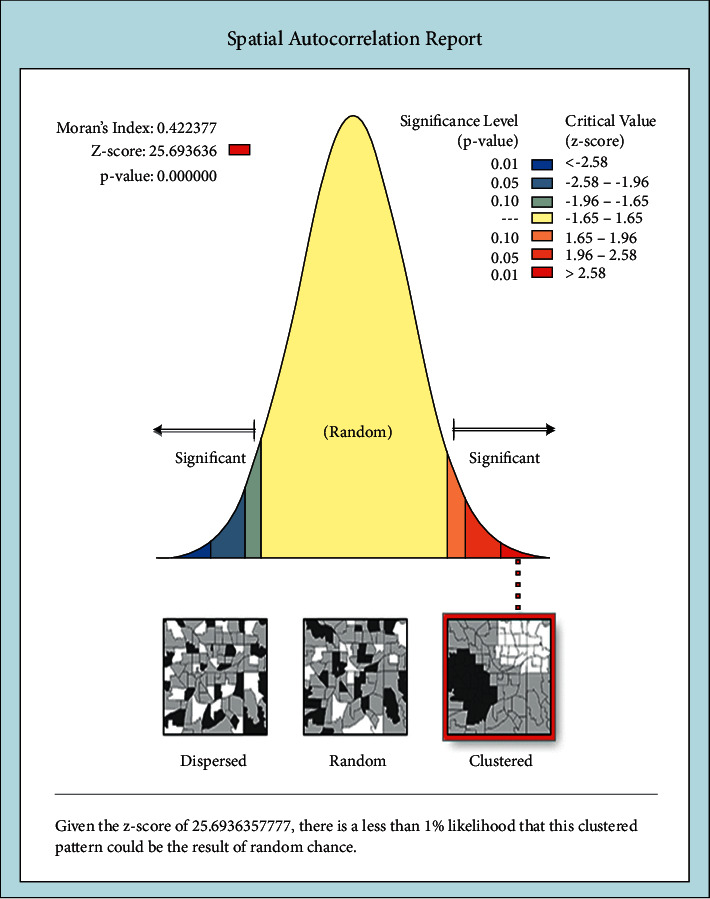
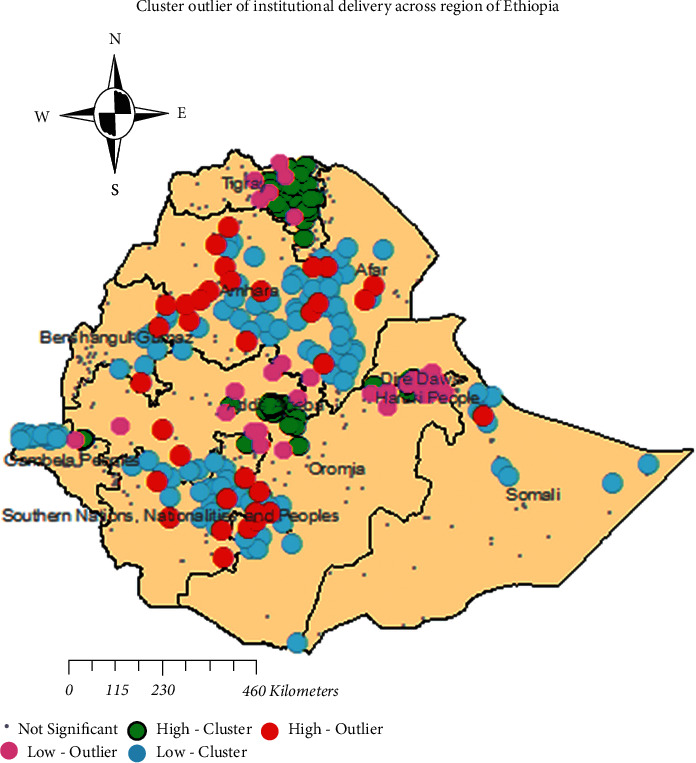
In this study, 33.25% of women who gave birth in the last 5 years preceding the survey delivered their babies at health institutions. The finding also indicated that the spatial distribution of institutional delivery was nonrandom in the country. Variables achieving statically significant association with utilization of institutional delivery were as follows: at the individual level, richness (AOR = 2.18, 95%CI: 1.39-3.41), higher education (AOR = 3.89, 95%CI: 1.51-10.01), a number of antenatal care visits of four and above (AOR = 6.57, 95%CI: 4.83-8.94), and parity of more than two children (AOR = 0.48, 95%CI: 0.34-0.68); at the community level, higher education (AOR = 1.70, 95%CI: 1.22-2.36) and urban residence (AOR = 5.30, 95%CI: 3.10-9.06) were variables that had achieved statically significant association for utilization of institutional delivery.
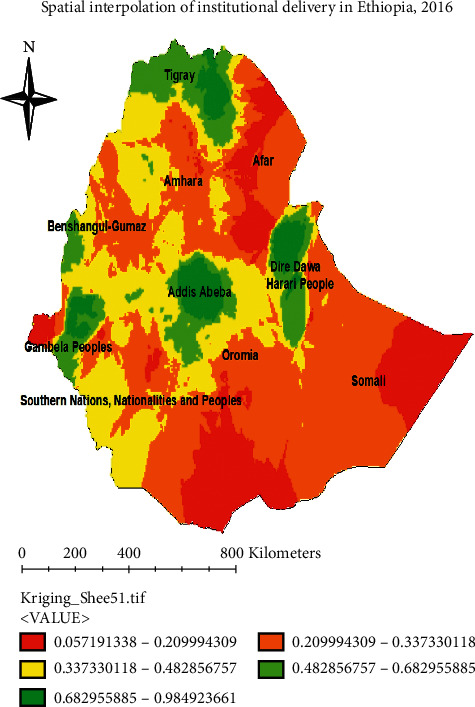
This study identified a spatial cluster of institutional delivery with the Somali and Afar region having low utilization rates and Addis Ababa and Tigray regions having the highest utilization rates. The significant individual factors associated with institution delivery were woman antenatal care visits, household wealth index, maternal education, and parity, and the significant community ones were region, place of residence, and educational status. Therefore, to maximize health facility delivery in Ethiopia, the predictors of institutional delivery identified in this study should be given more attention by governmental and nongovernmental stakeholders.
孕产妇死亡率高得令人无法接受。2017年,约有29.5万名妇女在妊娠及分娩期间和之后死亡。这些死亡中的绝大多数(94%)发生在资源匮乏地区,且大多数死亡本可预防。
本研究基于一项使用2016年埃塞俄比亚 DHS数据的横断面研究。分析纳入了在调查前五年内分娩的7590名妇女。使用SatScan空间统计分析找出机构分娩的高热点和低热点地区。采用多水平多变量混合效应逻辑回归来发现与机构分娩相关的特征。
在本研究中,在调查前五年内分娩的妇女中有33.25%在医疗机构分娩。研究结果还表明,该国机构分娩的空间分布并非随机。与机构分娩利用率具有统计学显著关联的变量如下:在个体层面,富裕程度(比值比[AOR]=2.18,95%置信区间[CI]:1.39 - 3.41)、高等教育(AOR = 3.89,95%CI:1.51 - 10.01)、产前检查次数为四次及以上(AOR = 6.57,95%CI:4.83 - 8.94)以及子女数超过两个(AOR = 0.48,95%CI:0.34 - 0.68);在社区层面,高等教育(AOR = 1.70,95%CI:1.22 - 2.36)和城市居住(AOR = 5.30,95%CI:3.10 - 9.06)是与机构分娩利用率具有统计学显著关联的变量。
本研究确定了机构分娩的一个空间聚集区,索马里和阿法尔地区利用率较低,亚的斯亚贝巴和提格雷地区利用率最高。与机构分娩相关的重要个体因素是产妇产前检查次数、家庭财富指数、母亲教育程度和子女数,重要的社区因素是地区、居住地点和教育状况。因此,为了在埃塞俄比亚最大限度地提高医疗机构分娩率,本研究确定的机构分娩预测因素应得到政府和非政府利益相关者更多的关注。