Department of Diabetes, Central Clinical School, Monash University, 99 Commercial Road, Melbourne, VIC, 3004, Australia.
Atherothrombosis and Vascular Biology Laboratory, Baker Heart and Diabetes Institute, 75 commercial Road, Melbourne, VIC, 3004, Australia.
Sci Rep. 2022 Jul 7;12(1):11570. doi: 10.1038/s41598-022-15706-5.
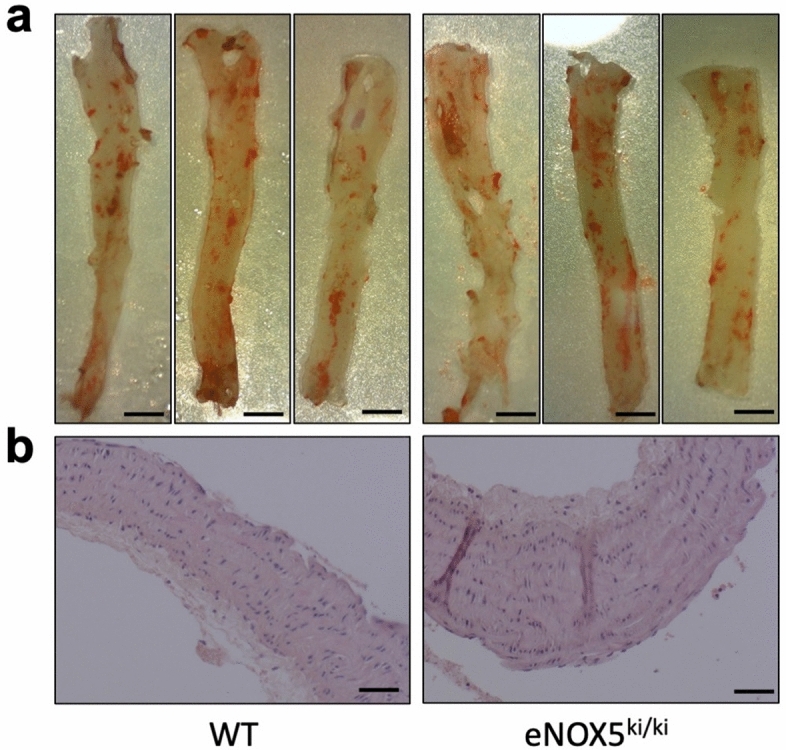
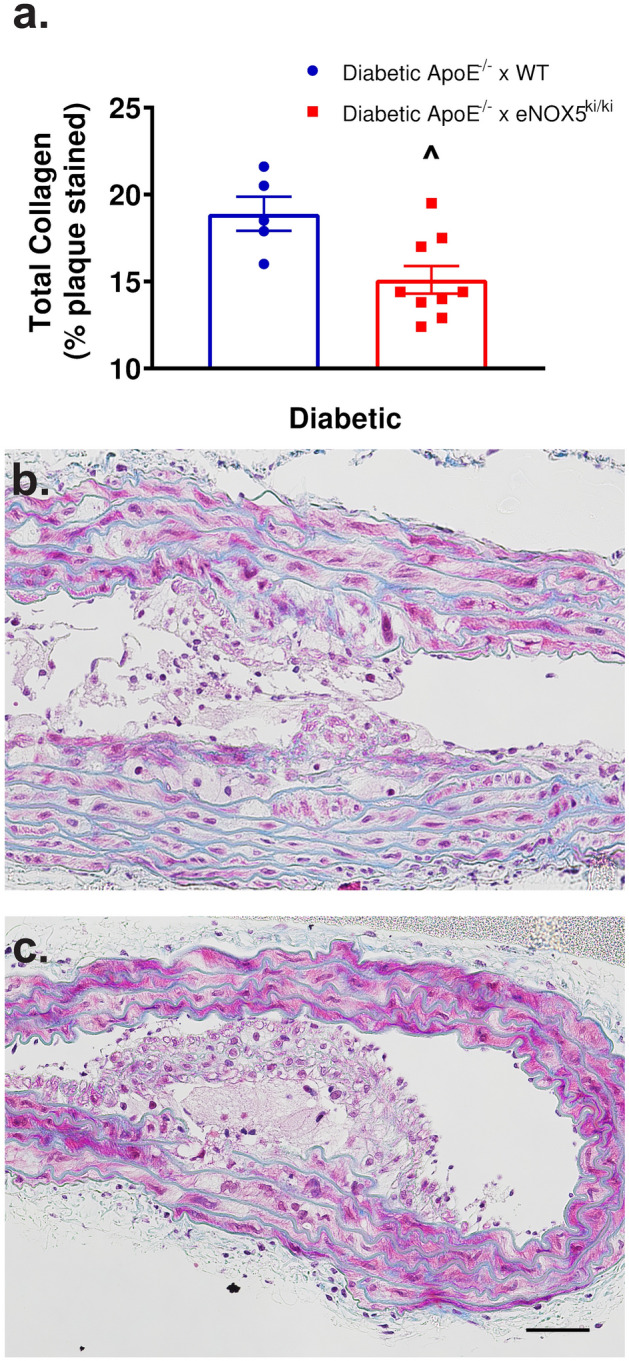
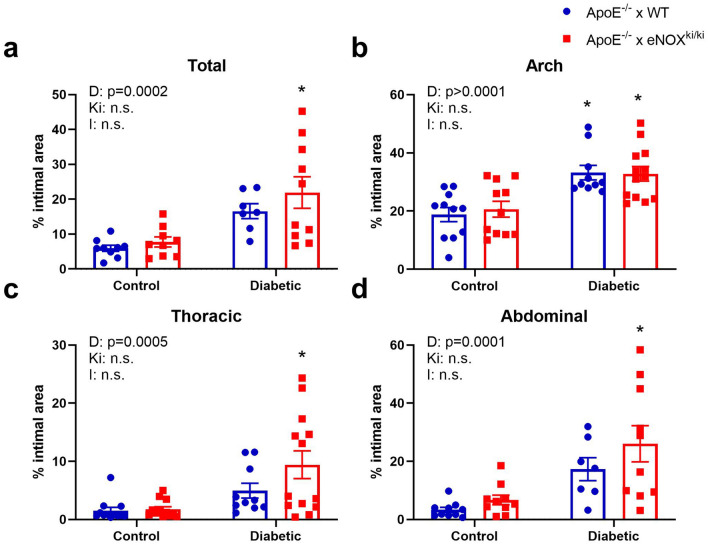
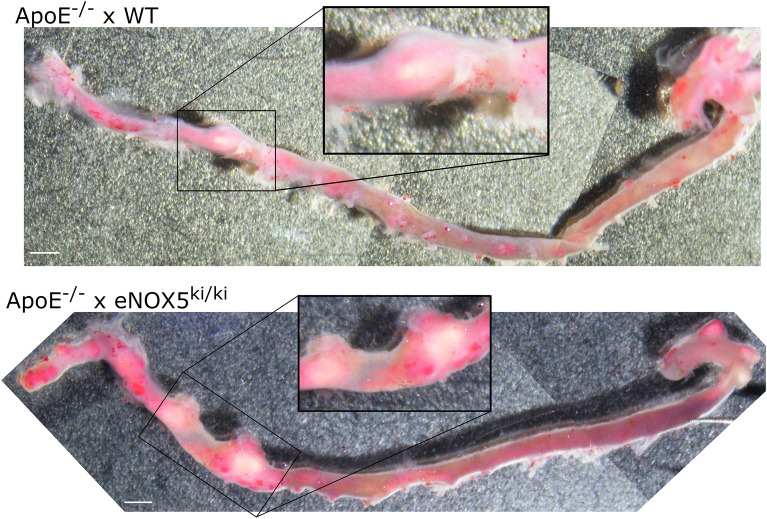
Atherosclerosis and its complications are major causes of cardiovascular morbidity and death. Apart from risk factors such as hypercholesterolemia and inflammation, the causal molecular mechanisms are unknown. One proposed causal mechanism involves elevated levels of reactive oxygen species (ROS). Indeed, early expression of the ROS forming NADPH oxidase type 5 (Nox5) in vascular endothelial cells correlates with atherosclerosis and aortic aneurysm. Here we test the pro-atherogenic Nox5 hypothesis using mouse models. Because Nox5 is missing from the mouse genome, a knock-in mouse model expressing human Nox5 in its physiological location of endothelial cells (eNOX5) was tested as a possible new humanised mouse atherosclerosis model. However, whether just on a high cholesterol diet or by crossing in aortic atherosclerosis-prone ApoE mice with and without induction of diabetes, Nox5 neither induced on its own nor aggravated aortic atherosclerosis. Surprisingly, however, diabetic ApoE x eNOX5 mice developed aortic aneurysms more than twice as often correlating with lower vascular collagens, as assessed by trichrome staining, without changes in inflammatory gene expression, suggesting that endothelial Nox5 directly affects extracellular matrix remodelling associated with aneurysm formation in diabetes. Thus Nox5-derived reactive oxygen species are not a new independent mechanism of atherosclerosis but may enhance the frequency of abdominal aortic aneurysms in the context of diabetes. Together with similar clinical findings, our preclinical target validation opens up a first-in-class mechanism-based approach to treat or even prevent abdominal aortic aneurysms.
动脉粥样硬化及其并发症是心血管发病率和死亡率的主要原因。除了高胆固醇血症和炎症等危险因素外,其因果分子机制尚不清楚。一种提出的因果机制涉及活性氧(ROS)水平升高。事实上,血管内皮细胞中 ROS 形成 NADPH 氧化酶 5(Nox5)的早期表达与动脉粥样硬化和主动脉瘤相关。在这里,我们使用小鼠模型来检验促动脉粥样硬化的 Nox5 假说。由于 Nox5 缺失于小鼠基因组中,因此测试了在其生理位置内皮细胞(eNOX5)中表达人 Nox5 的基因敲入小鼠模型,作为可能的新型人类化小鼠动脉粥样硬化模型。然而,无论是在高胆固醇饮食中,还是通过将易患主动脉粥样硬化的 ApoE 小鼠与是否诱导糖尿病交叉,Nox5 既没有单独诱导也没有加重主动脉粥样硬化。然而,令人惊讶的是,患有糖尿病的 ApoE x eNOX5 小鼠发展为主动脉瘤的频率增加了两倍以上,这与通过三原色染色评估的血管胶原减少相关,炎症基因表达没有变化,这表明内皮 Nox5 直接影响与糖尿病相关的动脉瘤形成的细胞外基质重塑。因此,Nox5 衍生的活性氧不是动脉粥样硬化的新独立机制,但可能会增加糖尿病背景下腹主动脉瘤的发生频率。结合类似的临床发现,我们的临床前靶标验证为治疗甚至预防腹主动脉瘤开辟了一种首创的基于机制的方法。