Department of Land Resources & Environmental Sciences, Montana State University, Bozeman, MT, 59717-3120, USA.
Transgenic Res. 2022 Oct;31(4-5):489-504. doi: 10.1007/s11248-022-00315-9. Epub 2022 Jul 7.
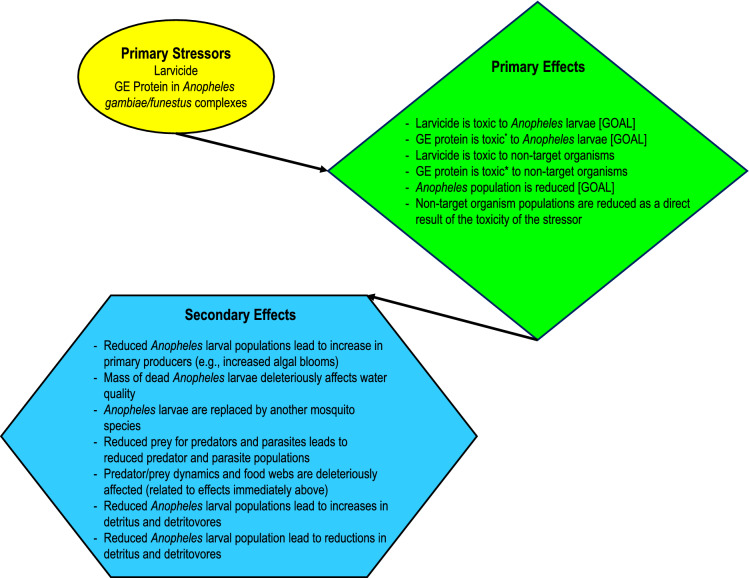
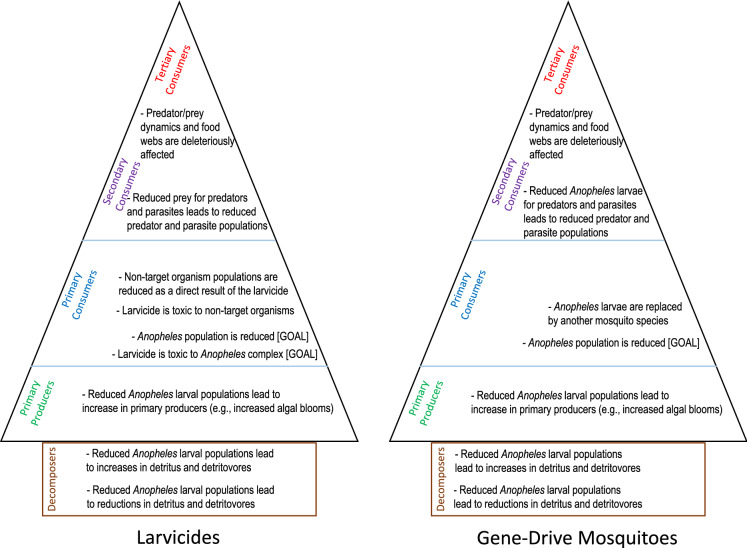
Genetic engineering of mosquitoes represents a promising tactic for reducing human suffering from malaria. Gene-drive techniques being developed that suppress or modify populations of Anopheles gambiae have the potential to be used with, or even possibly obviate, microbial and synthetic insecticides. However, these techniques are new and therefore there is attendant concern and uncertainty from regulators, policymakers, and the public about their environmental risks. Therefore, there is a need to assist decision-makers and public health stewards by assessing the risks associated with these newer mosquito management tactics so the risks can be compared as a basis for informed decision making. Previously, the effect of gene-drive mosquitoes on water quality in Africa was identified as a concern by stakeholders. Here, we use a comparative risk assessment approach for the effect of gene-drive mosquitoes on water quality in Africa. We compare the use of existing larvicides and the proposed genetic techniques in aquatic environments. Based on our analysis, we conclude that the tactic of gene-drive Anopheles for malaria management is unlikely to result in risks to aquatic environments that exceed current tactics for larval mosquitoes. As such, these new techniques would likely comply with currently recommended safety standards.
蚊子的基因工程代表了一种有前途的策略,可以减少人类因疟疾而遭受的痛苦。正在开发的基因驱动技术可以抑制或改变冈比亚按蚊的种群,这些技术有可能与微生物和合成杀虫剂一起使用,甚至可能替代它们。然而,这些技术是新的,因此监管机构、政策制定者和公众对它们的环境风险表示关注和不确定。因此,有必要通过评估这些更新的蚊子管理策略相关的风险来帮助决策者和公共卫生管理者,以便可以将风险进行比较,作为知情决策的基础。此前,利益相关者认为基因驱动蚊子对非洲水质的影响是一个令人担忧的问题。在这里,我们使用比较风险评估方法来评估基因驱动蚊子对非洲水质的影响。我们将现有的幼虫防治剂和拟议的遗传技术在水生环境中进行比较。根据我们的分析,我们得出结论,基因驱动按蚊用于疟疾管理的策略不太可能导致水生环境的风险超过目前针对幼虫蚊子的策略。因此,这些新技术可能符合当前推荐的安全标准。