Xing Chunhua, Chen Shun, Wang Yue, Pan Zhennan, Zou Yuanjing, Sun Shaochen, Ren Zili, Zhang Yu
College of Animal Science and Technology, Nanjing Agricultural University, Nanjing, 210095, China.
College of Animal Science, Tibet Agricultural and Animal Husbandry University, Linzhi, 860000, Tibet, China.
J Anim Sci Biotechnol. 2022 Jul 8;13(1):80. doi: 10.1186/s40104-022-00732-0.
Recently, defects in mammalian oocytes maturation induced by environmental pollution results in the decreasing animal reproduction. Animal exposed to glyphosate is largely unavoidable because glyphosate is one of the most widely used herbicide worldwide due to its high-efficiency and broad-spectrum effects, which causes glyphosate an environmental contaminant found in soil, water and food. During the last few years, the growing and wider use of glyphosate has raised great concerns about its effects of reproductive toxicity. In this study, using porcine models, we investigated effects of glyphosate on organelle functions during oocyte meiosis.
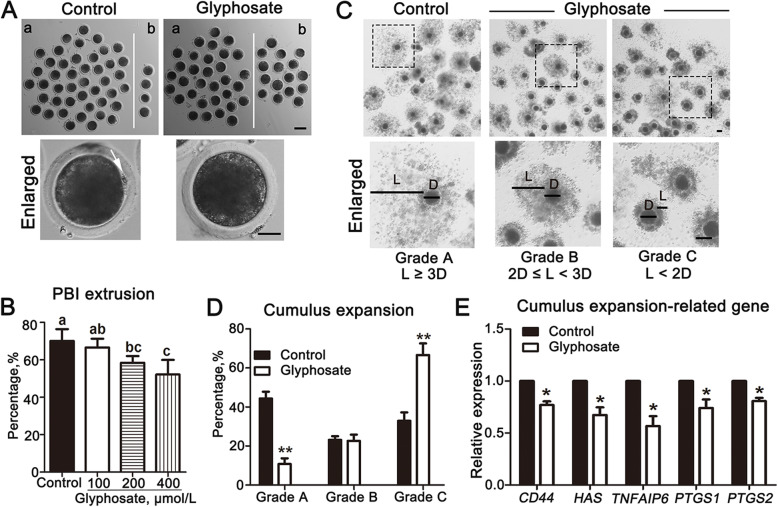
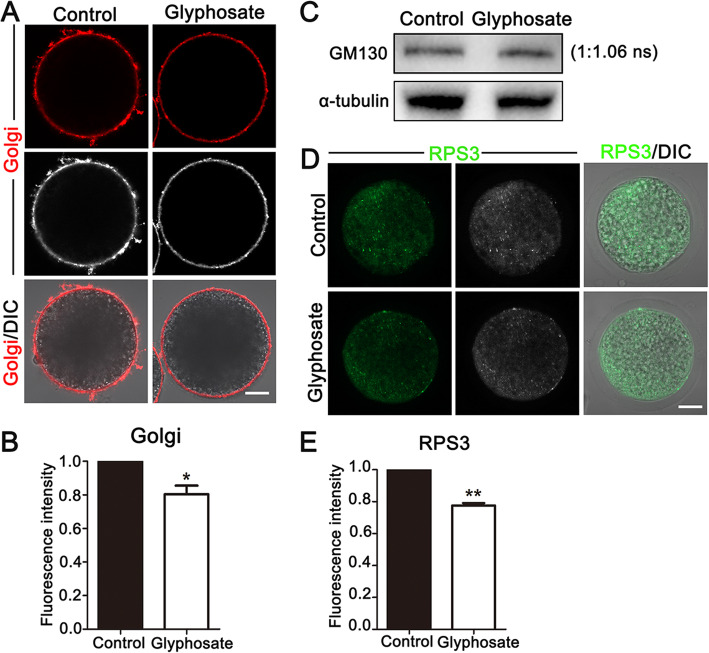
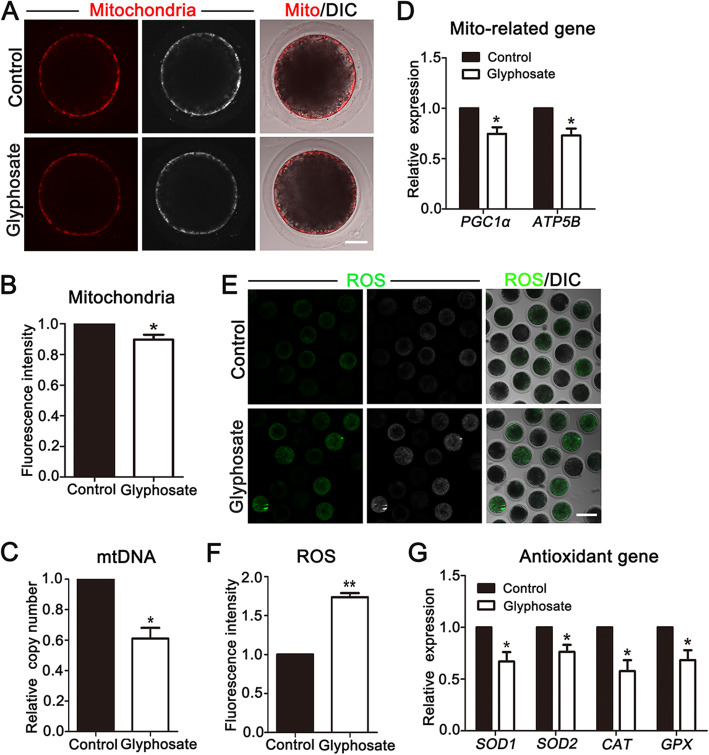
The results showed glyphosate exposure disrupted porcine oocyte maturation. Expression levels of cumulus expansion-related genes were interfered, further indicating the meiotic defects. The damaging effects were mediated by destruction of mitochondrial distribution and functions, which induced ROS accumulation and oxidative stress, also indicated by the decreased mRNA expression of related antioxidant enzyme genes. We also found an interference of endoplasmic reticulum (ER) distribution, disturbance of Ca homeostasis, as well as fluctuation of ER stress, showing with the reduced ER stress-related mRNA or protein expression, which could indicate the dysfunction of ER for protein processing and signal transduction in glyphosate-exposed oocytes. Moreover, glyphosate exposure induced the disruption of lysosome function for autophagy, showing with the decrease of LAMP2 expression and autophagy-related genes mRNA expression. Additionally, our data showed the distribution of Golgi apparatus and the functions of ribosome were disturbed after glyphosate exposure, which might affect protein synthesis and transport.
Collectively, our study showed that exposed to glyphosate could affect animal reproduction by compromising the quality of oocytes through its wide toxic effects on organelle functions.
近年来,环境污染导致哺乳动物卵母细胞成熟缺陷,致使动物繁殖能力下降。由于草甘膦具有高效、广谱的特性,是全球使用最广泛的除草剂之一,动物接触草甘膦在所难免,这使得草甘膦成为土壤、水和食物中常见的环境污染物。在过去几年中,草甘膦使用量的不断增加及其日益广泛的应用引发了人们对其生殖毒性影响的高度关注。在本研究中,我们使用猪模型,研究了草甘膦对卵母细胞减数分裂过程中细胞器功能的影响。
结果表明,草甘膦暴露会破坏猪卵母细胞的成熟。卵丘扩展相关基因的表达水平受到干扰,进一步表明减数分裂存在缺陷。这种破坏作用是由线粒体分布和功能的破坏介导的,线粒体分布和功能的破坏会诱导活性氧(ROS)积累和氧化应激,相关抗氧化酶基因的mRNA表达降低也表明了这一点。我们还发现内质网(ER)分布受到干扰,钙稳态紊乱,以及内质网应激波动,表现为内质网应激相关mRNA或蛋白质表达降低,这可能表明在接触草甘膦的卵母细胞中内质网在蛋白质加工和信号转导方面功能失调。此外,草甘膦暴露会导致自噬溶酶体功能破坏,表现为溶酶体相关膜蛋白2(LAMP2)表达降低和自噬相关基因mRNA表达降低。此外,我们的数据表明,草甘膦暴露后高尔基体的分布和核糖体的功能受到干扰,这可能会影响蛋白质的合成和运输。
总的来说,我们的研究表明,接触草甘膦会通过对细胞器功能产生广泛的毒性作用,损害卵母细胞质量,从而影响动物繁殖。