Institute of Chinese Materia Medica, China Academy of Chinese Medical Sciences, Beijing, China.
Guangdong Engineering and Technology Research Center for Quality and Efficacy Reevaluation of Post-Market Traditional Chinese Medicine, Guangdong Provincial Key Laboratory of Plant Resources, School of Life Sciences, Sun Yat-sen University, Guangzhou, China.
Front Immunol. 2022 Jun 21;13:912933. doi: 10.3389/fimmu.2022.912933. eCollection 2022.
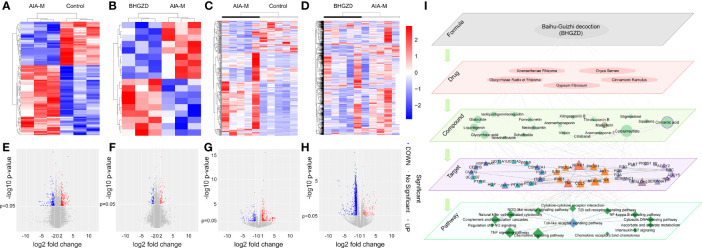
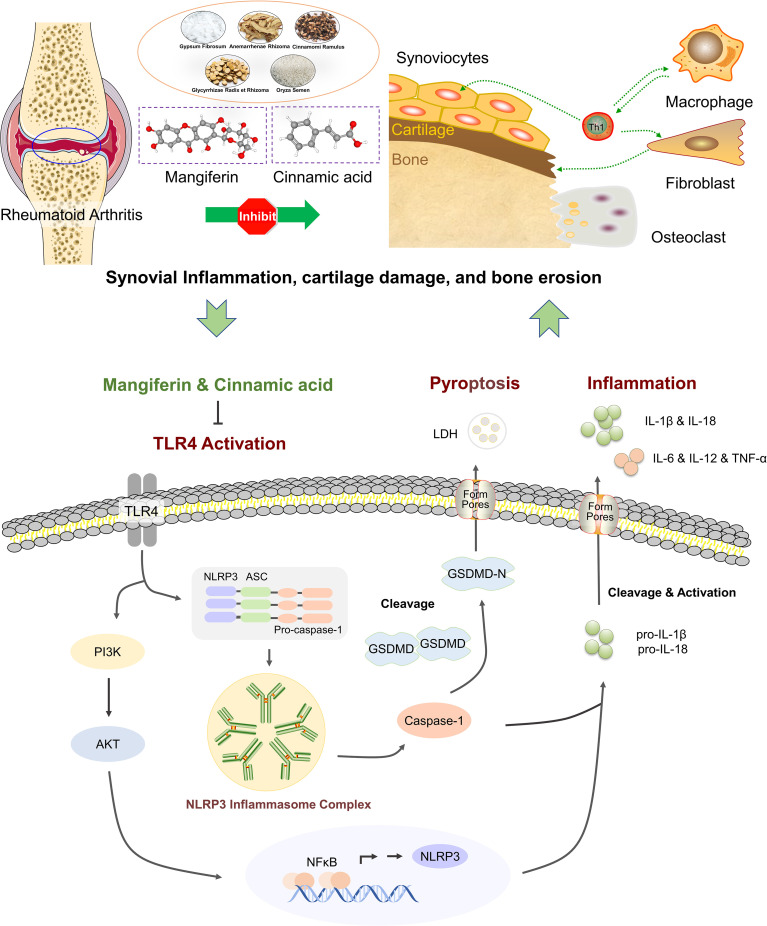
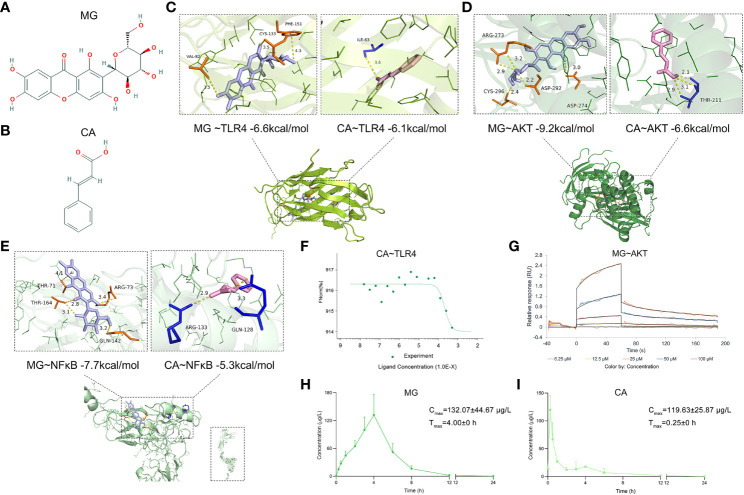
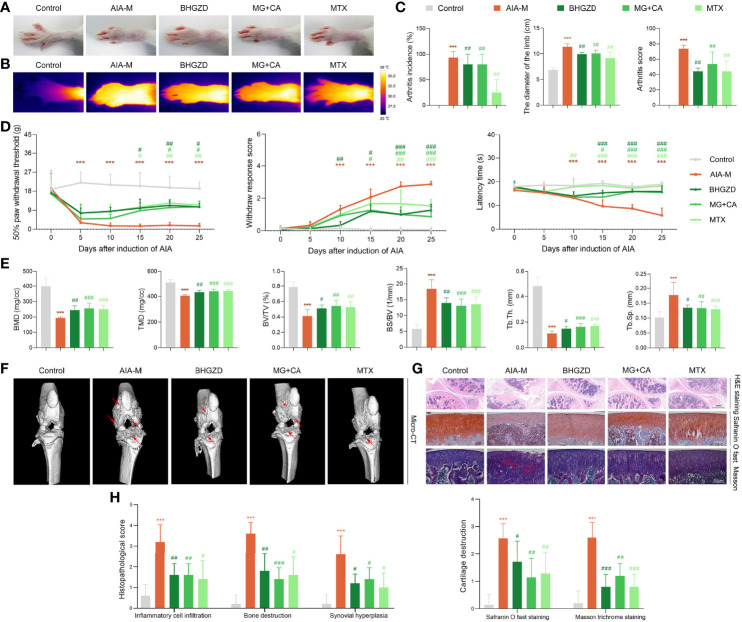
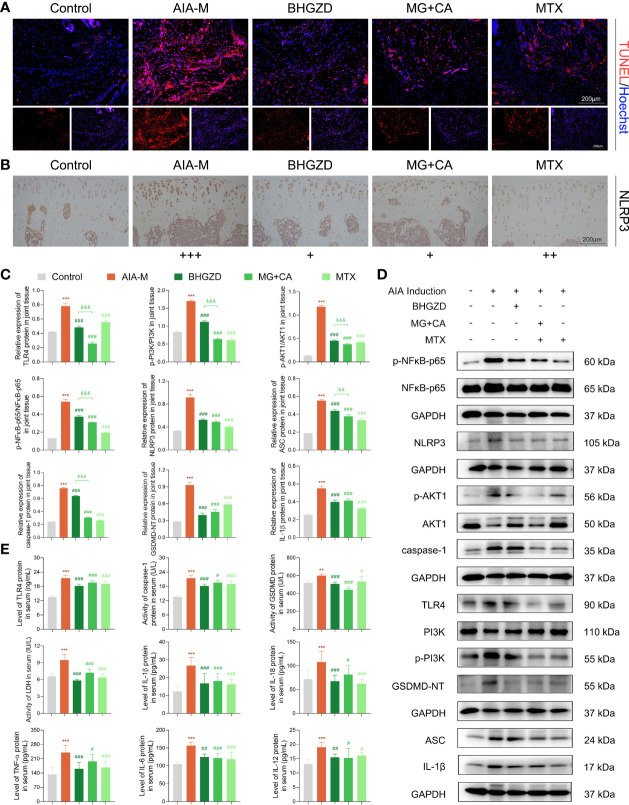
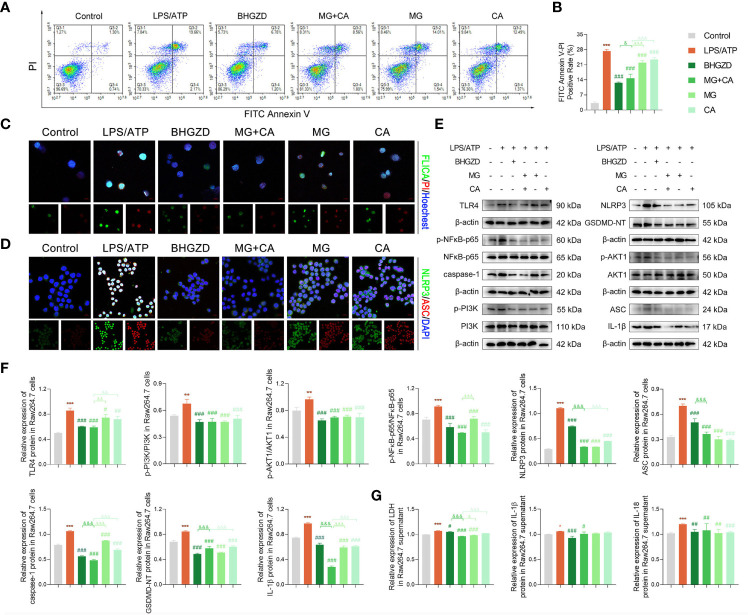
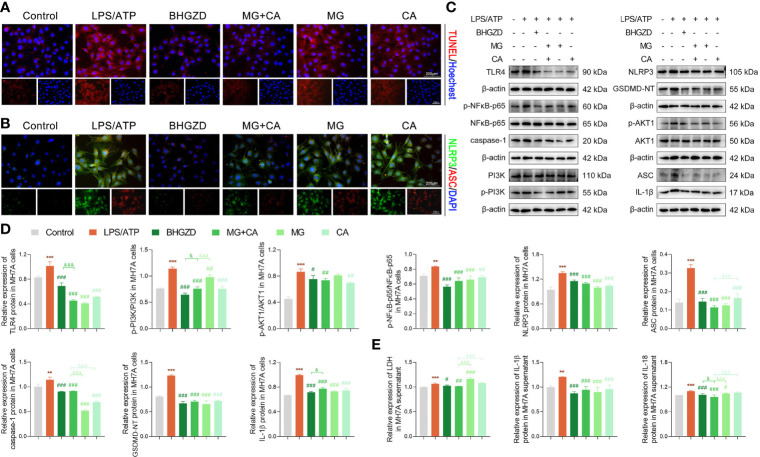
Growing evidence shows that Baihu-Guizhi decoction (BHGZD), a traditional Chinese medicine (TCM)-originated disease-modifying anti-rheumatic prescription, may exert a satisfying clinical efficacy for rheumatoid arthritis (RA) therapy. In our previous studies, we verified its immunomodulatory and anti-inflammatory activities. However, bioactive compounds (BACs) of BHGZD and the underlying mechanisms remain unclear. Herein, an integrative research strategy combining UFLC-Q-TOF-MS/MS, gene expression profiling, network calculation, pharmacokinetic profiling, surface plasmon resonance, microscale thermophoresis, and pharmacological experiments was carried out to identify the putative targets of BHGZD and underlying BACs. After that, both and experiments were performed to determine the drug effects and pharmacological mechanisms. As a result, the calculation and functional modularization based on the interaction network of the "RA-related gene-BHGZD effective gene" screened the TLR4/PI3K/AKT/NFκB/NLRP3 signaling-mediated pyroptosis to be one of the candidate effective targets of BHGZD for reversing the imbalance network of "immune-inflammation" during RA progression. In addition, both mangiferin (MG) and cinnamic acid (CA) were identified as representative BACs acting on that target, for the strong binding affinities between compounds and target proteins, good pharmacokinetic features, and similar pharmacological effects to BHGZD. Notably, both BHGZD and the two-BAC combination of MG and CA effectively alleviated the disease severity of the adjuvant-induced arthritis-modified rat model, including elevating pain thresholds, relieving joint inflammation and bone erosion inhibiting NF-κB TLR4/PI3K/AKT signaling to suppress the activation of the NLRP3 inflammasome, leading to the downregulation of downstream caspase-1, the reduced release of IL-1β and IL-18, and the modulation of GSDMD-mediated pyroptosis. Consistent data were obtained based on the pyroptosis cellular models of RAW264.7 and MH7A cells induced by LPS/ATP. In conclusion, these findings offer an evidence that the MG and CA combination identified from BHGZD may interact with TLR4/PI3K/AKT/NFκB signaling to inhibit NLRP3 inflammasome activation and modulate pyroptosis, which provides the novel representative BACs and pharmacological mechanisms of BHGZD against active RA. Our data may shed new light on the mechanisms of the TCM formulas and promote the modernization development of TCM and drug discovery.
越来越多的证据表明,白虎桂枝汤(BHGZD)作为一种源于中药的疾病修饰抗风湿处方药,可能对类风湿关节炎(RA)的治疗有令人满意的临床疗效。在我们之前的研究中,我们验证了它的免疫调节和抗炎活性。然而,BHGZD 的生物活性化合物(BACs)及其潜在机制尚不清楚。在此,我们结合 UFLC-Q-TOF-MS/MS、基因表达谱、网络计算、药代动力学谱、表面等离子体共振、微量热泳动和药理实验,采用综合研究策略,以鉴定 BHGZD 的潜在靶点和潜在 BACs。之后,我们进行了 和 实验,以确定药物作用和药理机制。结果表明,基于“RA 相关基因-BHGZD 有效基因”相互作用网络的计算和功能模块化,筛选出 TLR4/PI3K/AKT/NFκB/NLRP3 信号转导介导的细胞焦亡,是 BHGZD 逆转 RA 进展过程中“免疫炎症”失衡网络的候选有效靶点之一。此外,我们还鉴定出芒果苷(MG)和桂皮酸(CA)为代表性 BACs,作用于该靶点,化合物与靶蛋白具有较强的结合亲和力、良好的药代动力学特征,且与 BHGZD 具有相似的药理作用。值得注意的是,BHGZD 以及 MG 和 CA 的两-BAC 联合,均能有效缓解佐剂诱导的关节炎改良大鼠模型的疾病严重程度,包括提高痛阈、缓解关节炎症和骨质侵蚀、抑制 NF-κB、TLR4/PI3K/AKT 信号转导,抑制 NLRP3 炎性小体的激活,从而下调下游 caspase-1 的表达,减少 IL-1β和 IL-18 的释放,调节 GSDMD 介导的细胞焦亡。基于 LPS/ATP 诱导的 RAW264.7 和 MH7A 细胞的细胞焦亡模型,获得了一致的数据。总之,这些发现为 MG 和 CA 联合物可能通过 TLR4/PI3K/AKT/NFκB 信号通路相互作用抑制 NLRP3 炎性小体激活和调节细胞焦亡提供了证据,为 BHGZD 治疗活动期 RA 提供了新的代表性 BACs 和药理机制。我们的数据可能为中药方剂的机制提供新的见解,并促进中药现代化发展和药物发现。