Internal Medicine and Gastroenterology, Hepatology Unit, Fondazione Policlinico Universitario Agostino Gemelli IRCCS, Rome 00168, Italy.
World J Gastroenterol. 2022 Jun 7;28(21):2251-2281. doi: 10.3748/wjg.v28.i21.2251.
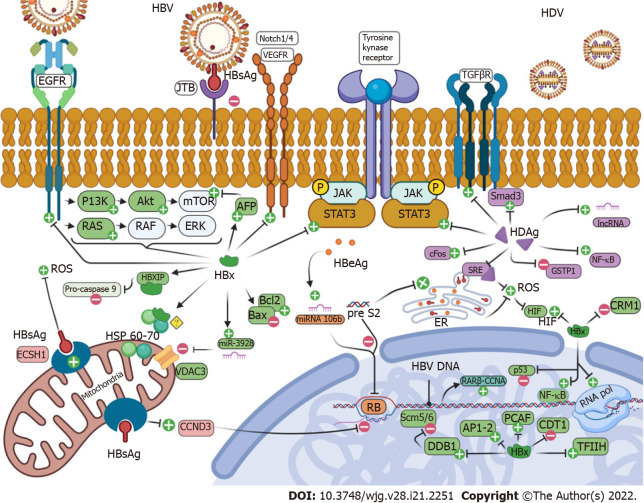
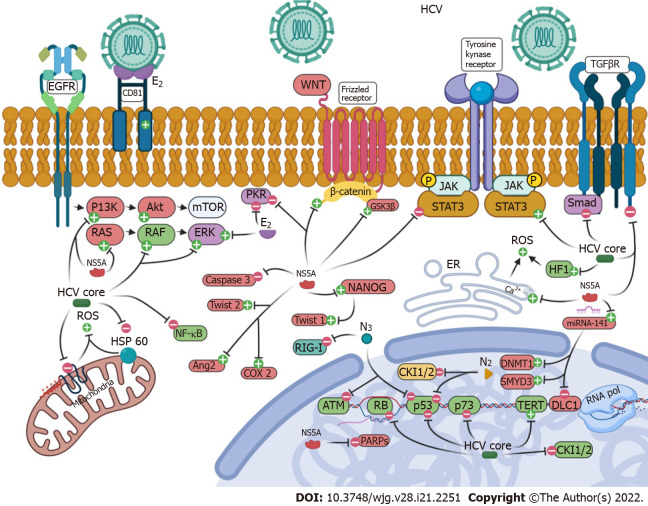
Hepatocellular carcinoma (HCC) is a global health challenge. Due to the high prevalence in low-income countries, hepatitis B virus (HBV) and hepatitis C virus infections remain the main risk factors for HCC occurrence, despite the increasing frequencies of non-viral etiologies. In addition, hepatitis D virus coinfection increases the oncogenic risk in patients with HBV infection. The molecular processes underlying HCC development are complex and various, either independent from liver disease etiology or etiology-related. The reciprocal interlinkage among non-viral and viral risk factors, the damaged cellular microenvironment, the dysregulation of the immune system and the alteration of gut-liver-axis are known to participate in liver cancer induction and progression. Oncogenic mechanisms and pathways change throughout the natural history of viral hepatitis with the worsening of liver fibrosis. The high risk of cancer incidence in chronic viral hepatitis infected patients compared to other liver disease etiologies makes it necessary to implement a proper surveillance, both through clinical-biochemical scores and periodic ultrasound assessment. This review aims to outline viral and microenvironmental factors contributing to HCC occurrence in patients with chronic viral hepatitis and to point out the importance of surveillance programs recommended by international guidelines to promote early diagnosis of HCC.
肝细胞癌 (HCC) 是一个全球性的健康挑战。尽管非病毒性病因的频率不断增加,但由于低收入国家的高发病率,乙型肝炎病毒 (HBV) 和丙型肝炎病毒感染仍然是 HCC 发生的主要危险因素。此外,丁型肝炎病毒合并感染增加了 HBV 感染患者的致癌风险。HCC 发展的分子过程是复杂多样的,既有独立于肝病病因的,也有与病因相关的。非病毒性和病毒性危险因素之间的相互联系、受损的细胞微环境、免疫系统的失调以及肠道-肝脏轴的改变,都被认为参与了肝癌的诱导和进展。致癌机制和途径随着肝纤维化的恶化而在病毒性肝炎的自然病史中发生变化。与其他肝病病因相比,慢性病毒性肝炎感染患者癌症发病率的高风险使得有必要通过临床-生化评分和定期超声评估来实施适当的监测。本综述旨在概述导致慢性病毒性肝炎患者 HCC 发生的病毒和微环境因素,并指出国际指南推荐的监测计划的重要性,以促进 HCC 的早期诊断。