Shen Xuanren, Li Saiqun, Zhao Xuan, Han Jiandong, Chen Jiaxin, Rao Zilong, Zhang Kexin, Quan Daping, Yuan Jin, Bai Ying
Guangdong Engineering Technology Research Centre for Functional Biomaterials, School of Materials Science and Engineering, Sun Yat-sen University, Guangzhou, 510006, China.
State Key Laboratory of Ophthalmology, Zhongshan Ophthalmic Center, Sun Yat-sen University, Guangzhou, 510623, China.
Bioact Mater. 2022 Jun 21;20:434-448. doi: 10.1016/j.bioactmat.2022.06.006. eCollection 2023 Feb.
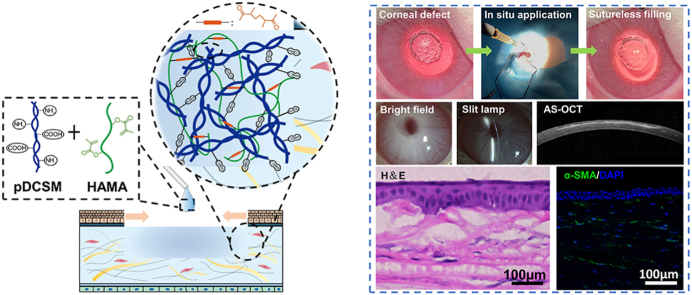
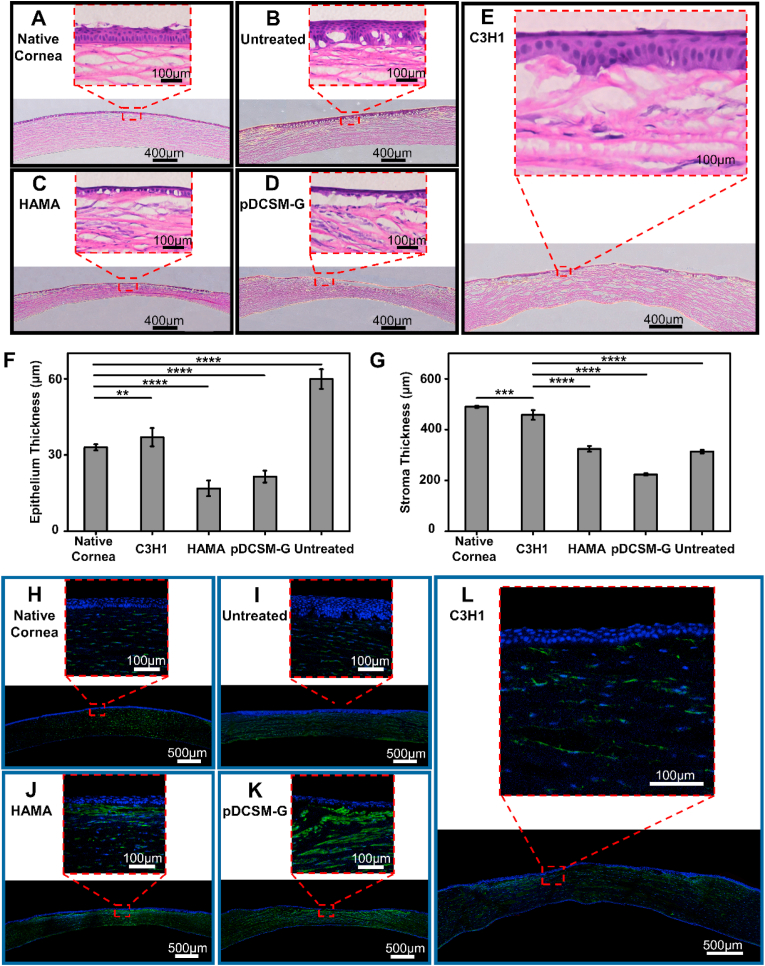
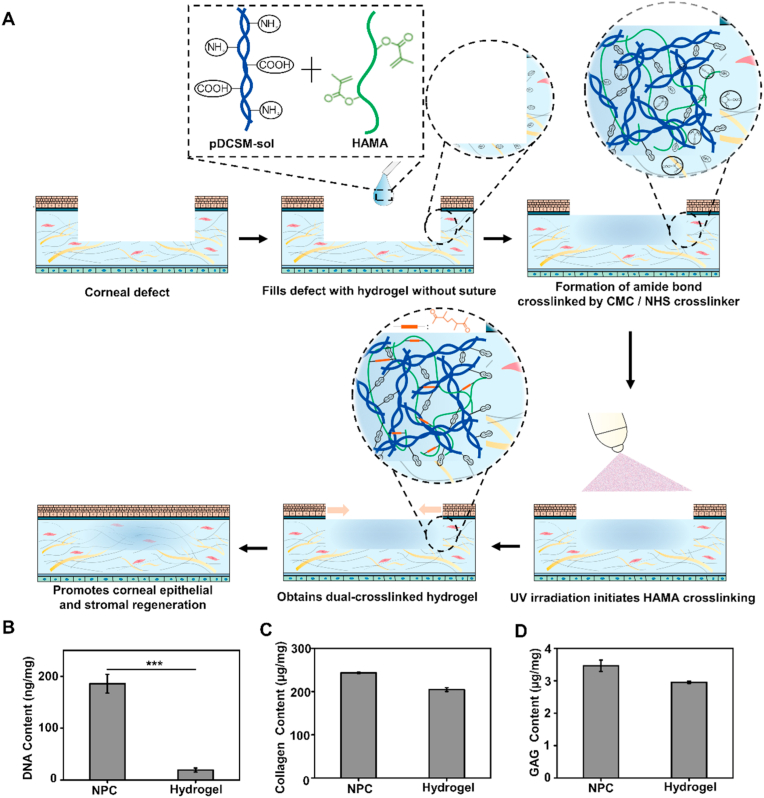
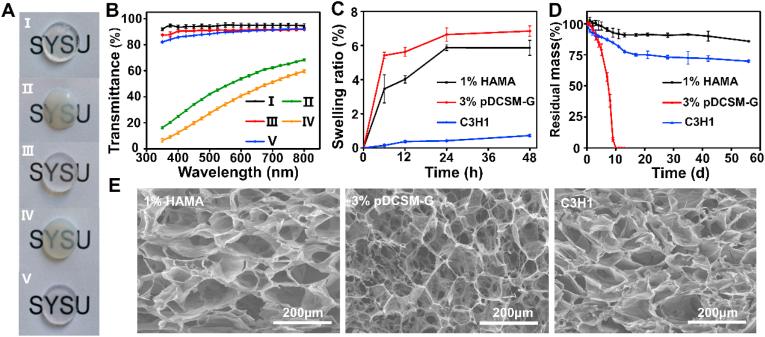
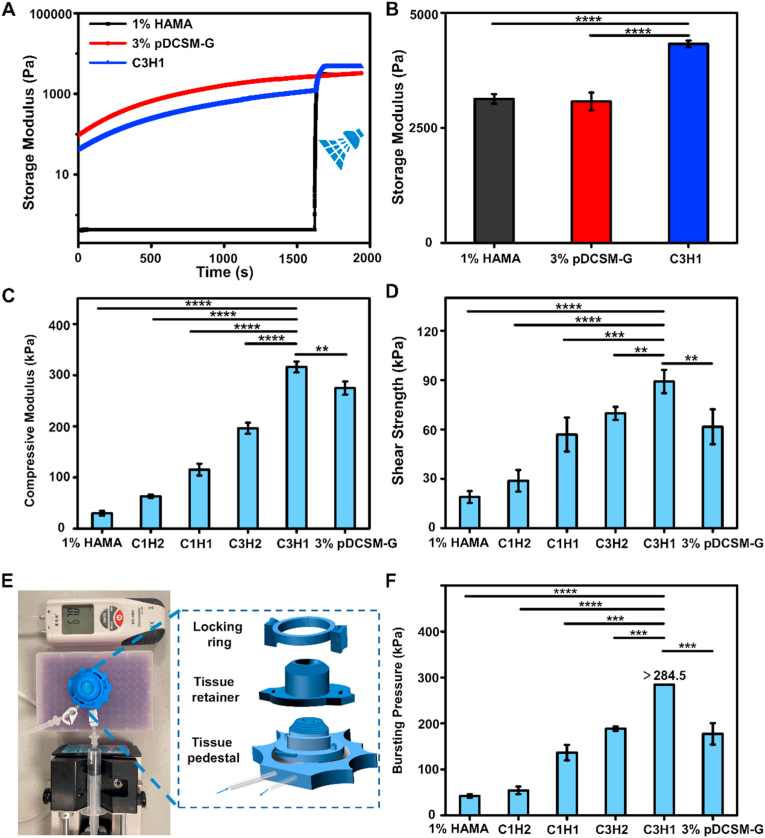
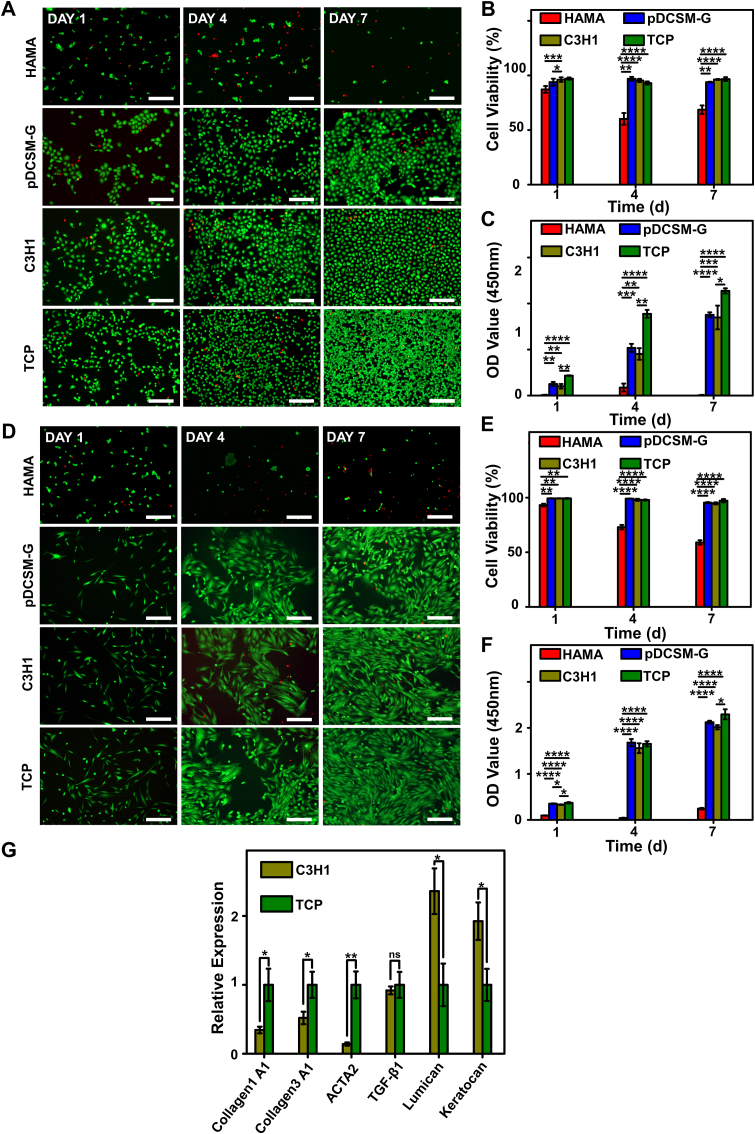
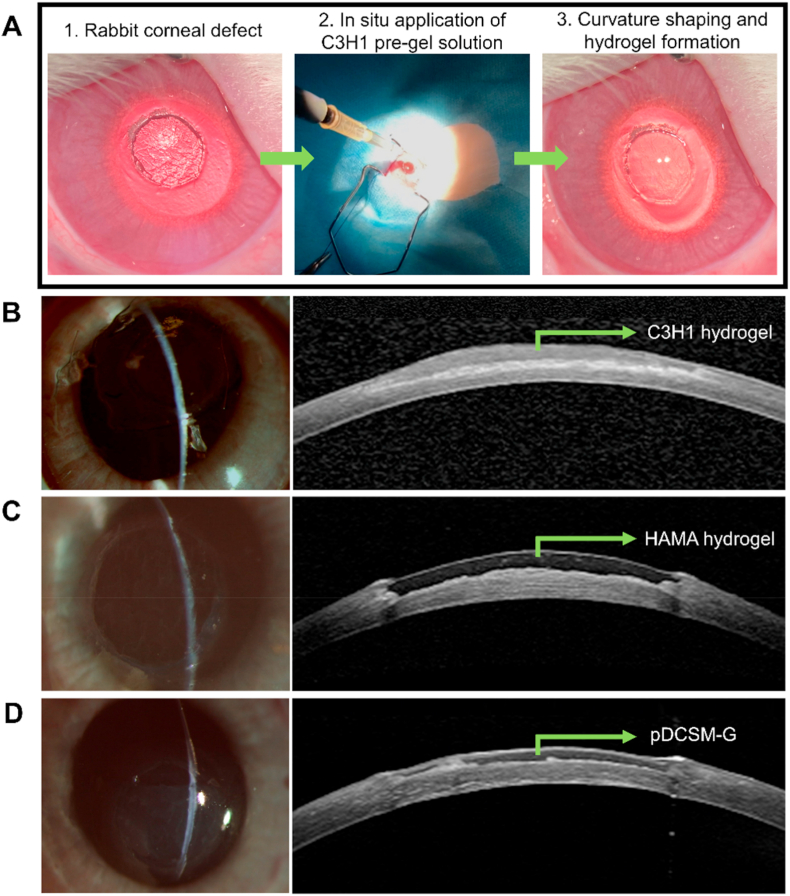
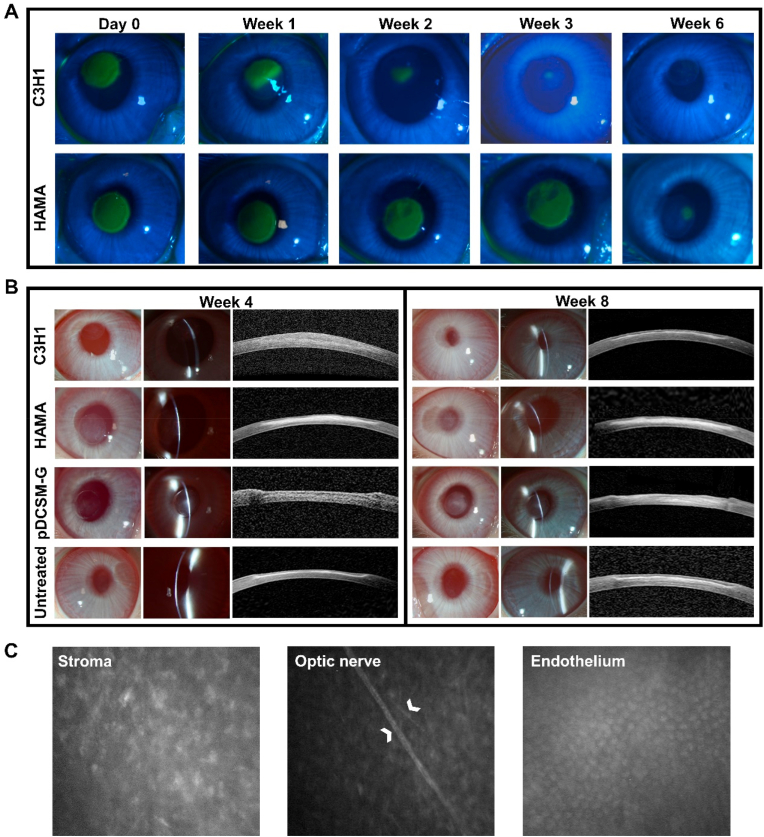
Corneal transplantation is the most effective clinical treatment for corneal defects, but it requires precise size of donor corneas, surgical sutures, and overcoming other technical challenges. Postoperative patients may suffer graft rejection and complications caused by sutures. Ophthalmic glues that can long-term integrate with the corneal tissue and effectively repair the focal corneal damage are highly desirable. Herein, a hybrid hydrogel consisting of porcine decellularized corneal stroma matrix (pDCSM) and methacrylated hyaluronic acid (HAMA) was developed through a non-competitive dual-crosslinking process. It can be directly filled into corneal defects with various shapes. More importantly, through formation of interpenetrating network and stable amide bonds between the hydrogel and adjacent tissue, the hydrogel manifested excellent adhesion properties to achieve suture-free repair. Meanwhile, the hybrid hydrogel not only preserved bioactive components from pDCSM, but also exhibited cornea-matching transparency, low swelling ratio, slow degradation, and enhanced mechanical properties, which was capable of withstanding superhigh intraocular pressure. The combinatorial hydrogel greatly improved the poor cell adhesion performance of HAMA, supported the viability, proliferation of corneal cells, and preservation of keratocyte phenotype. In a rabbit corneal stromal defect model, the experimental eyes treated with the hybrid hydrogel remained transparent and adhered intimately to the stroma bed with long-term retention, accelerated corneal re-epithelialization and wound healing. Giving the advantages of high bioactivity, low-cost, and good practicality, the dual-crosslinked hybrid hydrogel served effectively for long-term suture-free treatment and tissue regeneration after corneal defect.
角膜移植是治疗角膜缺损最有效的临床方法,但它需要精确尺寸的供体角膜、手术缝合,并克服其他技术挑战。术后患者可能会遭受移植排斥反应和由缝合引起的并发症。非常需要能够与角膜组织长期整合并有效修复角膜局部损伤的眼科胶水。在此,通过非竞争性双交联过程开发了一种由猪脱细胞角膜基质(pDCSM)和甲基丙烯酸化透明质酸(HAMA)组成的混合水凝胶。它可以直接填充到各种形状的角膜缺损处。更重要的是,通过在水凝胶与相邻组织之间形成互穿网络和稳定的酰胺键,该水凝胶表现出优异的粘附性能,从而实现免缝合修复。同时,这种混合水凝胶不仅保留了pDCSM中的生物活性成分,还表现出与角膜匹配的透明度、低膨胀率、缓慢降解以及增强的机械性能,能够承受超高眼压。这种组合水凝胶极大地改善了HAMA较差的细胞粘附性能,支持角膜细胞的活力、增殖以及角膜细胞表型的保留。在兔角膜基质缺损模型中,用这种混合水凝胶治疗的实验眼保持透明,并与基质床紧密粘附且长期留存,加速了角膜上皮再形成和伤口愈合。鉴于其高生物活性、低成本和良好实用性的优点,这种双交联混合水凝胶有效地用于角膜缺损后的长期免缝合治疗和组织再生。