Shenouda Marc, Xiao Shangxi, MacNair Laura, Lau Agnes, Robertson Janice
Tanz Centre for Research in Neurodegenerative Diseases, Toronto, ON, Canada.
Department of Laboratory Medicine and Pathobiology, University of Toronto, Toronto, ON, Canada.
Front Neurosci. 2022 Jun 21;16:868556. doi: 10.3389/fnins.2022.868556. eCollection 2022.
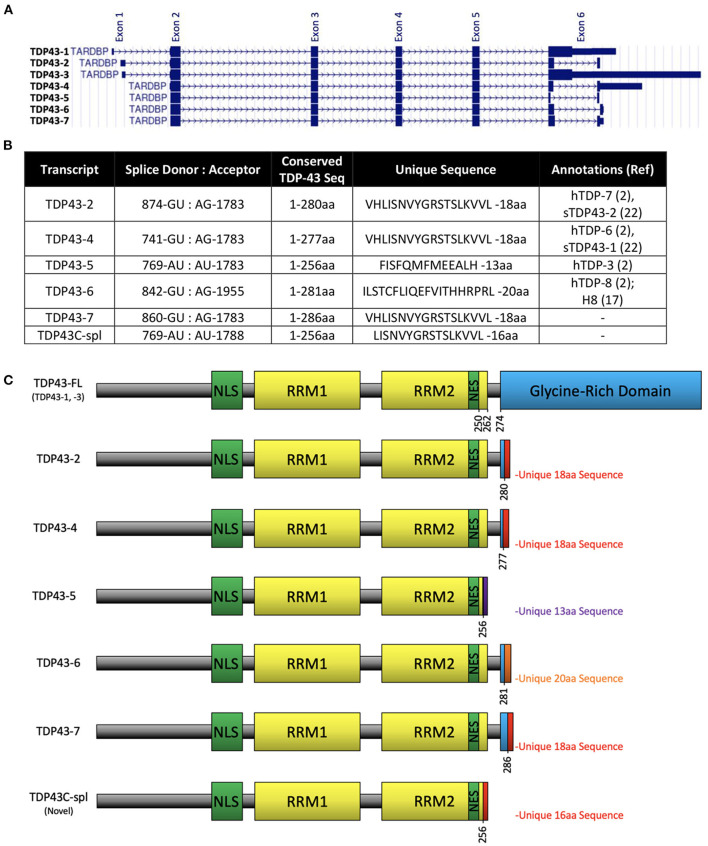
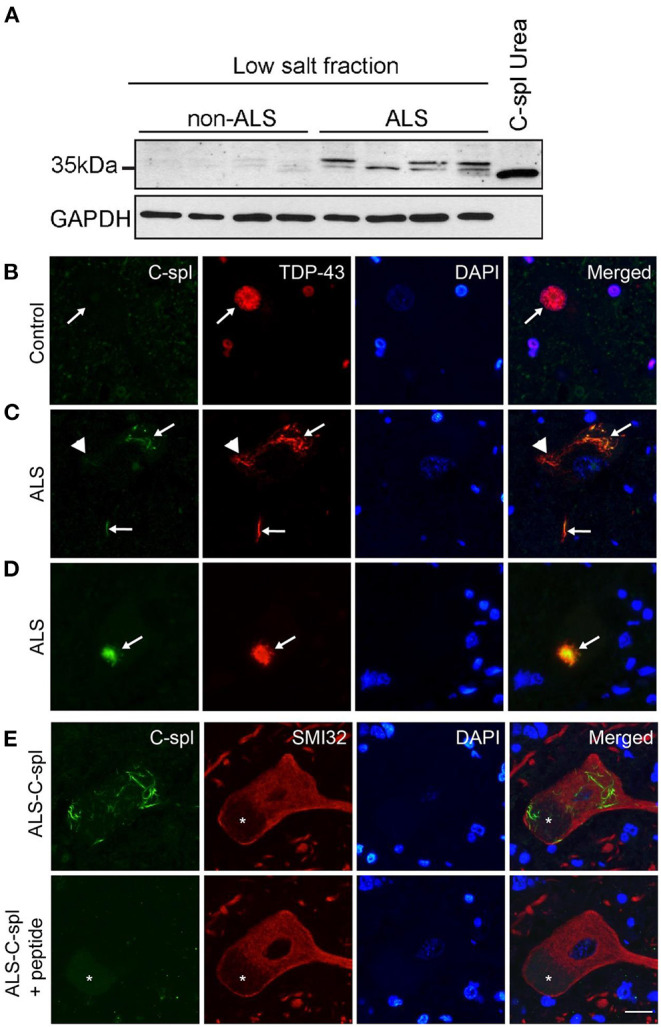
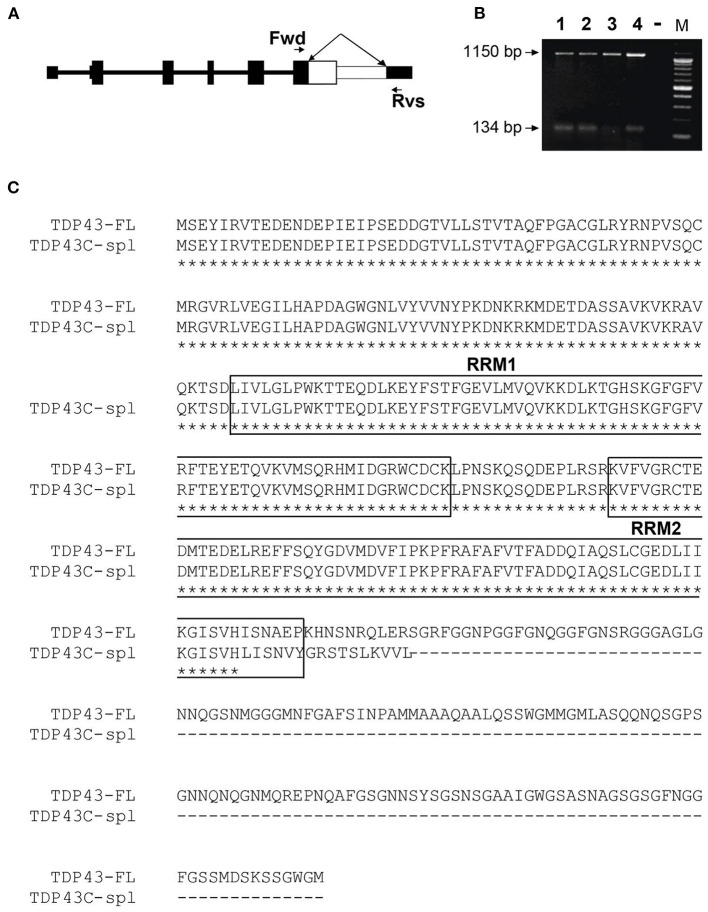
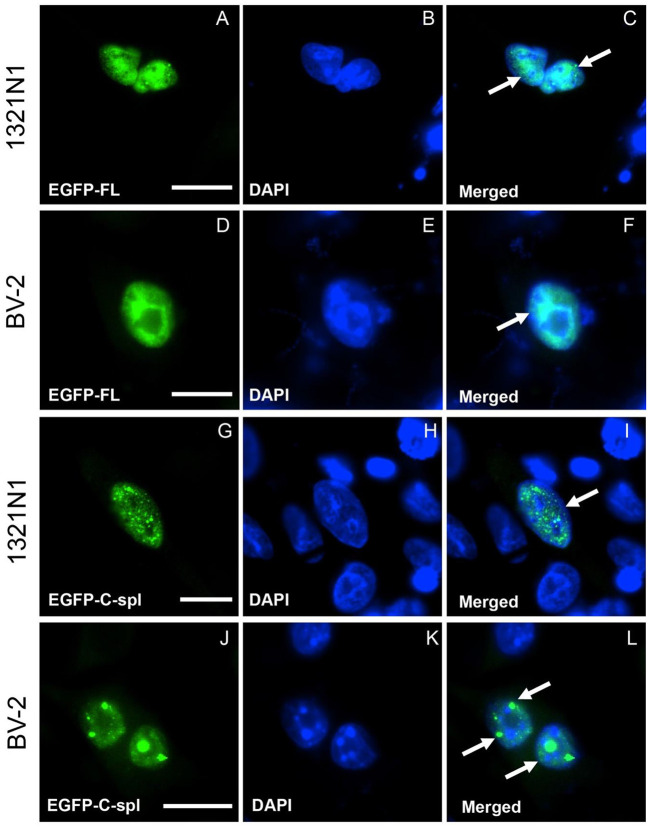
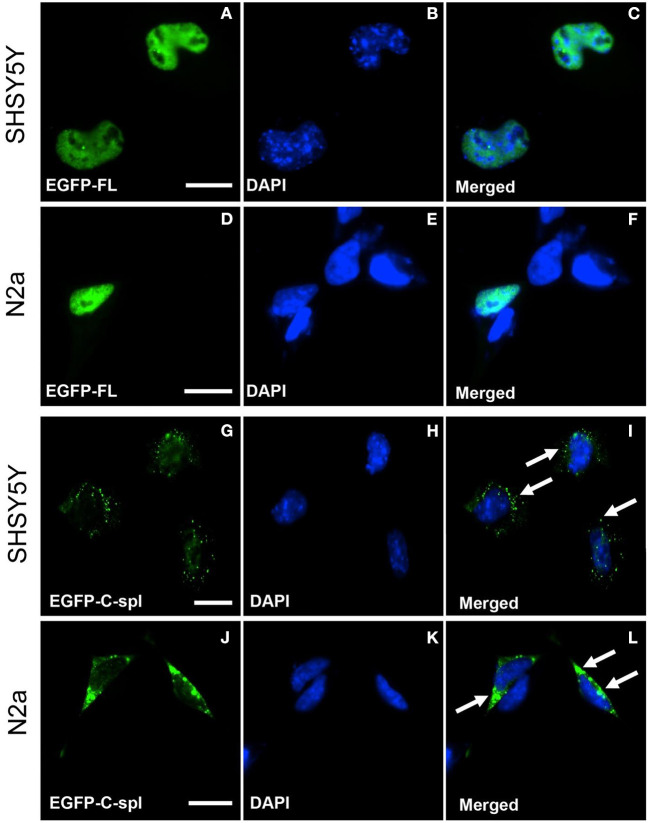
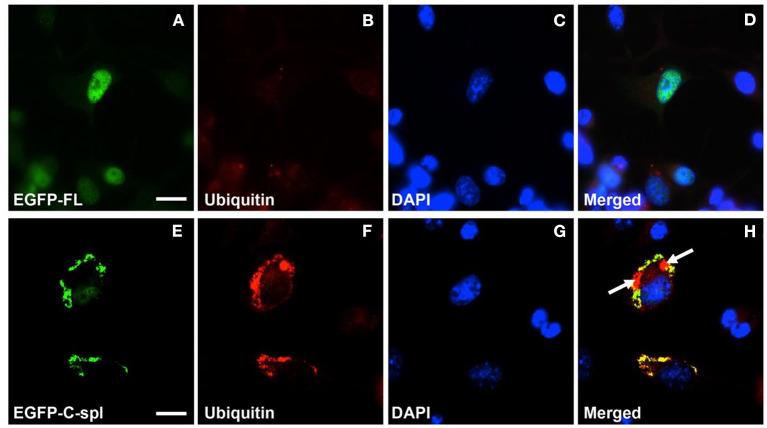
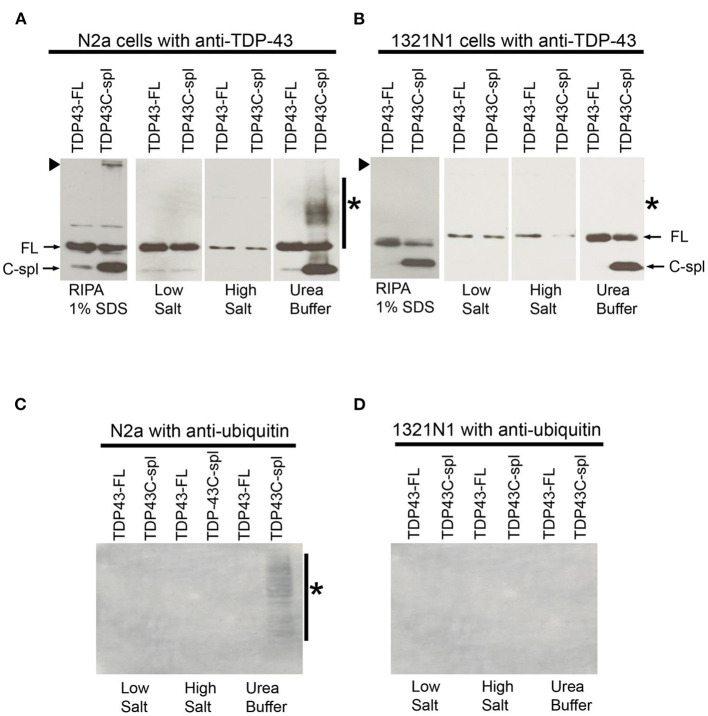
Neuronal cytoplasmic aggregation and ubiquitination of TDP-43 is the most common disease pathology linking Amyotrophic Lateral Sclerosis (ALS) and frontotemporal lobar degeneration (FTLD). TDP-43 pathology is characterized by the presence of low molecular weight TDP-43 species generated through proteolytic cleavage and/or abnormal RNA processing events. In addition to N-terminally truncated TDP-43 species, it has become evident that C-terminally truncated variants generated through alternative splicing in exon 6 also contribute to the pathophysiology of ALS/FTLD. Three such variants are listed in UCSD genome browser each sharing the same C-terminal unique sequence of 18 amino acids which has been shown to contain a putative nuclear export sequence. Here we have identified an additional C-terminally truncated variant of TDP-43 in human spinal cord tissue. This variant, called TDP43C-spl, is generated through use of non-canonical splice sites in exon 6, skipping 1,020 bp and encoding a 272 aa protein lacking the C-terminus with the first 256 aa identical to full-length TDP-43 and the same 18 amino acid C-terminal unique sequence. Ectopic expression studies in cells revealed that TDP43C-spl was localized to the nucleus in astrocytic and microglial cell lines but formed cytoplasmic ubiquitinated aggregates in neuronal cell lines. An antibody raised to the unique 18 amino acid sequence showed elevated levels of C-terminally truncated variants in ALS spinal cord tissues, and co-labeled TDP-43 pathology in disease affected spinal motor neurons. The retention of this 18 amino acid sequence among several C-terminally truncated TDP-43 variants suggests important functional relevance. Our studies of TDP43C-spl suggest this may be related to the selective vulnerability of neurons to TDP-43 pathology and cell-subtype differences in nuclear export.
神经元胞质中TDP-43的聚集和泛素化是肌萎缩侧索硬化症(ALS)和额颞叶痴呆(FTLD)共有的最常见疾病病理特征。TDP-43病理特征表现为通过蛋白水解切割和/或异常RNA加工事件产生的低分子量TDP-43分子。除了N端截短的TDP-43分子外,越来越明显的是,通过外显子6的可变剪接产生的C端截短变体也参与了ALS/FTLD的病理生理过程。加州大学圣地亚哥分校基因组浏览器中列出了三种这样的变体,它们都共享相同的18个氨基酸的C端独特序列,该序列已被证明含有一个假定的核输出序列。在这里,我们在人类脊髓组织中鉴定出了另一种TDP-43的C端截短变体。这种变体称为TDP43C-spl,是通过使用外显子6中的非规范剪接位点产生的,跳过了1020 bp,编码一个272个氨基酸的蛋白质,该蛋白质缺少C端,前256个氨基酸与全长TDP-43相同,且具有相同的18个氨基酸的C端独特序列。细胞中的异位表达研究表明,TDP43C-spl在星形胶质细胞和小胶质细胞系中定位于细胞核,但在神经元细胞系中形成细胞质泛素化聚集体。针对独特的18个氨基酸序列产生的抗体显示,ALS脊髓组织中C端截短变体的水平升高,并在疾病影响的脊髓运动神经元中共标记了TDP-43病理。几种C端截短的TDP-43变体中这种18个氨基酸序列的保留表明其具有重要的功能相关性。我们对TDP43C-spl的研究表明,这可能与神经元对TDP-43病理的选择性易感性以及核输出中的细胞亚型差异有关。