Department of Cardiology, the First Hospital of Jilin University, Changchun, Jilin Province, China.
Medicine (Baltimore). 2022 Jul 8;101(27):e29456. doi: 10.1097/MD.0000000000029456.
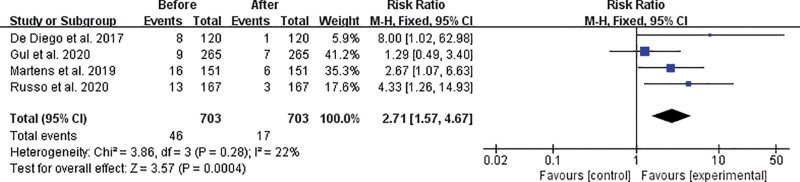
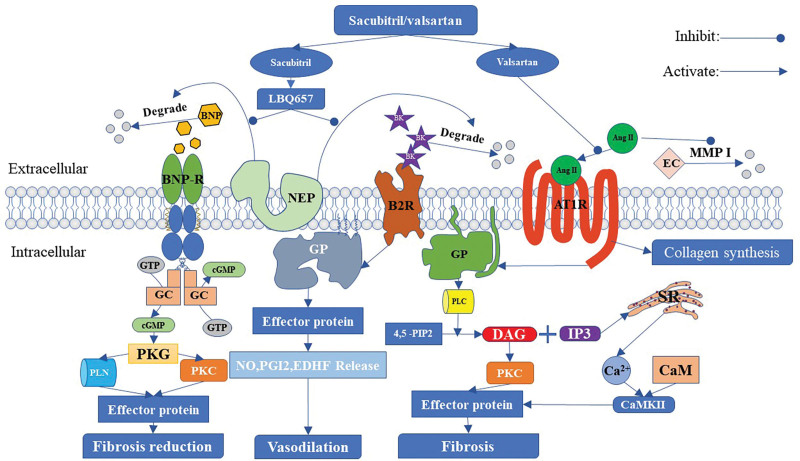
Sacubitril/valsartan, the first angiotensin receptor neprilysin inhibitor approved by the Food and Drug Administration for marketing, has been shown to reduce the risk of cardiovascular death or heart failure hospitalization and improve symptoms in patients with chronic heart failure with a reduced ejection fraction. However, some researchers have also found that sacubitril/valsartan has an antiarrhythmic effect. The mechanism by which sacubitril/valsartan reduces the mortality associated with malignant ventricular arrhythmias is not precise. Many studies have concluded that ventricular arrhythmia is associated with a reduction in myocardial fibrosis. This article reviews the current understanding of the effects of sacubitril/valsartan on the reduction of ventricular arrhythmia and explains its possible mechanisms. The results of this study suggest that sacubitril/valsartan reduces the occurrence of appropriate implantable cardioverter-defibrillator shocks. Meanwhile, sacubitril/valsartan may reduce the occurrence of ventricular arrhythmias by affecting 3 pathways of B-type natriuretic peptide, Angiotensin II, and Bradykinin. The conclusion of this study is that sacubitril/valsartan reduces the number of implantable cardioverter-defibrillator shocks and ventricular arrhythmias in heart failure with reduced ejection fraction patients.
沙库巴曲缬沙坦,首个获美国食品药品监督管理局批准上市的血管紧张素受体脑啡肽酶抑制剂,已被证实可降低射血分数降低的慢性心力衰竭患者心血管死亡或心力衰竭住院的风险,并改善症状。然而,一些研究人员还发现沙库巴曲缬沙坦具有抗心律失常作用。沙库巴曲缬沙坦降低与恶性室性心律失常相关死亡率的确切机制尚不清楚。许多研究得出结论,室性心律失常与心肌纤维化减少有关。本文综述了目前对沙库巴曲缬沙坦降低室性心律失常作用的认识,并解释了其可能的机制。该研究结果表明,沙库巴曲缬沙坦可降低合适植入式心脏复律除颤器电击的发生。同时,沙库巴曲缬沙坦可能通过影响脑啡肽酶、血管紧张素 II 和缓激肽 3 种途径来减少室性心律失常的发生。该研究的结论是,沙库巴曲缬沙坦可减少射血分数降低的心力衰竭患者植入式心脏复律除颤器电击和室性心律失常的发生。