Lillehei Heart Institute, Department of Medicine, University of Minnesota, 4-128 CCRB, 2231 6th St. SE, Minneapolis, MN, 55455, USA.
Cell Mol Life Sci. 2022 Jul 8;79(8):406. doi: 10.1007/s00018-022-04434-8.
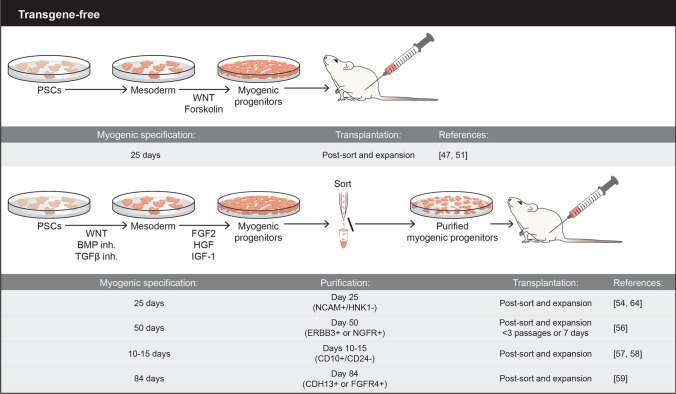
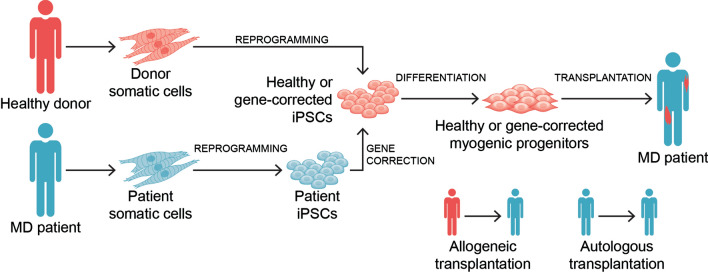
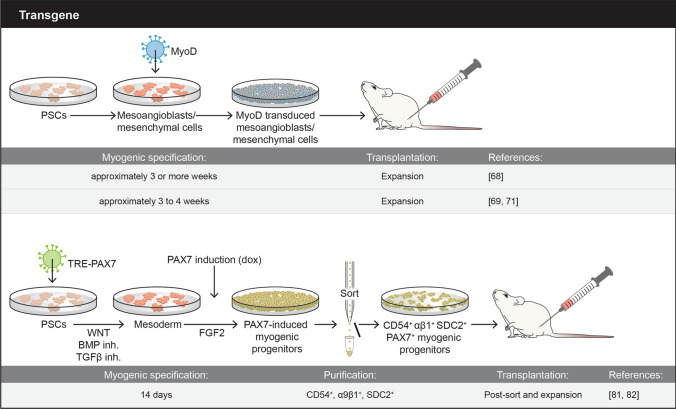
Muscular dystrophy encompasses a large number of heterogeneous genetic disorders characterized by progressive and devastating muscle wasting. Cell-based replacement strategies aimed at promoting skeletal muscle regeneration represent a candidate therapeutic approach to treat muscular dystrophies. Due to the difficulties of obtaining large numbers of stem cells from a muscle biopsy as well as expanding these in vitro, pluripotent stem cells (PSCs) represent an attractive cell source for the generation of myogenic progenitors, given that PSCs can repeatedly produce large amounts of lineage-specific tissue, representing an unlimited source of cells for therapy. In this review, we focus on the progress to date on different methods for the generation of human PSC-derived myogenic progenitor cells, their regenerative capabilities upon transplantation, their potential for allogeneic and autologous transplantation, as well as the specific challenges to be considered for future therapeutic applications.
肌肉萎缩症包括许多异质性的遗传疾病,其特征是进行性和破坏性的肌肉萎缩。基于细胞的替代策略旨在促进骨骼肌再生,这是治疗肌肉萎缩症的一种候选治疗方法。由于从肌肉活检中获得大量干细胞以及在体外扩增这些干细胞的困难,多能干细胞(PSCs)代表了一种有吸引力的细胞来源,可用于生成肌源性祖细胞,因为 PSCs 可以反复产生大量的谱系特异性组织,为治疗提供了无限的细胞来源。在这篇综述中,我们重点介绍了迄今为止在生成人 PSC 衍生的肌源性祖细胞的不同方法方面的进展,它们在移植后的再生能力,同种异体和自体移植的潜力,以及未来治疗应用中需要考虑的具体挑战。