Department of Microbiology, Faculty of Biological Sciences, Quaid-i-Azam University, Islamabad, Pakistan.
Université de Paris, IAME, INSERM, Paris, France.
PLoS One. 2022 Jul 8;17(7):e0270707. doi: 10.1371/journal.pone.0270707. eCollection 2022.
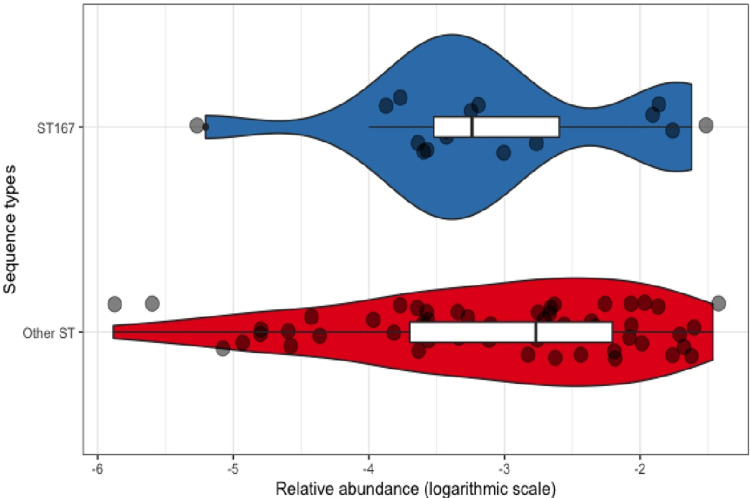
Carbapenems are considered last-line beta-lactams for the treatment of infections caused by multidrug-resistant Gram-negative bacteria. However, their activity is compromised by the rising prevalence of carbapenemase-producing Enterobacterales (CPE), which are especially marked in the Indian subcontinent. In Pakistan, previous reports have warned about the possible spread of CPE in the community, but data are still partial. This study was carried out to analyse the prevalence of CPE, the genetic characterisation, and phylogenetic links among the spreading CPE in the community. In this cohort study, we collected 306 rectal swabs from patients visiting Benazir Bhutto hospital, Rawalpindi. CPEs were screened by using ertapenem-supplemented MacConkey agar. Identification was performed by using conventional biochemical tests, and genomes were sequenced using Illumina chemistry. Antibiotic resistance genes, plasmid incompatibility groups, and Escherichia coli phylogroups were determined in silico. Sequence types were determined by using MLST tool. The prevalence of CPE carriage observed was 14.4% (44/306 samples). The most common carbapenemase-encoding gene was bla-NDM-5 (n = 58) followed by blaNDM-1 (n = 7), blaNDM (non-assigned variant, n = 4), blaOXA-181 (n = 3), blaOXA-232 (n = 3) and blaNDM-7 (n = 1). Most of the CPE were E. coli (55/64, 86%), and the genomic analysis revealed a pauciclonal diffusion of E. coli with ST167 (n = 14), 405 (n = 10), 940 (n = 8), 648 (n = 6) and 617 (n = 5). We obtained a second sample from 94 patients during their hospital stay in whom carriage was negative at admission and found that 7 (7.4%) acquired a CPE. Our results indicate that the prevalence of CPE carriage in the Pakistani urban community was high and driven by the dissemination of some E. coli clones, with ST167 being the most frequent. The high CPE carriage in the community poses a serious public health threat and calls for implementation of adequate preventive measures.
碳青霉烯类抗生素被认为是治疗多重耐药革兰氏阴性菌感染的最后一线β-内酰胺类药物。然而,由于产碳青霉烯酶肠杆菌科(CPE)的流行率不断上升,其活性受到了影响,尤其是在印度次大陆。在巴基斯坦,先前的报告已经警告过社区中 CPE 可能传播的问题,但数据仍然不完整。本研究旨在分析社区中 CPE 的流行率、遗传特征以及传播 CPE 之间的系统发育联系。在这项队列研究中,我们从拉瓦尔品第贝娜齐尔·布托医院的患者中收集了 306 份直肠拭子。使用厄他培南补充的 MacConkey 琼脂筛选 CPE。通过常规生化试验进行鉴定,使用 Illumina 化学进行基因组测序。在计算机中确定抗生素耐药基因、质粒不相容群和大肠埃希菌进化枝。使用 MLST 工具确定序列类型。观察到的 CPE 携带率为 14.4%(44/306 份样本)。最常见的碳青霉烯酶编码基因是 bla-NDM-5(n = 58),其次是 blaNDM-1(n = 7)、blaNDM(未分配变异体,n = 4)、blaOXA-181(n = 3)、blaOXA-232(n = 3)和 blaNDM-7(n = 1)。大多数 CPE 是大肠埃希菌(55/64,86%),基因组分析显示,ST167(n = 14)、405(n = 10)、940(n = 8)、648(n = 6)和 617(n = 5)的大肠埃希菌呈克隆性扩散。我们在住院期间从 94 名患者中获得了第二个样本,他们在入院时的携带率为阴性,发现其中 7 名(7.4%)获得了 CPE。我们的结果表明,巴基斯坦城市社区中 CPE 携带率较高,主要由一些大肠埃希菌克隆传播引起,其中 ST167 最为常见。社区中 CPE 的高携带率对公共健康构成严重威胁,需要采取适当的预防措施。