Department of Community Oral Health, Dental School, Zahedan University of Medical Sciences, Zahedan, Iran.
Oral and Dental Disease Research Center, Zahedan University of Medical Sciences, Zahedan, Iran.
BMC Oral Health. 2022 Jul 8;22(1):280. doi: 10.1186/s12903-022-02292-1.
Dental caries is a costly and very common disease, especially in pregnant women. Reasons such as not paying attention to oral health, poor diet and also lack of adequate education in this regard cause this to happen. Performing well-designed educational interventions using primary health system's forces, can improve oral health of pregnant women and help control this disease. We conducted this study to evaluate the effectiveness of some oral health interventions on pregnant women dental caries.
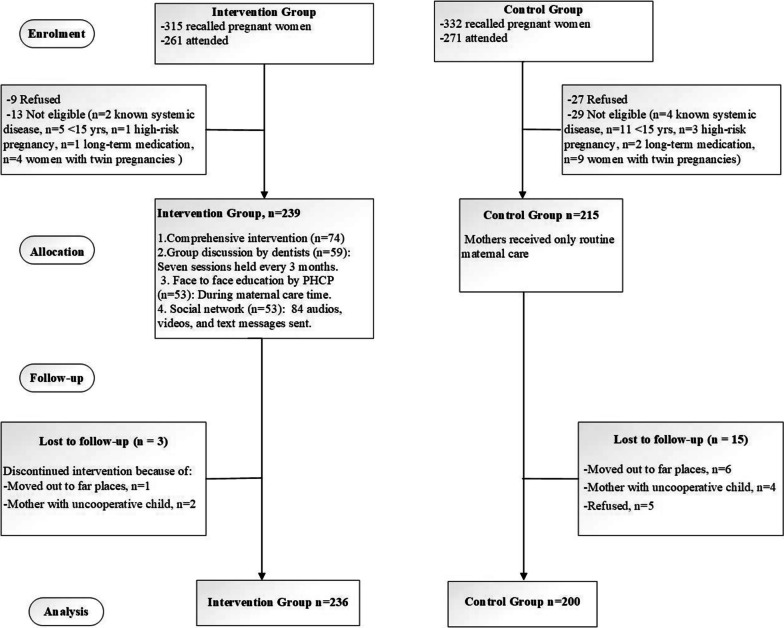
A field trial study was done in comprehensive Health Centers in Varamin, Tehran, Iran to assess 439 mothers' dental health status from pregnancy up to 2 years after delivery in intervention (n = 239) and control groups (n = 200). Mothers in intervention groups received oral health-related education consisted of nutritional and behavioral messages via either of four methods: A: comprehensive method including all following methods together (n = 74), B: group discussion by dentists (n = 59), C: face to face education by primary health care providers (n = 53), and D: social network applications (n = 53); while those in control group only received routine maternal and oral health care. We used a questionnaire to collect mothers' demographic, socioeconomic and dental care behavior data and also performed oral examinations to assess their DMFT at baseline and 24 months after delivery to evaluate the effectiveness of these educational oral health interventions.
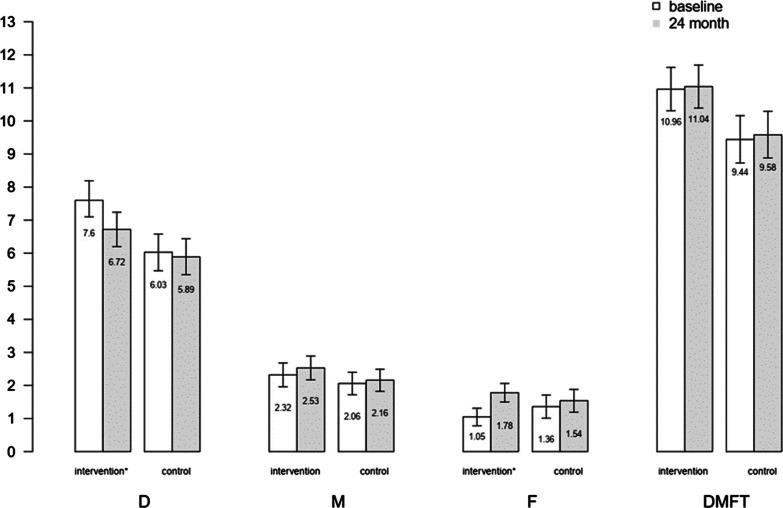
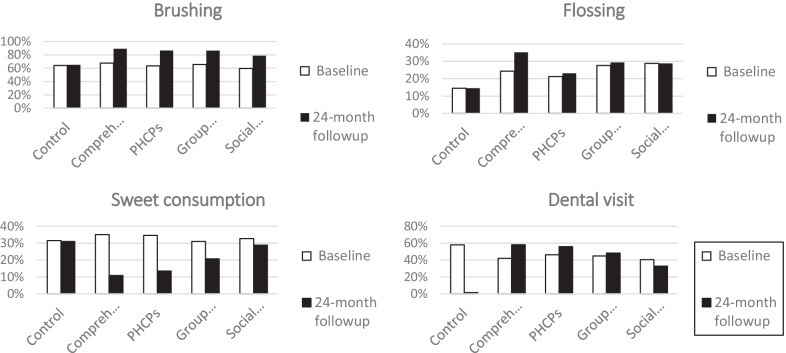
From 454 mothers participated the examination session, 18 pregnant women discontinued during the follow-ups and 439 were remained with mean age of 27.47. In the intervention group, the frequency of daily brushing among women increased from 64% at baseline to 85.6% at the last follow-up and the mean D significantly decreased nearly 1unit at same period (P < 0.05). Most and least dental caries changes were in comprehensive intervention group and social network intervention group compared to other intervention groups, respectively.
Performing educational interventions during and after pregnancy using various message delivery methods and messengers (oral health professionals and trained PHCPs), could improve oral health status and behaviors of pregnant and lactating mothers in a feasible and applicable manner.
龋齿是一种代价高昂且非常普遍的疾病,尤其是在孕妇中。不注意口腔卫生、不良饮食以及缺乏这方面的足够教育等原因导致了这种情况的发生。通过基层卫生系统的力量实施精心设计的教育干预,可以改善孕妇的口腔健康状况,有助于控制这种疾病。我们进行了这项研究,以评估一些口腔健康干预措施对孕妇龋齿的有效性。
在伊朗德黑兰瓦拉明综合保健中心进行了一项现场试验研究,评估了 439 名孕妇的口腔健康状况,从怀孕到产后 2 年(干预组 n=239,对照组 n=200)。干预组的母亲接受了与口腔健康相关的教育,包括通过以下四种方法中的任何一种传递的营养和行为信息:A:综合方法,包括所有以下方法一起(n=74),B:由牙医进行小组讨论(n=59),C:由初级卫生保健提供者进行面对面教育(n=53),和 D:社交网络应用(n=53);而对照组的母亲仅接受常规的产妇和口腔保健。我们使用问卷收集母亲的人口统计学、社会经济和口腔保健行为数据,并在基线和产后 24 个月进行口腔检查,以评估这些口腔健康教育干预措施的效果。
在 454 名参加检查的母亲中,有 18 名孕妇在随访过程中停止了检查,439 名母亲的平均年龄为 27.47 岁。在干预组中,女性每天刷牙的频率从基线时的 64%增加到最后一次随访时的 85.6%,同期平均 D 值也下降了近 1 个单位(P<0.05)。在各种干预组中,综合干预组和社交网络干预组的龋齿变化最大和最小,分别。
通过使用各种信息传递方法和信息传递者(口腔卫生专业人员和经过培训的初级卫生保健提供者),在怀孕期间和之后实施教育干预,可以以可行和适用的方式改善孕妇和哺乳期母亲的口腔健康状况和行为。