Acosta Balcazar Isabel Cristina, Granados Rivera Lorenzo Danilo, Salinas Chavira Jaime, Estrada Drouaillet Benigno, Albarrán Miguel Ruiz, Bautista Martínez Yuridia
Facultad de Medicina Veterinaria y Zootecnia, Universidad Autónoma de Tamaulipas, Ciudad Victoria 87000, Tamaulipas, Mexico.
Instituto Nacional de Investigaciones Forestales, Agrícolas y Pecuarias, General Terán 67400, Nuevo León, Mexico.
Animals (Basel). 2022 Jun 24;12(13):1621. doi: 10.3390/ani12131621.
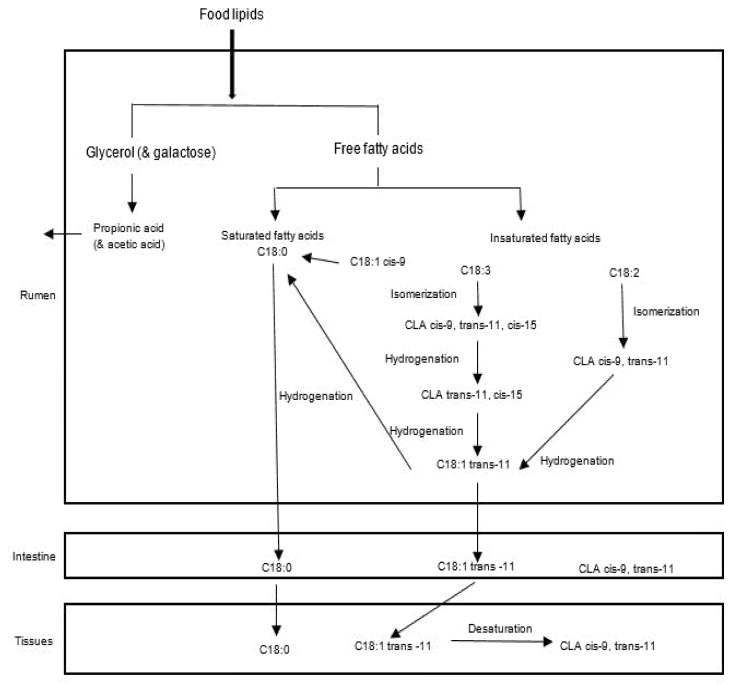
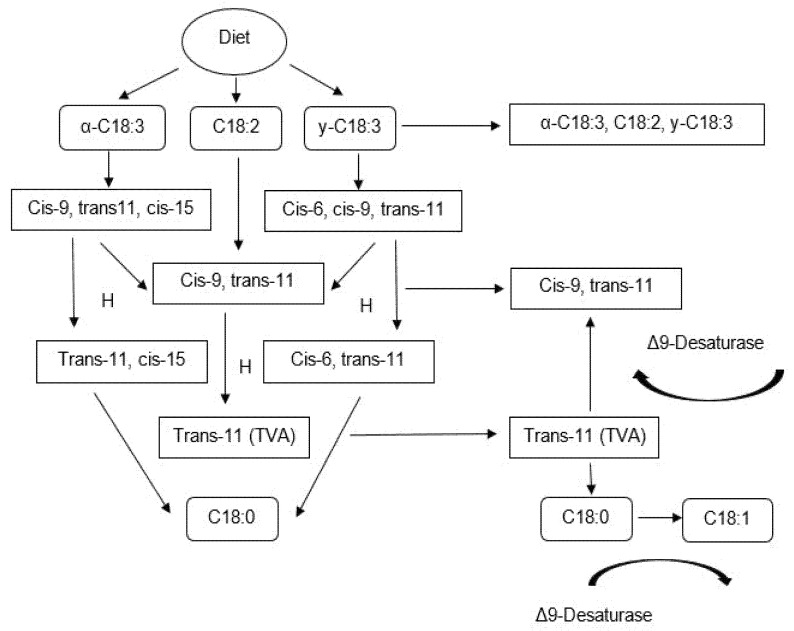
Conjugated linoleic acid (CLA), has been shown to have protective effects against various diseases, such as obesity, arteriosclerosis, diabetes, chronic inflammatory diseases, and cancer. This fatty acid in ruminants results from two processes, biohydrogenation, which takes place in the rumen, and de novo synthesis, carried out in the mammary gland, and it has linoleic and α-linolenic acids as its precursors. The amounts of precursors in the diets of animals are related to the amounts of CLA in milk. In the literature review, it was found that the milk of cows fed fresh forage has a higher amount of CLA because they have a higher amount of linoleic acid and α-linolenic acid compared to other foods used in the diets of cows. The amount of CLA precursors in pastures can be increased through agronomic practices, such as nitrogen fertilization, and regrowth age. It is also a technique used to increase the amount of CLA in milk to obtain a greater benefit regarding its nutritional value.
共轭亚油酸(CLA)已被证明对多种疾病具有保护作用,如肥胖、动脉硬化、糖尿病、慢性炎症性疾病和癌症。反刍动物体内的这种脂肪酸来自两个过程,一个是在瘤胃中发生的生物氢化过程,另一个是在乳腺中进行的从头合成过程,它以亚油酸和α-亚麻酸作为前体。动物日粮中前体的含量与牛奶中CLA的含量有关。在文献综述中发现,喂食新鲜草料的奶牛所产牛奶中CLA的含量更高,因为与奶牛日粮中使用的其他食物相比,新鲜草料中亚油酸和α-亚麻酸的含量更高。通过农艺措施,如氮肥施用和再生年龄,可以增加牧场中CLA前体的含量。这也是一种用于增加牛奶中CLA含量以获得更大营养价值益处的技术。