Datta Moumita, Jumaa Hassan
Institute of Immunology, University Medical Center, 89081 Ulm, Germany.
Cancers (Basel). 2022 Jun 21;14(13):3045. doi: 10.3390/cancers14133045.
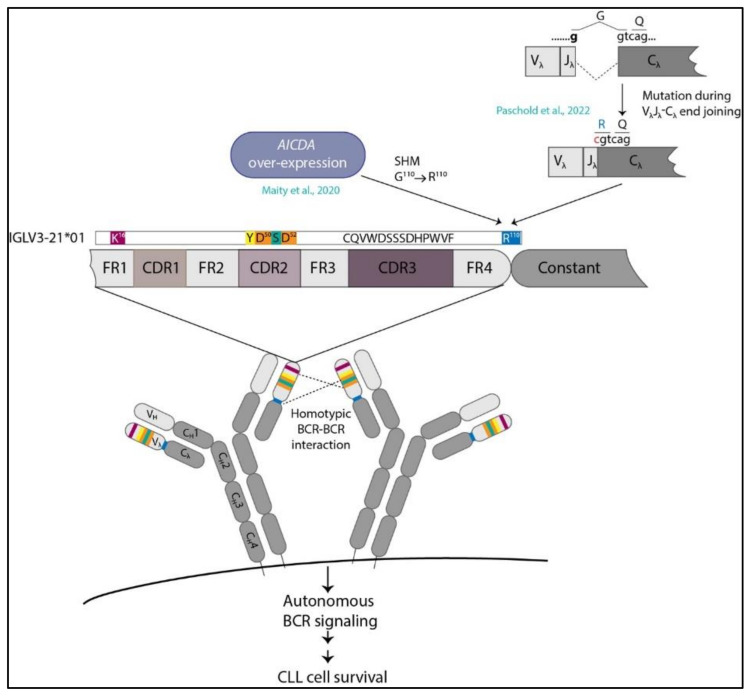
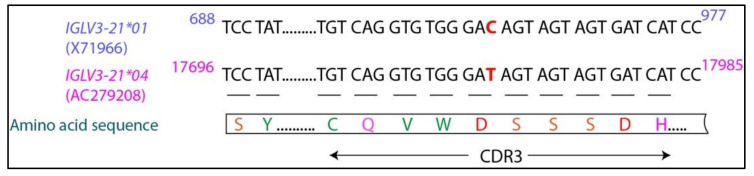
Chronic lymphocytic leukemia (CLL) is a lymphoproliferative disease characterized by the accumulation of CD5 CD19 malignant B cells. Autonomous ligand-independent B-cell signaling is a key process involved in the development of CLL pathogenesis. Together with other cytogenetic alterations, mutations in the immunoglobulin heavy chain variable (IGHV) gene act as a prognostic marker for CLL, with mutated CLL (M-CLL) being far more indolent than unmutated CLL (U-CLL). Recent studies highlight the role of a specific light chain mutation, namely, IGLV3-21, in the development and prognosis of CLL. Such a mutation increases the propensity of homotypic BCR-BCR interaction, leading to cell autonomous signaling. In this article, we review the current findings on immunoglobulin gene sequence mutations as a potential risk factor for developing CLL.
慢性淋巴细胞白血病(CLL)是一种以CD5 CD19恶性B细胞积聚为特征的淋巴细胞增殖性疾病。自主性非配体依赖性B细胞信号传导是CLL发病机制发展过程中的关键过程。与其他细胞遗传学改变一起,免疫球蛋白重链可变区(IGHV)基因突变作为CLL的预后标志物,其中突变型CLL(M-CLL)比未突变型CLL(U-CLL)的惰性要强得多。最近的研究强调了一种特定轻链突变,即IGLV3-21,在CLL发展和预后中的作用。这种突变增加了同型BCR-BCR相互作用的倾向,导致细胞自主性信号传导。在本文中,我们综述了关于免疫球蛋白基因序列突变作为CLL潜在危险因素的当前研究结果。