Kleinmanns Katrin, Gullaksen Stein-Erik, Bredholt Geir, Davidson Ben, Torkildsen Cecilie Fredvik, Grindheim Sindre, Bjørge Line, McCormack Emmet
Department of Clinical Science, Centre for Cancer Biomarkers CCBIO, University of Bergen, 5020 Bergen, Norway.
Department of Pathology, Oslo University Hospital, Norwegian Radium Hospital, 0310 Oslo, Norway.
Cancers (Basel). 2022 Jun 23;14(13):3092. doi: 10.3390/cancers14133092.
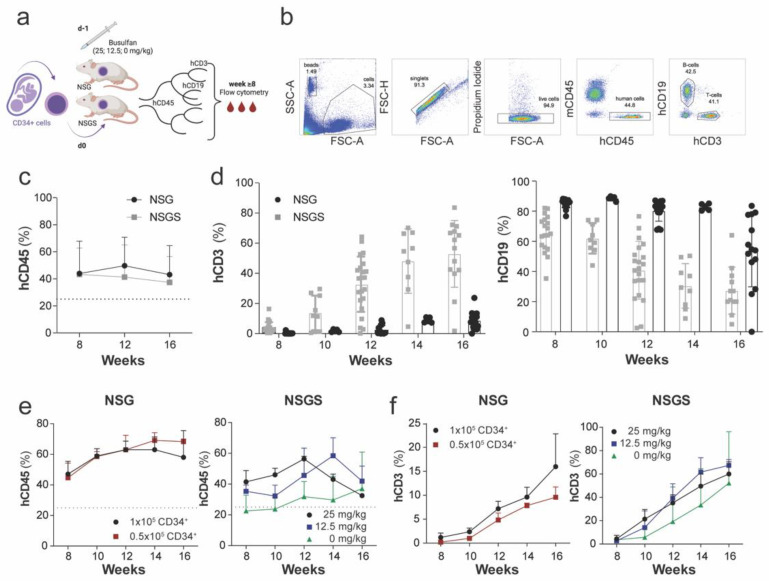
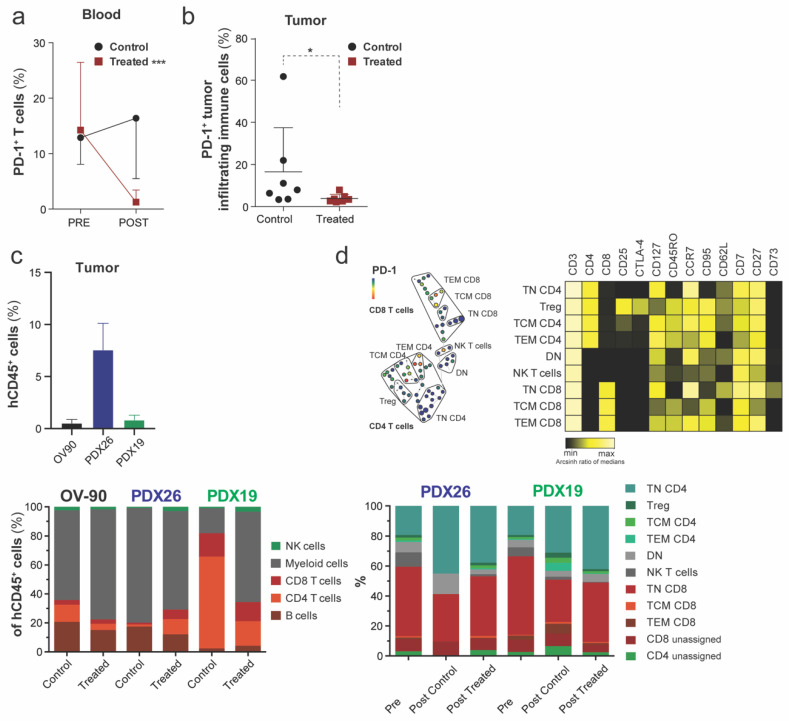
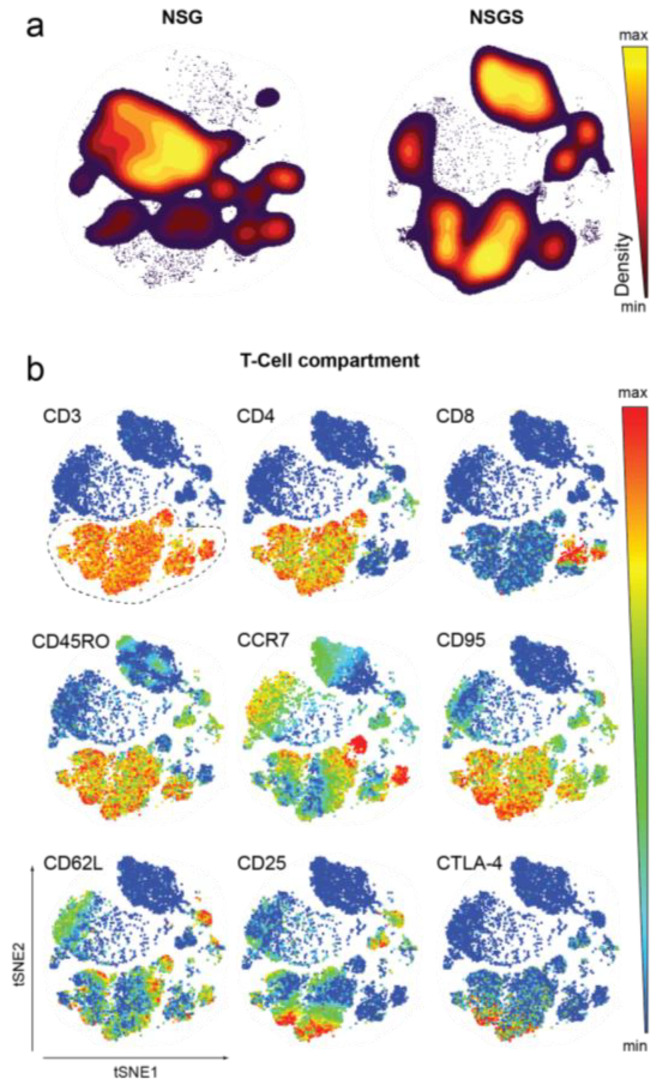
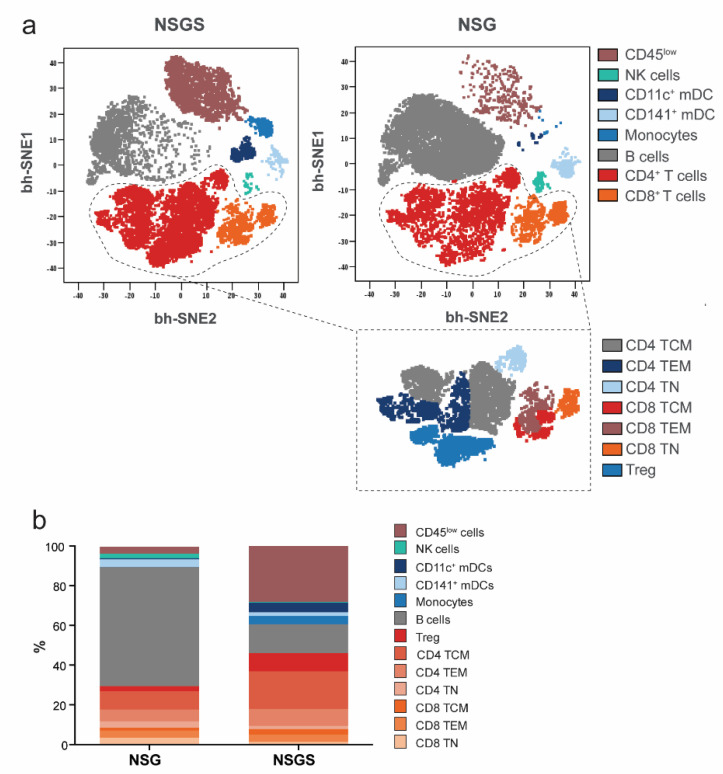
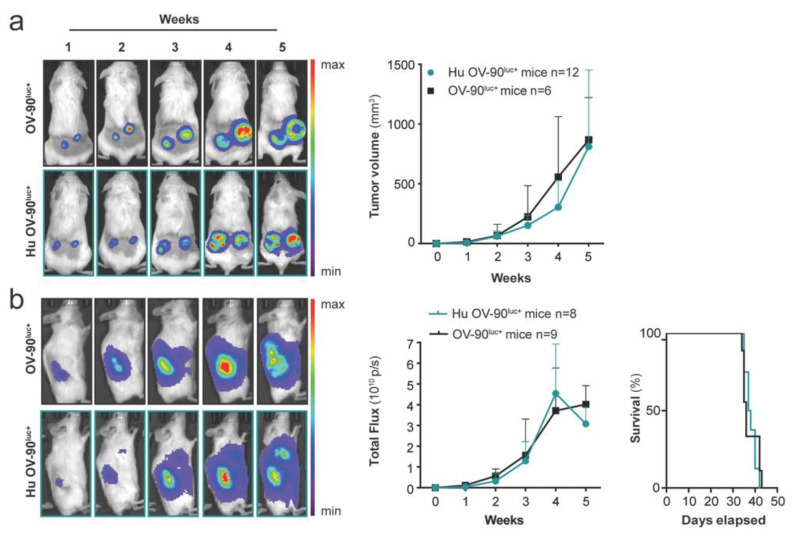
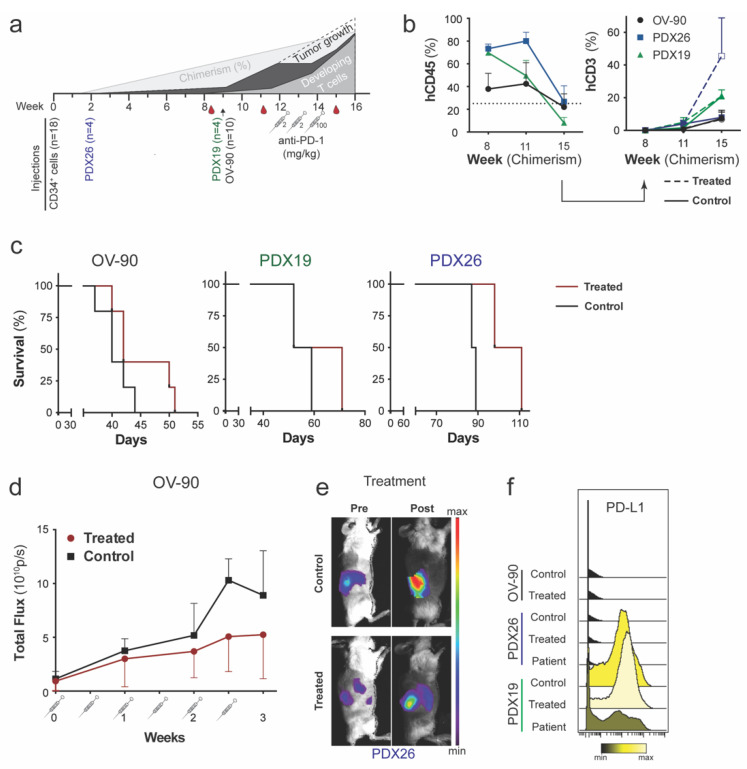
High-grade serous ovarian cancer (HGSOC) has poor prognosis and new treatment modalities are needed. Immunotherapy, with checkpoint inhibitors, have demonstrated limited impact. To evaluate the suitability for immunotherapeutics, contextualized preclinical models are required to secure meaningful clinical translation. Therefore, we developed and characterized humanized patient-derived xenograft (hu PDX) murine models of HGSOC, which were established by orthotopic implantation of tumor cell suspensions and intravenous injection of CD34 cells isolated from umbilical cord blood samples. The developing human immune system in NSG and NSGS mice was followed longitudinally by flow cytometry and characterized by mass cytometry with a panel of 34 surface markers. Molecular imaging of tumor burden, survival analysis, and characterization of tumor-infiltrating immune cells was performed to assess the treatment response to anti-PD-1 (nivolumab) monotherapy. Successful generation of hu PDX models was achieved. Mice treated with nivolumab showed a decrease in tumor burden, however no significant survival benefit was identified when compared to untreated controls. No correlation was seen between PD-L1 expression and CD8 T cell infiltration and response parameters. As the characterization showed an immune infiltration of predominantly myeloid cells, similar to what is observed in HGSOC patients, the models may have the potential to evaluate the importance of myeloid cell immunomodulation as well.
高级别浆液性卵巢癌(HGSOC)预后较差,需要新的治疗方式。使用检查点抑制剂的免疫疗法显示出的效果有限。为了评估免疫治疗的适用性,需要情境化的临床前模型来确保有意义的临床转化。因此,我们开发并表征了HGSOC的人源化患者来源异种移植(hu PDX)小鼠模型,该模型通过原位植入肿瘤细胞悬液和静脉注射从脐带血样本中分离的CD34细胞建立。通过流式细胞术纵向跟踪NSG和NSGS小鼠中发育中的人类免疫系统,并用一组34种表面标志物通过质谱流式细胞术进行表征。进行肿瘤负荷的分子成像、生存分析以及肿瘤浸润免疫细胞的表征,以评估对抗PD-1(纳武单抗)单药治疗的反应。成功建立了hu PDX模型。接受纳武单抗治疗的小鼠肿瘤负荷降低,但与未治疗的对照组相比,未发现显著的生存获益。未观察到PD-L1表达与CD8 T细胞浸润及反应参数之间的相关性。由于表征显示主要是髓样细胞的免疫浸润,类似于在HGSOC患者中观察到的情况,这些模型也可能有潜力评估髓样细胞免疫调节的重要性。