Zhang Wei, Zheng Xiaoqiang
Department of Talent Highland, The First Affiliated Hospital of Xi'an Jiaotong University, Xi'an, China.
Department of Medical Oncology, The First Affiliated Hospital of Xi'an Jiaotong University, Xi'an, China.
Front Oncol. 2023 Apr 4;13:1122322. doi: 10.3389/fonc.2023.1122322. eCollection 2023.
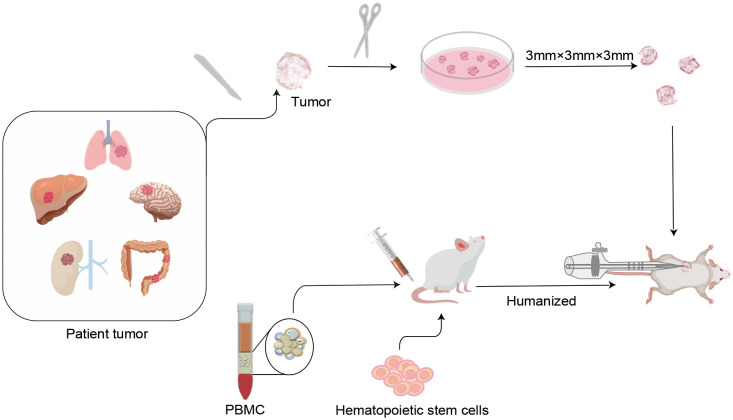
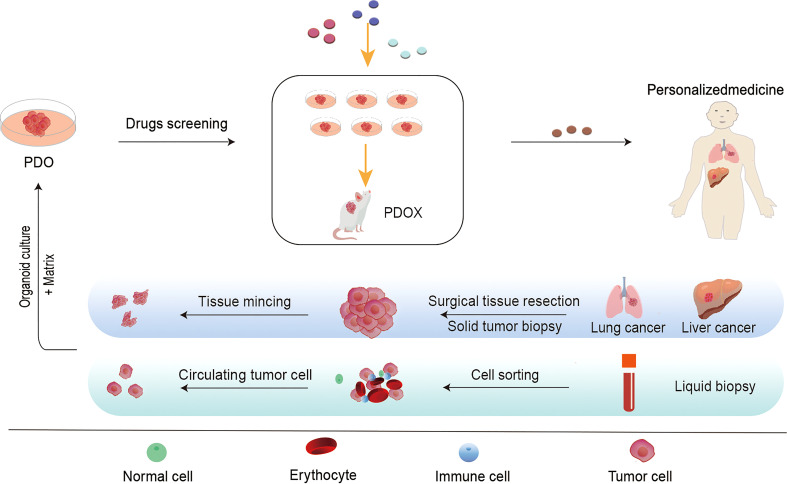
In addition to the rapid development of immune checkpoint inhibitors, there has also been a surge in the development of self-assembly immunotherapy drugs. Based on the immune target, traditional tumor immunotherapy drugs are classified into five categories, namely immune checkpoint inhibitors, direct immune modulators, adoptive cell therapy, oncolytic viruses, and cancer vaccines. Additionally, the emergence of self-assembled drugs with improved precision and environmental sensitivity offers a promising innovation approach to tumor immunotherapy. Despite rapid advances in tumor immunotherapy drug development, all candidate drugs require preclinical evaluation for safety and efficacy, and conventional evaluations are primarily conducted using two-dimensional cell lines and animal models, an approach that may be unsuitable for immunotherapy drugs. The patient-derived xenograft and organoids models, however, maintain the heterogeneity and immunity of the pathological tumor heterogeneity.
除了免疫检查点抑制剂的快速发展外,自组装免疫治疗药物的研发也激增。基于免疫靶点,传统肿瘤免疫治疗药物分为五类,即免疫检查点抑制剂、直接免疫调节剂、过继性细胞疗法、溶瘤病毒和癌症疫苗。此外,具有更高精准度和环境敏感性的自组装药物的出现为肿瘤免疫治疗提供了一种有前景的创新方法。尽管肿瘤免疫治疗药物研发进展迅速,但所有候选药物都需要进行安全性和有效性的临床前评估,而传统评估主要使用二维细胞系和动物模型,这种方法可能不适用于免疫治疗药物。然而,患者来源的异种移植模型和类器官模型保留了肿瘤病理异质性的异质性和免疫性。