Clinical Neuroscience Research Center, Department of Neurosurgery & Neurology, Tulane University School of Medicine, New Orleans, LA 70112, USA.
Cells. 2022 Jun 24;11(13):2011. doi: 10.3390/cells11132011.
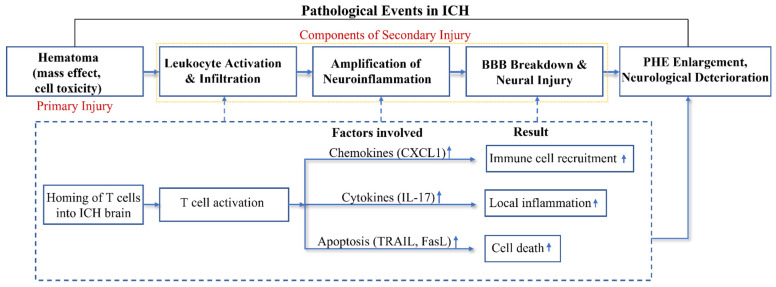
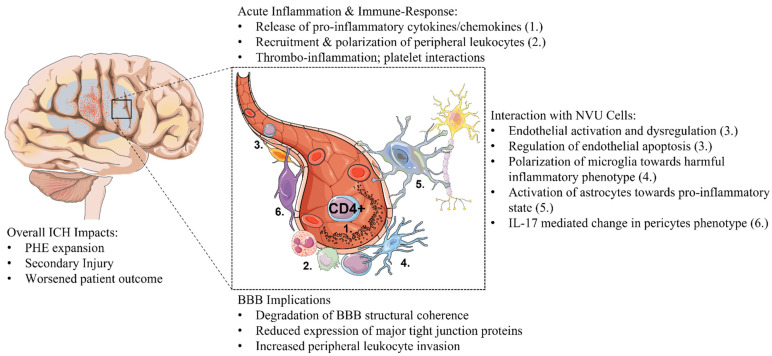
In the pathophysiology of hemorrhagic stroke, the perturbation of the neurovascular unit (NVU), a functional group of the microvascular and brain intrinsic cellular components, is implicated in the progression of secondary injury and partially informs the ultimate patient outcome. Given the broad NVU functions in maintaining healthy brain homeostasis through its maintenance of nutrients and energy substrates, partitioning central and peripheral immune components, and expulsion of protein and metabolic waste, intracerebral hemorrhage (ICH)-induced dysregulation of the NVU directly contributes to numerous destructive processes in the post-stroke sequelae. In ICH, the damaged NVU precipitates the emergence and evolution of perihematomal edema as well as the breakdown of the blood-brain barrier structural coherence and function, which are critical facets during secondary ICH injury. As a gateway to the central nervous system, the NVU is among the first components to interact with the peripheral immune cells mobilized toward the injured brain. The release of signaling molecules and direct cellular contact between NVU cells and infiltrating leukocytes is a factor in the dysregulation of NVU functions and further adds to the acute neuroinflammatory environment of the ICH brain. Thus, the interactions between the NVU and immune cells, and their reverberating consequences, are an area of increasing research interest for understanding the complex pathophysiology of post-stroke injury. This review focuses on the interactions of T-lymphocytes, a major cell of the adaptive immunity with expansive effector function, with the NVU in the context of ICH. In cataloging the relevant clinical and experimental studies highlighting the synergistic actions of T-lymphocytes and the NVU in ICH injury, this review aimed to feature emergent knowledge of T cells in the hemorrhagic brain and their diverse involvement with the neurovascular unit in this disease.
在出血性中风的病理生理学中,神经血管单元 (NVU) 的紊乱与继发性损伤的进展有关,并在一定程度上反映了最终的患者结局,NVU 是一个微血管和脑固有细胞成分的功能群。鉴于 NVU 通过维持营养和能量底物、分隔中枢和外周免疫成分以及排出蛋白质和代谢废物来维持健康的大脑内环境的广泛功能,脑出血 (ICH) 引起的 NVU 失调直接导致中风后继发损伤中的许多破坏性过程。在 ICH 中,受损的 NVU 促使血肿周围水肿的出现和发展,以及血脑屏障结构连贯性和功能的破坏,这在继发性 ICH 损伤中是至关重要的方面。作为中枢神经系统的门户,NVU 是与动员到受损大脑的外周免疫细胞首先相互作用的成分之一。NVU 细胞与浸润白细胞之间释放信号分子和直接细胞接触是 NVU 功能失调的一个因素,并进一步加剧了 ICH 大脑的急性神经炎症环境。因此,NVU 与免疫细胞之间的相互作用及其反响后果是理解中风后损伤复杂病理生理学的研究热点。本综述重点介绍了适应性免疫的主要细胞 T 淋巴细胞与 ICH 中 NVU 的相互作用。在列举强调 T 淋巴细胞与 ICH 损伤中 NVU 协同作用的相关临床和实验研究时,本综述旨在突出出血性大脑中 T 细胞的新认识及其在该疾病中与神经血管单元的多样化参与。