Department of Chemistry and Institute for Medical Engineering and Science, Massachusetts Institute of Technology, Cambridge, Massachusetts, USA.
Broad Institute, Harvard University and Massachusetts Institute of Technology, Cambridge, Massachusetts, USA.
JCI Insight. 2021 Mar 22;6(6):145857. doi: 10.1172/jci.insight.145857.
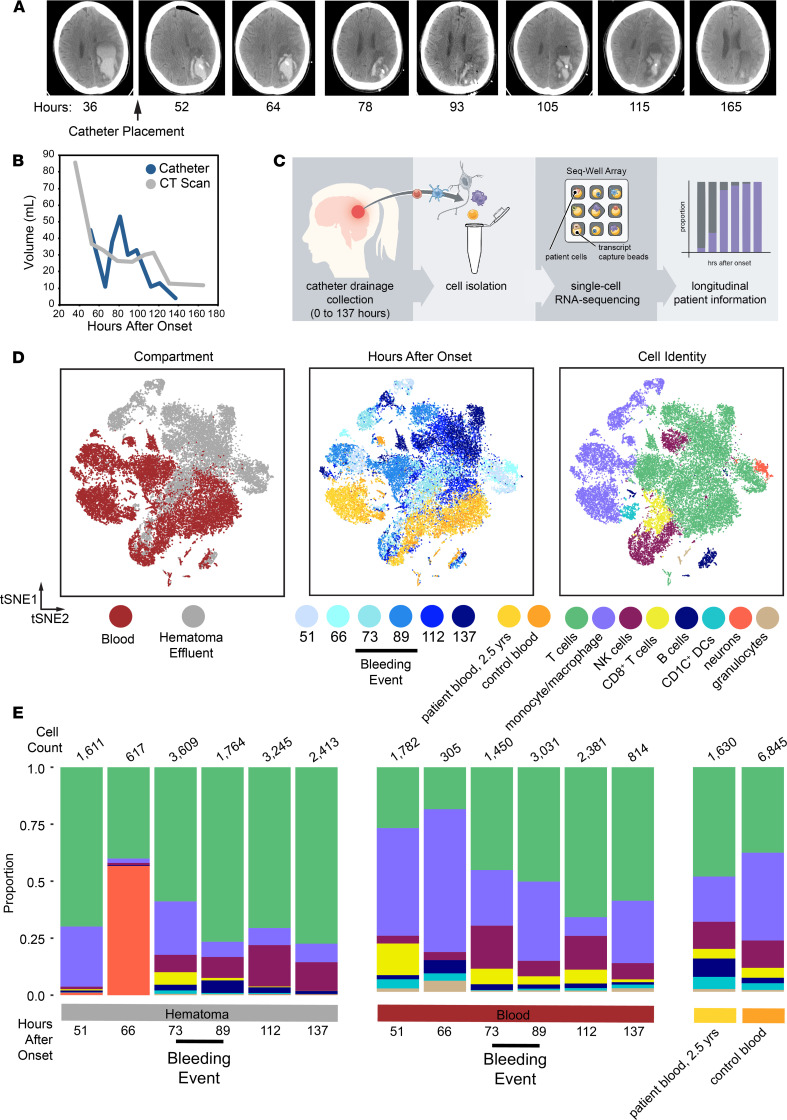
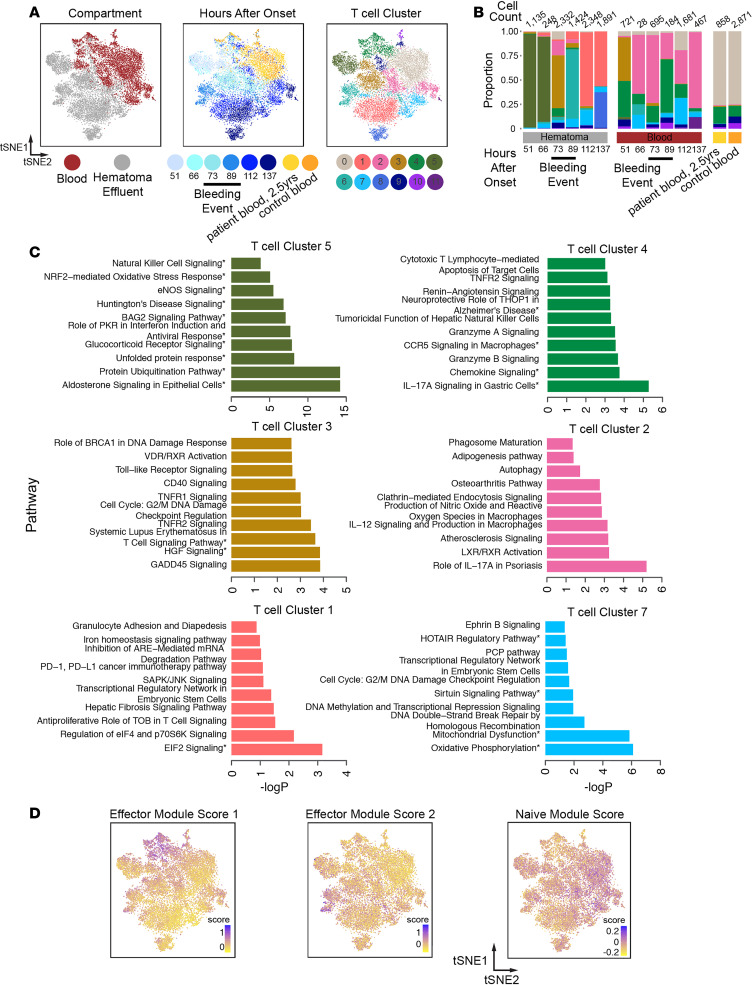
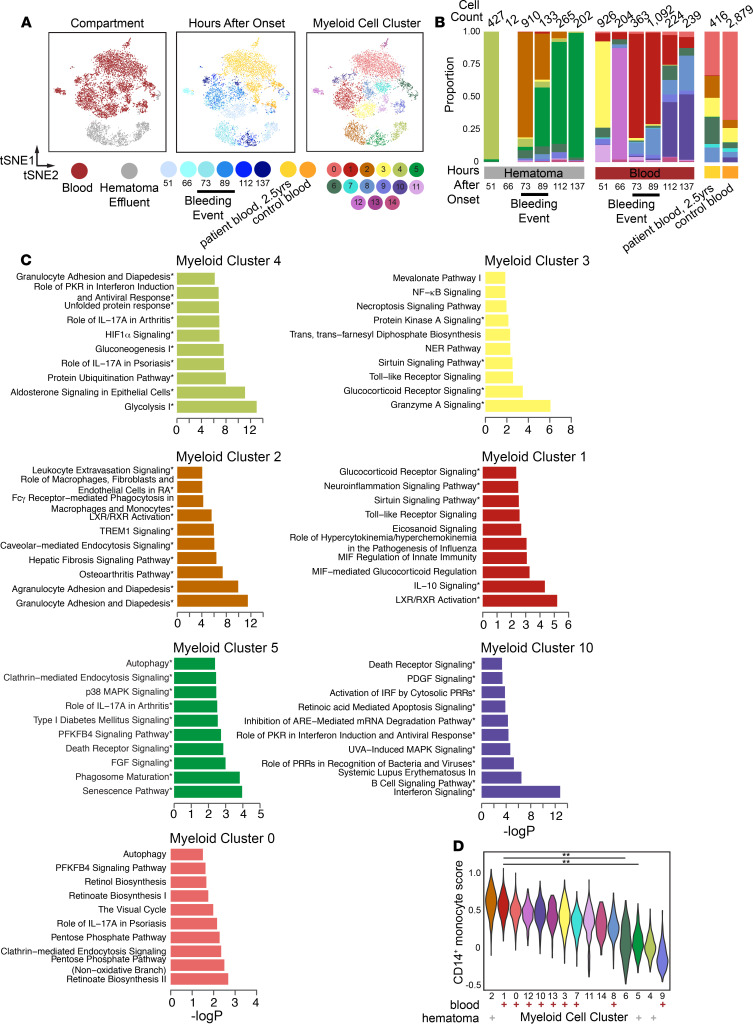
Intracerebral hemorrhage (ICH) is a devastating form of stroke with a high mortality rate and few treatment options. Discovery of therapeutic interventions has been slow given the challenges associated with studying acute injury in the human brain. Inflammation induced by exposure of brain tissue to blood appears to be a major part of brain tissue injury. Here, we longitudinally profiled blood and cerebral hematoma effluent from a patient enrolled in the Minimally Invasive Surgery with Thrombolysis in Intracerebral Hemorrhage Evacuation trial, offering a rare window into the local and systemic immune responses to acute brain injury. Using single-cell RNA-Seq (scRNA-Seq), this is the first report to our knowledge that characterized the local cellular response during ICH in the brain of a living patient at single-cell resolution. Our analysis revealed shifts in the activation states of myeloid and T cells in the brain over time, suggesting that leukocyte responses are dynamically reshaped by the hematoma microenvironment. Interestingly, the patient had an asymptomatic rebleed that our transcriptional data indicated occurred prior to detection by CT scan. This case highlights the rapid immune dynamics in the brain after ICH and suggests that sensitive methods such as scRNA-Seq would enable greater understanding of complex intracerebral events.
脑出血 (ICH) 是一种死亡率高且治疗选择有限的破坏性中风形式。鉴于研究人类大脑急性损伤所面临的挑战,治疗干预措施的发现一直很缓慢。脑组织暴露于血液引起的炎症似乎是脑组织损伤的主要部分。在这里,我们对一名参加微创溶栓脑出血清除试验的患者的血液和脑血肿流出物进行了纵向分析,为急性脑损伤的局部和全身免疫反应提供了一个难得的窗口。通过单细胞 RNA 测序 (scRNA-Seq),这是我们所知的第一个在单细胞分辨率下描述活患者脑出血期间大脑中局部细胞反应的报告。我们的分析显示,随着时间的推移,大脑中的髓样细胞和 T 细胞的激活状态发生了变化,这表明白细胞反应被血肿微环境动态重塑。有趣的是,该患者发生了无症状再出血,我们的转录数据表明,再出血发生在 CT 扫描检测之前。该病例突出了脑出血后大脑中的快速免疫动态,并表明敏感方法(如 scRNA-Seq)将能够更好地理解复杂的颅内事件。