Girona Neuroimmunology and Multiple Sclerosis Unit, Department of Neurology, Dr. Josep Trueta University Hospital, Girona Biomedical Research Institute (IDIBGI), 17007 Girona, Spain.
Medical Sciences Department, Faculty of Medicine, University of Girona, 17004 Girona, Spain.
Cells. 2022 Jun 29;11(13):2058. doi: 10.3390/cells11132058.
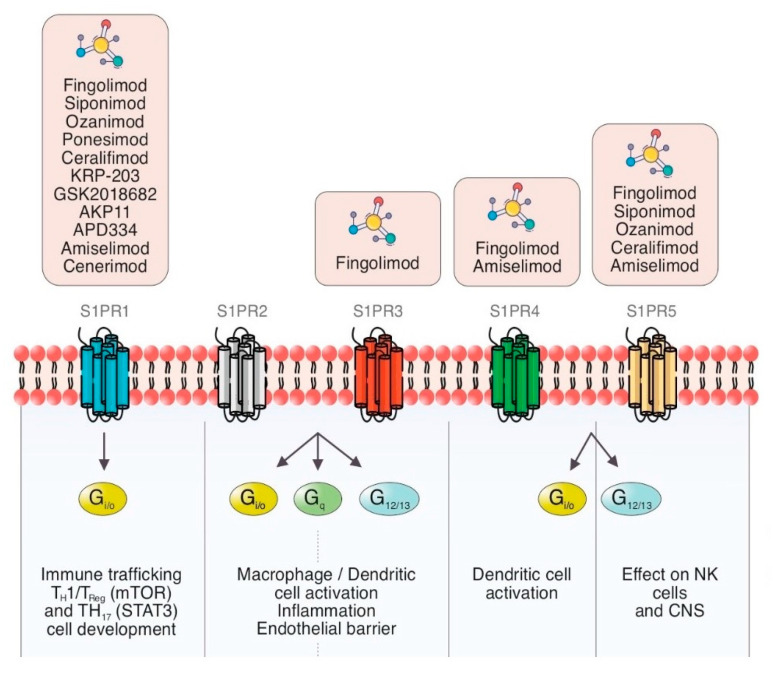
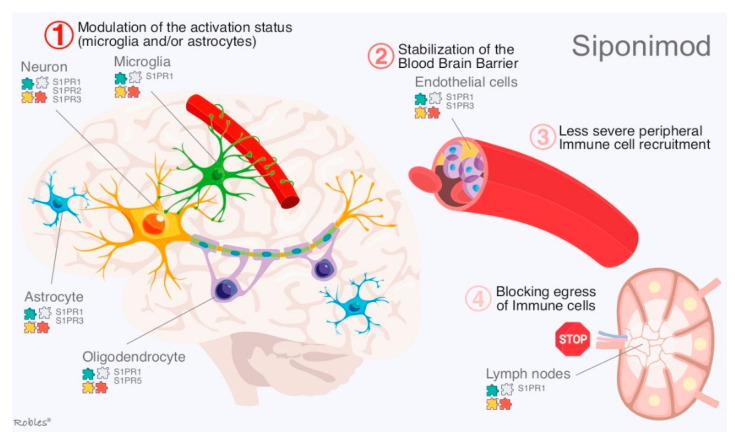
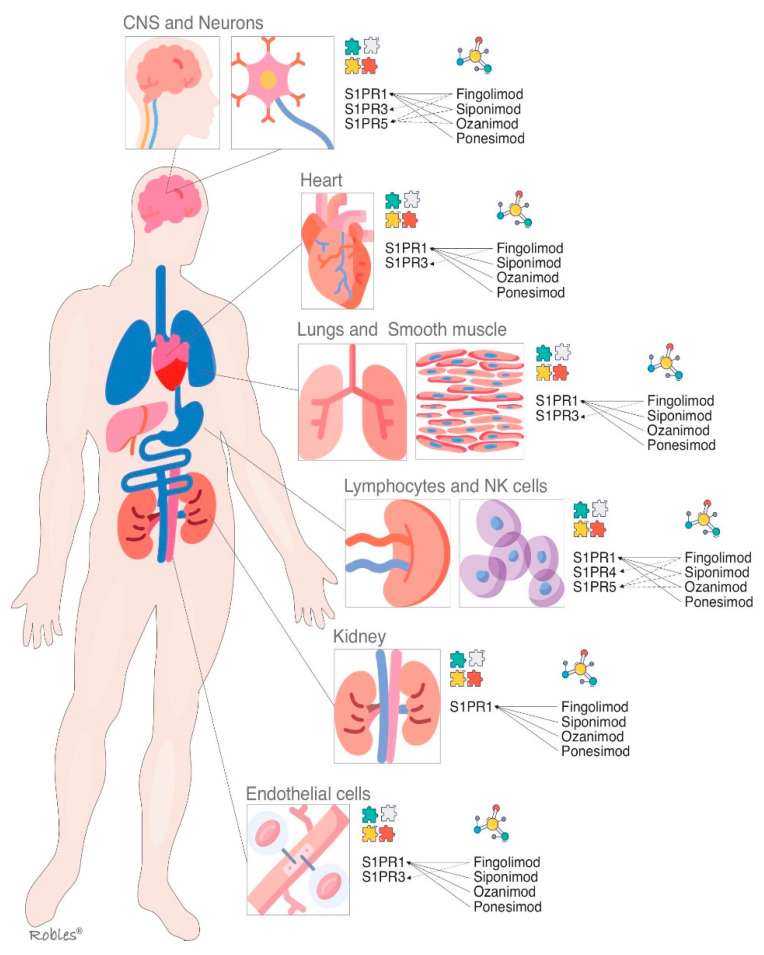
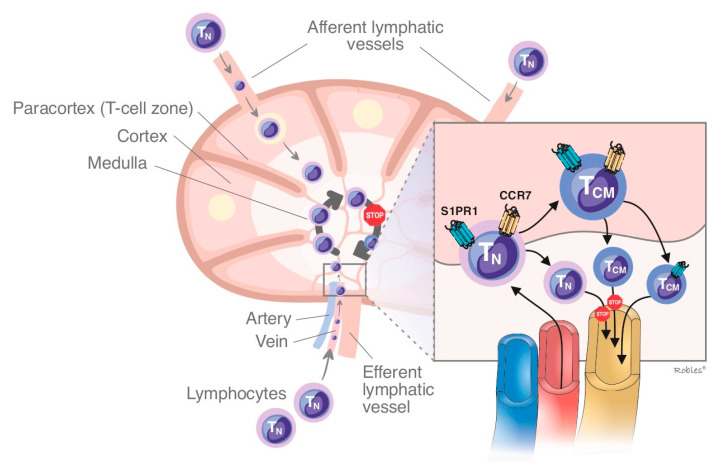
Sphingosine-1-phosphate (S1P) and S1P receptors (S1PR) are bioactive lipid molecules that are ubiquitously expressed in the human body and play an important role in the immune system. S1P-S1PR signaling has been well characterized in immune trafficking and activation in both innate and adaptive immune systems. Despite this knowledge, the full scope in the pathogenesis of autoimmune disorders is not well characterized yet. From the discovery of fingolimod, the first S1P modulator, until siponimod, the new molecule recently approved for the treatment of secondary progressive multiple sclerosis (SPMS), there has been a great advance in understanding the S1P functions and their involvement in immune diseases, including multiple sclerosis (MS). Modulation on S1P is an interesting target for the treatment of various autoimmune disorders. Improved understanding of the mechanism of action of fingolimod has allowed the development of the more selective second-generation S1PR modulators. Subtype 1 of the S1PR (S1PR1) is expressed on the cell surface of lymphocytes, which are known to play a major role in MS pathogenesis. The understanding of S1PR1's role facilitated the development of pharmacological strategies directed to this target, and theoretically reduced the safety concerns derived from the use of fingolimod. A great advance in the MS treatment was achieved in March 2019 when the Food and Drug Association (FDA) approved Siponimod, for both active secondary progressive MS and relapsing-remitting MS. Siponimod became the first oral disease modifying therapy (DMT) specifically approved for active forms of secondary progressive MS. Additionally, for the treatment of relapsing forms of MS, ozanimod was approved by FDA in March 2020. Currently, there are ongoing trials focused on other new-generation S1PR1 modulators. This review approaches the fundamental aspects of the sphingosine phosphate modulators and their main similarities and differences.
鞘氨醇-1-磷酸(S1P)及其受体(S1PR)是生物活性脂质分子,在人体中广泛表达,在免疫系统中发挥重要作用。S1P-S1PR 信号已在固有和适应性免疫系统中的免疫细胞运输和激活中得到很好的描述。尽管有了这些认识,但自身免疫性疾病发病机制的全貌尚未得到很好的描述。从第一个 S1P 调节剂 fingolimod 的发现,到最近批准用于治疗继发进展型多发性硬化症(SPMS)的新型 siponimod,人们对 S1P 功能及其在包括多发性硬化症(MS)在内的免疫性疾病中的作用有了很大的了解。S1P 的调节是治疗各种自身免疫性疾病的一个有趣靶点。对 fingolimod 作用机制的深入了解,使得第二代 S1PR 调节剂的选择性更高。S1PR 的亚型 1(S1PR1)在淋巴细胞的细胞表面表达,淋巴细胞被认为在 MS 发病机制中起主要作用。对 S1PR1 作用的理解促进了针对该靶点的药理学策略的发展,并且理论上降低了使用 fingolimod 所带来的安全性担忧。2019 年 3 月,食品和药物管理局(FDA)批准 siponimod 用于活跃的继发进展型 MS 和复发缓解型 MS,这是 MS 治疗的一大进步。siponimod 成为第一个专门批准用于活跃的继发进展型 MS 的口服疾病修正治疗(DMT)。此外,FDA 于 2020 年 3 月批准了 ozanimod 用于治疗复发型 MS。目前,正在进行针对其他新一代 S1PR1 调节剂的临床试验。本文综述了鞘氨醇磷酸调节剂的基本方面及其主要异同。