Tyshkunova Irina V, Gofman Iosif V, Chukhchin Dmitry G, Malkov Alexey V, Mishanin Alexander I, Golovkin Alexey S, Pavlova Ekaterina N, Poshina Daria N, Skorik Yury A
Institute of Macromolecular Compounds of the Russian Academy of Sciences, Bolshoy V.O. 31, 199004 St. Petersburg, Russia.
Department of Biology, Ecology and Biotechnology, Northern (Arctic) Federal University Named after M.V. Lomonosov, Severnaya Dvina Emb. 17, 163002 Arkhangelsk, Russia.
Polymers (Basel). 2022 Jun 30;14(13):2694. doi: 10.3390/polym14132694.
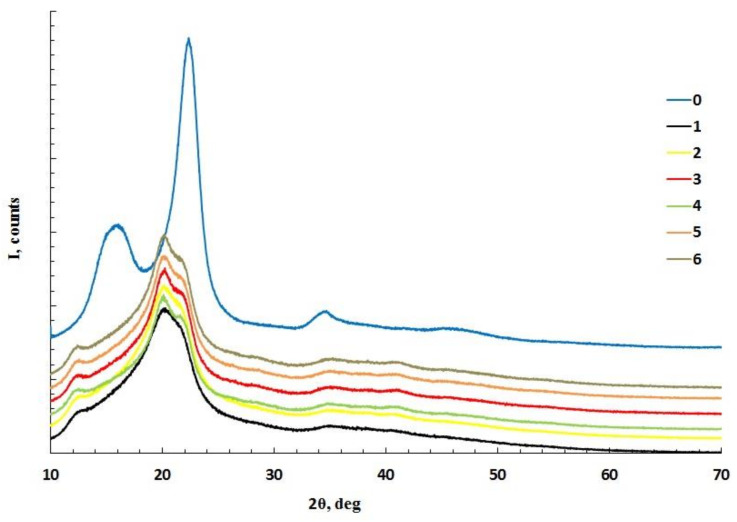
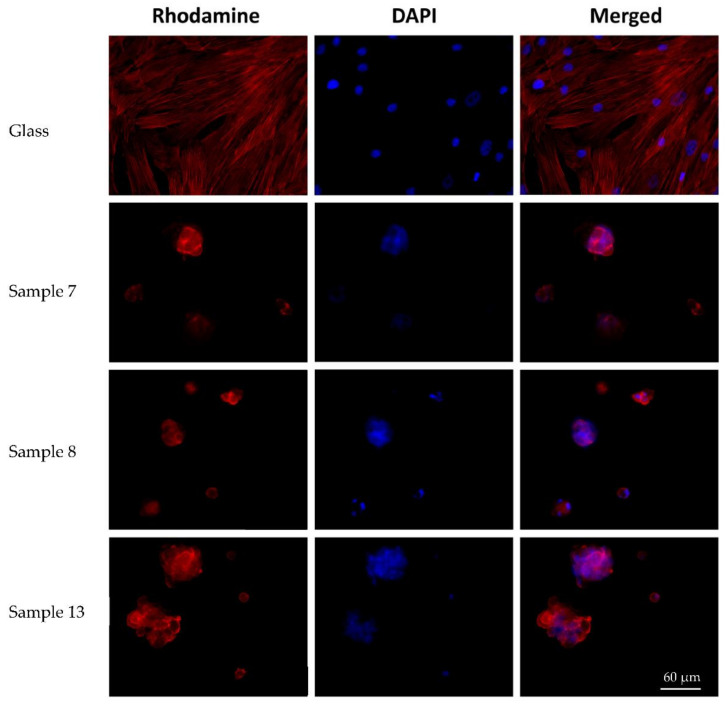
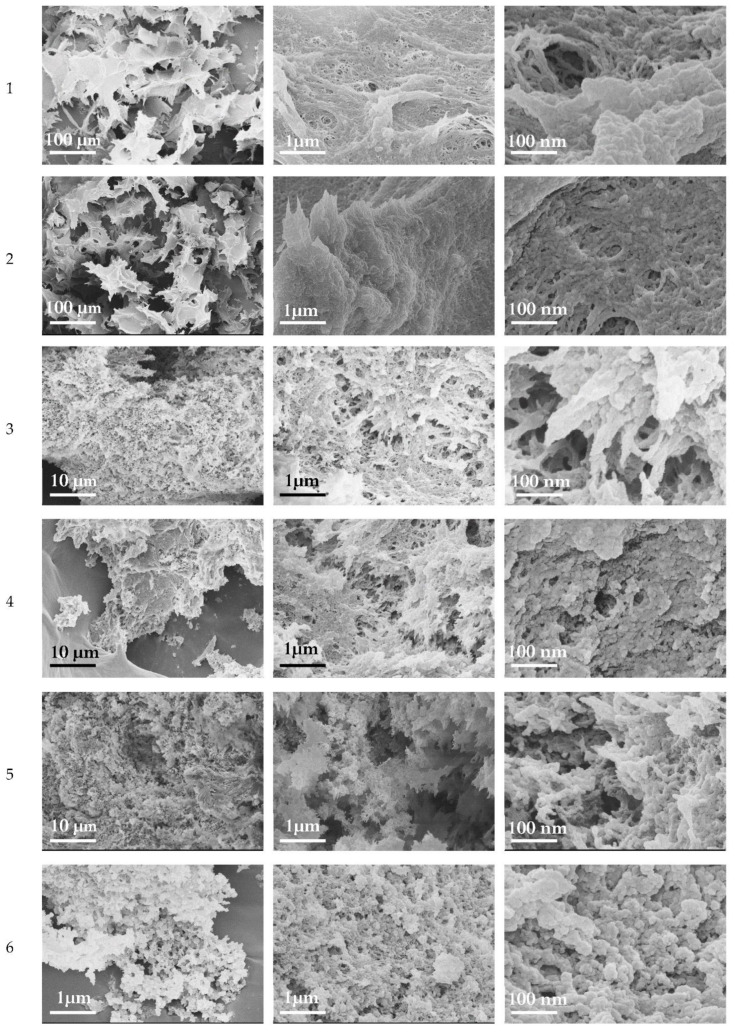
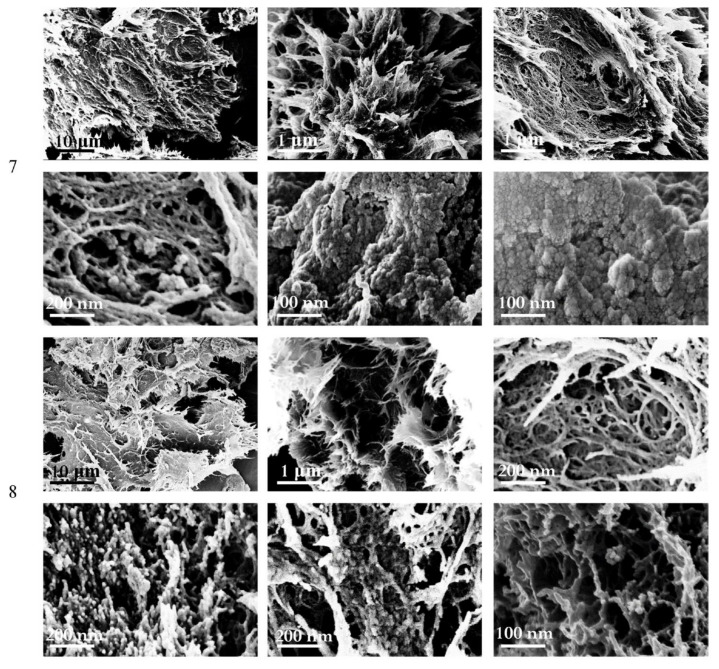
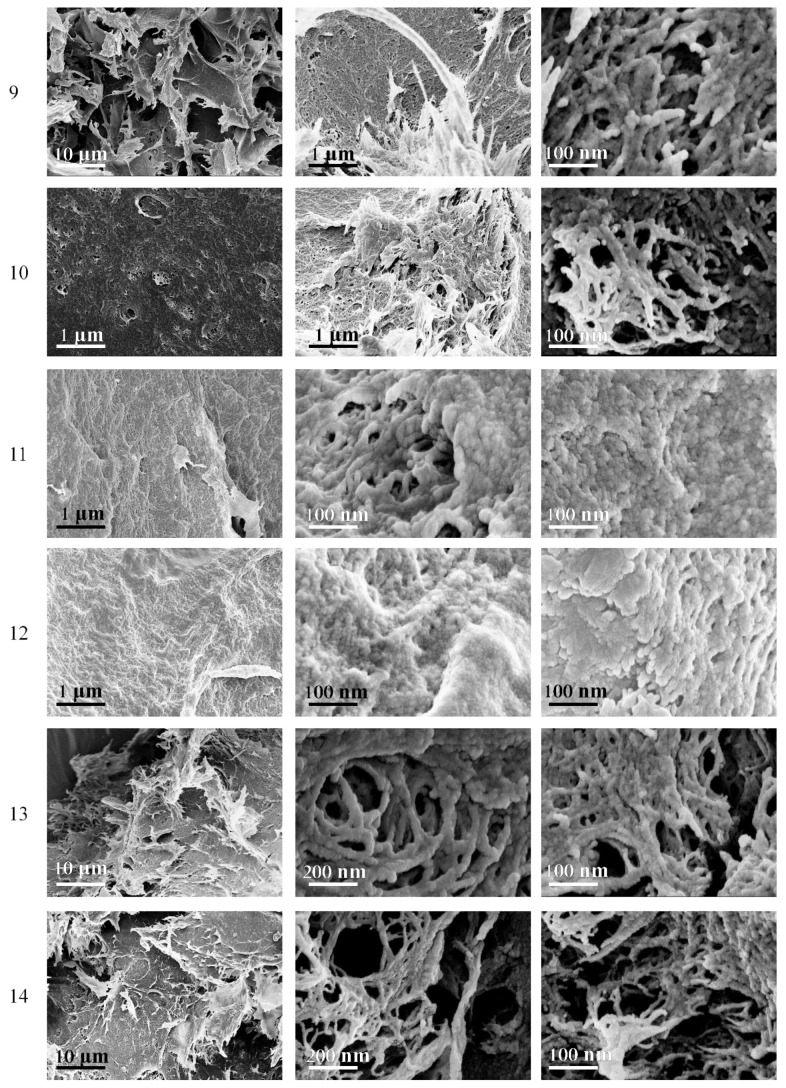
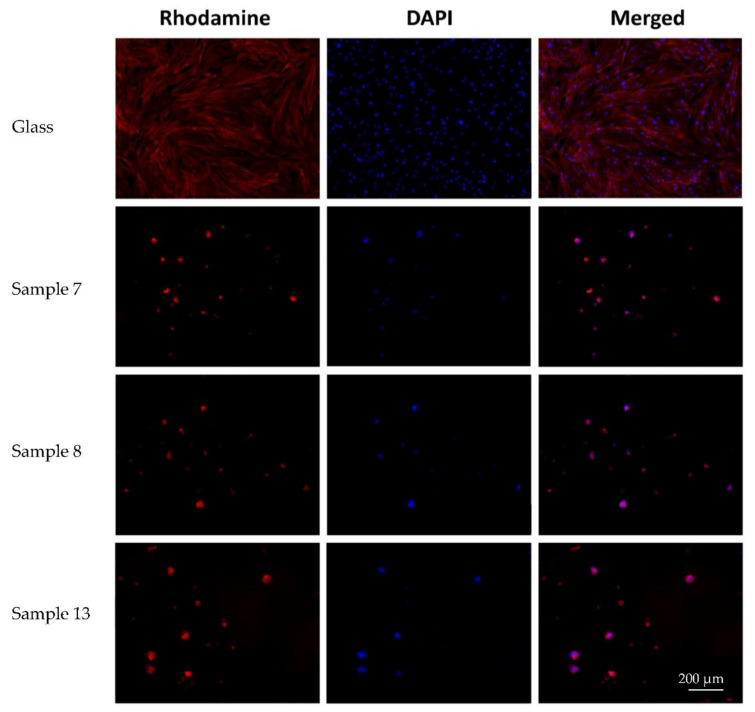
Polysaccharide-based cryogels are promising materials for producing scaffolds in tissue engineering. In this work, we obtained ultralight (0.046-0.162 g/cm) and highly porous (88.2-96.7%) cryogels with a complex hierarchical morphology by dissolving cellulose in phosphoric acid, with subsequent regeneration and freeze-drying. The effect of the cellulose dissolution temperature on phosphoric acid and the effect of the freezing time of cellulose hydrogels on the structure and properties of the obtained cryogels were studied. It has been shown that prolonged freezing leads to the formation of denser and stronger cryogels with a network structure. The incorporation of chitin nanowhiskers led to a threefold increase in the strength of the cellulose cryogels. The X-ray diffraction method showed that the regenerated cellulose was mostly amorphous, with a crystallinity of 26.8-28.4% in the structure of cellulose II. Cellulose cryogels with chitin nanowhiskers demonstrated better biocompatibility with mesenchymal stem cells compared to the normal cellulose cryogels.
基于多糖的冷冻凝胶是用于组织工程中生产支架的有前景的材料。在这项工作中,我们通过将纤维素溶解在磷酸中,随后进行再生和冷冻干燥,获得了具有复杂分级形态的超轻(0.046 - 0.162 g/cm)和高度多孔(88.2 - 96.7%)的冷冻凝胶。研究了纤维素溶解温度对磷酸的影响以及纤维素水凝胶的冷冻时间对所得冷冻凝胶结构和性能的影响。结果表明,延长冷冻时间会导致形成具有网络结构的更致密、更强的冷冻凝胶。几丁质纳米晶须的加入使纤维素冷冻凝胶的强度提高了三倍。X射线衍射方法表明,再生纤维素大多为无定形,在纤维素II结构中的结晶度为26.8 - 28.4%。与普通纤维素冷冻凝胶相比,含有几丁质纳米晶须的纤维素冷冻凝胶对间充质干细胞表现出更好的生物相容性。