Department of Molecular Medicine and Medical Biotechnology, University of Naples Federico II, Italy.
Institute of Experimental Endocrinology and Oncology (IEOS), CNR, Naples, Italy.
Mol Oncol. 2022 Aug;16(16):2959-2980. doi: 10.1002/1878-0261.13280. Epub 2022 Jul 20.
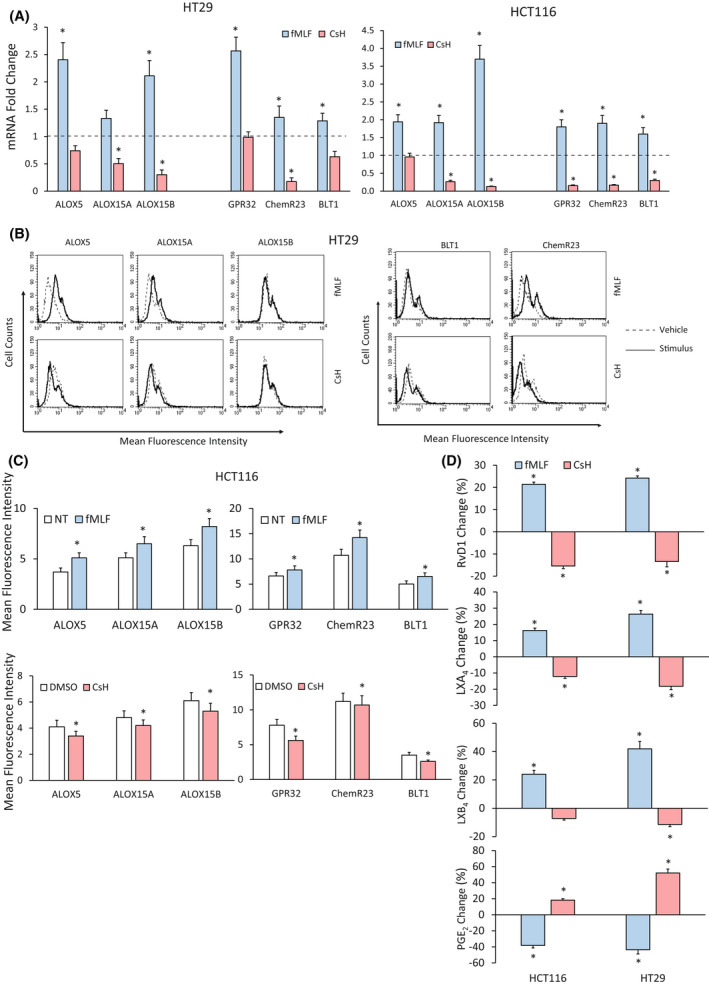
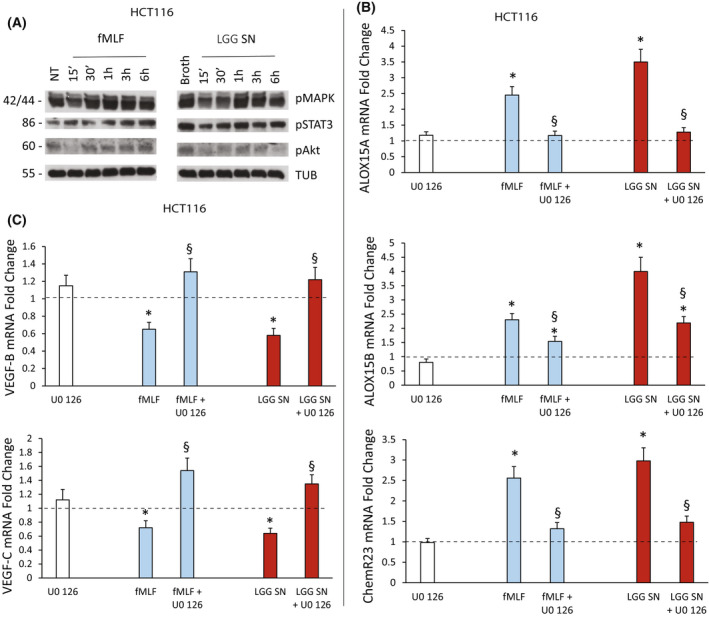
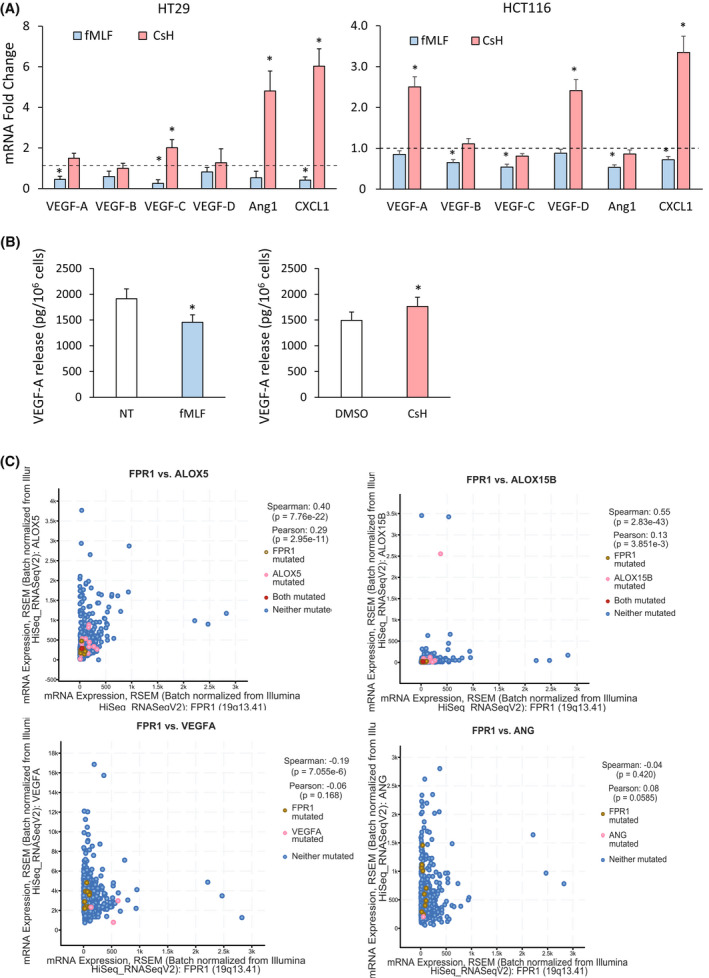
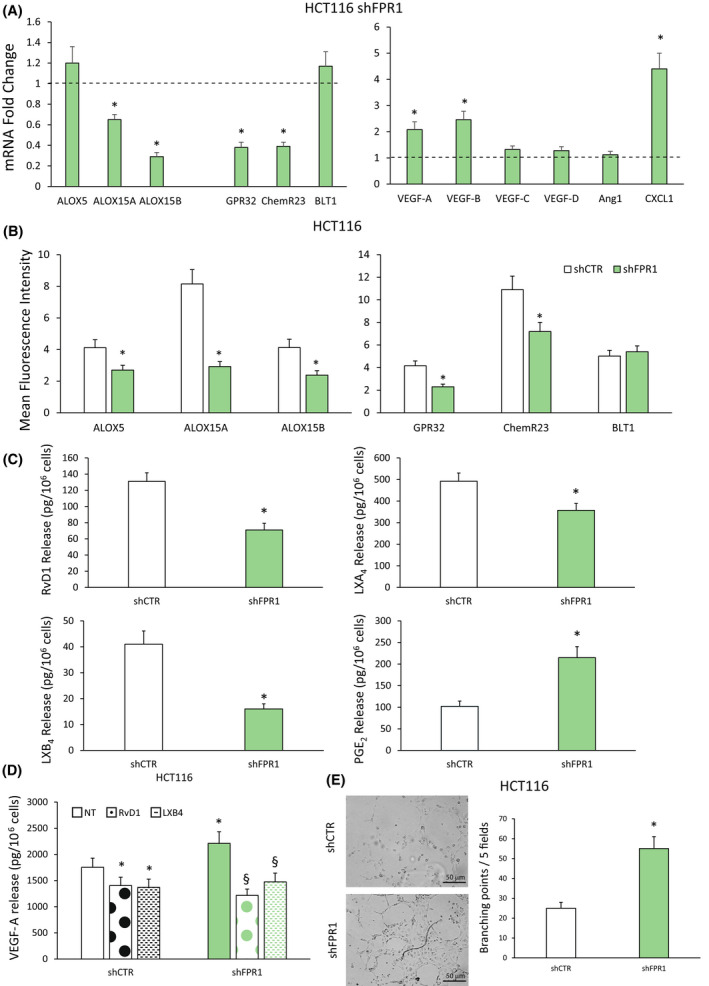
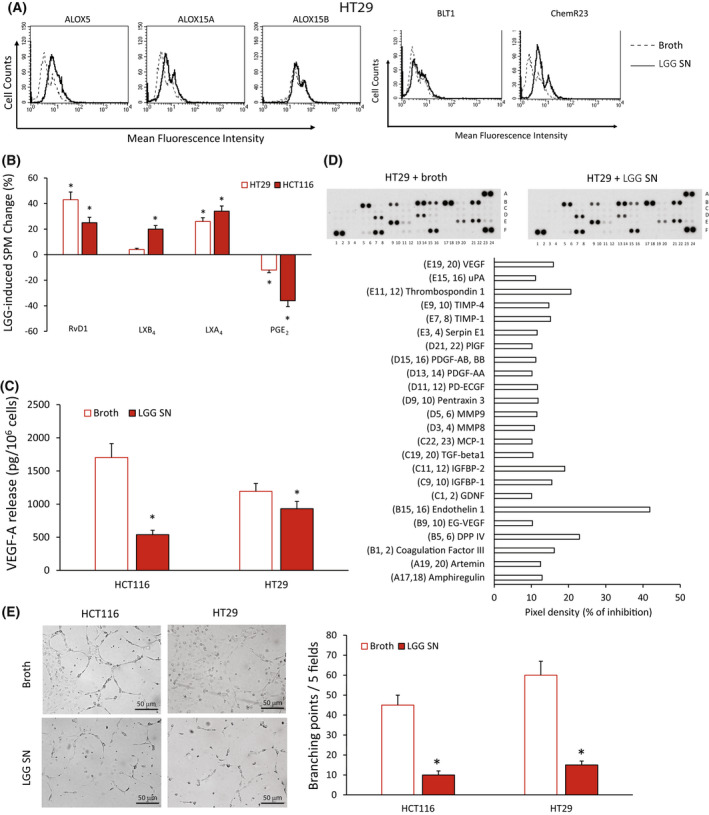
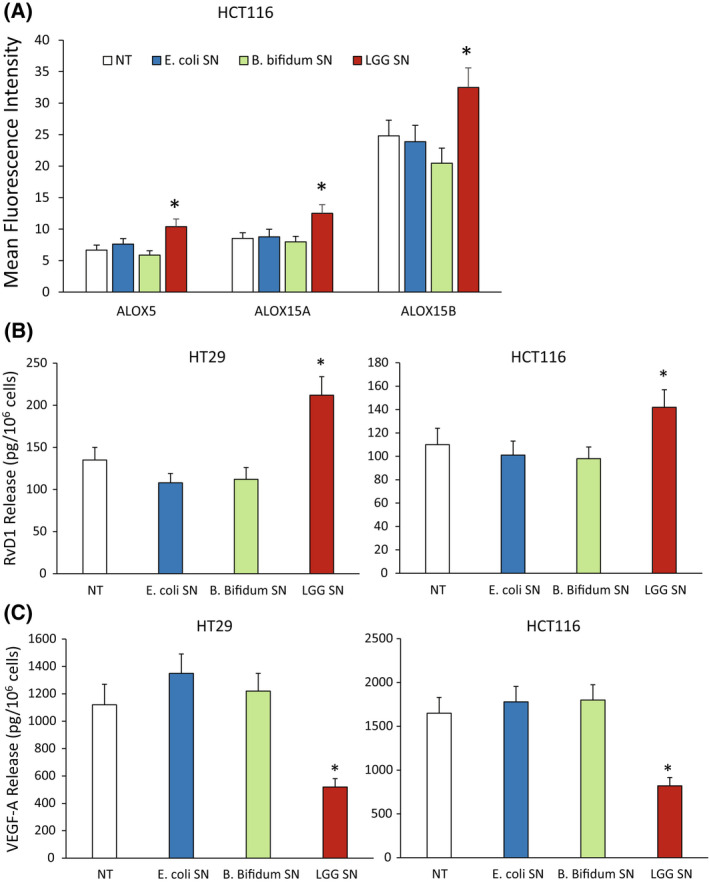
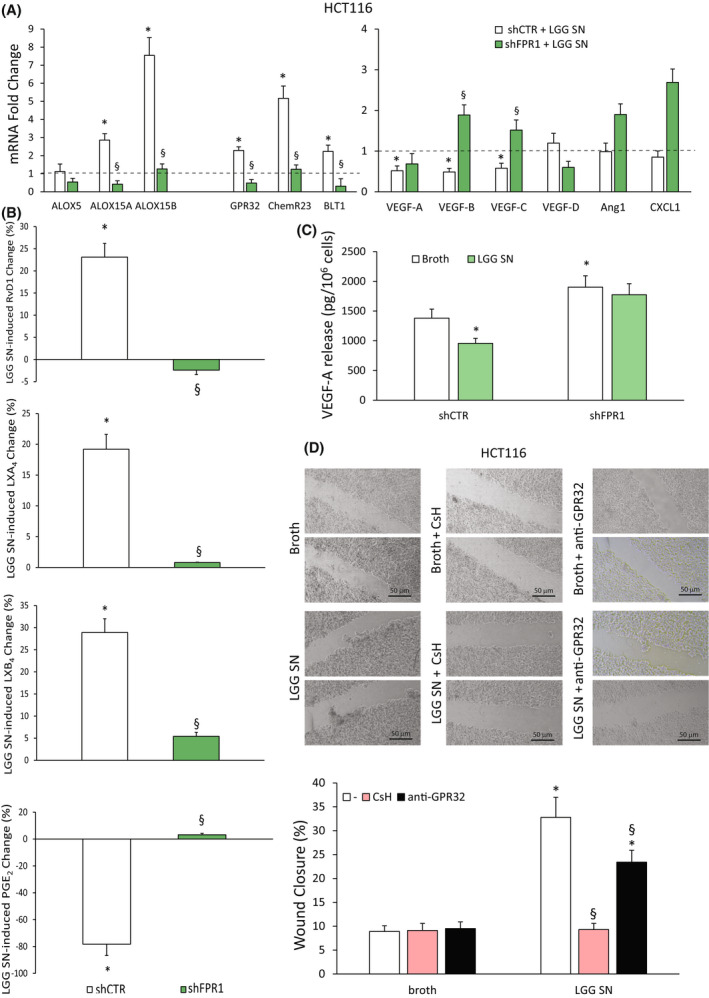
Formyl peptide receptors (FPR1, FPR2 and FPR3) are innate immune sensors of pathogen and commensal bacteria and have a role in colonic mucosa homeostasis. We identified FPR1 as a tumour suppressor in gastric cancer cells due to its ability to sustain an inflammation resolution response with antiangiogenic potential. Here, we investigate whether FPR1 exerts similar functions in colorectal carcinoma (CRC) cells. Since it has been shown that the commensal bacterium Lactobacillus rhamnosus GG (LGG) can promote intestinal epithelial homeostasis through FPR1, we explored the possibility that it could induce proresolving and antiangiogenic effects in CRC cells. We demonstrated that pharmacologic inhibition or genetic deletion of FPR1 in CRC cells caused a reduction of proresolving mediators and a consequent upregulation of angiogenic factors. The activation of FPR1 mediates opposite effects. Proresolving, antiangiogenic and homeostatic functions were also observed upon treatment of CRC cells with supernatant of LGG culture, but not of other lactic acid or nonprobiotic bacteria (i.e. Bifidobacterium bifidum or Escherichia coli). These activities of LGG are dependent on FPR1 expression and on the subsequent MAPK signalling activation. Thus, the innate immune receptor FPR1 could be a regulator of the balance between microbiota, inflammation and cancer in CRC models.
形式肽受体(FPR1、FPR2 和 FPR3)是病原体和共生菌的先天免疫传感器,在结肠黏膜稳态中发挥作用。我们发现 FPR1 是胃癌细胞中的肿瘤抑制因子,因为它能够维持具有抗血管生成潜力的炎症消退反应。在这里,我们研究 FPR1 是否在结直肠癌(CRC)细胞中发挥类似的功能。由于共生菌鼠李糖乳杆菌 GG(LGG)可以通过 FPR1 促进肠道上皮细胞稳态,我们探索了它是否可以在 CRC 细胞中诱导促解决和抗血管生成作用的可能性。我们证明,CRC 细胞中 FPR1 的药理学抑制或基因缺失导致促解决介质减少,随后血管生成因子上调。FPR1 的激活介导相反的作用。LGG 处理 CRC 细胞后还观察到促解决、抗血管生成和稳态功能,但乳酸或非益生菌细菌(即双歧杆菌或大肠杆菌)则没有。LGG 的这些活性依赖于 FPR1 表达和随后的 MAPK 信号激活。因此,先天免疫受体 FPR1 可能是 CRC 模型中微生物群、炎症和癌症之间平衡的调节剂。