Division of Dental Safety and System Management, Tohoku University Hospital, Sendai, Miyagi, Japan; Liaison Centre for Innovative Dentistry, Tohoku University Graduate School of Dentistry, Sendai, Miyagi, Japan.
Division of Dental Safety and System Management, Tohoku University Hospital, Sendai, Miyagi, Japan; Division of Molecular and Regenerative Prosthodontics, Tohoku University Graduate School of Dentistry, Sendai, Miyagi, Japan.
Int Dent J. 2023 Feb;73(1):114-120. doi: 10.1016/j.identj.2022.04.009. Epub 2022 Jul 7.
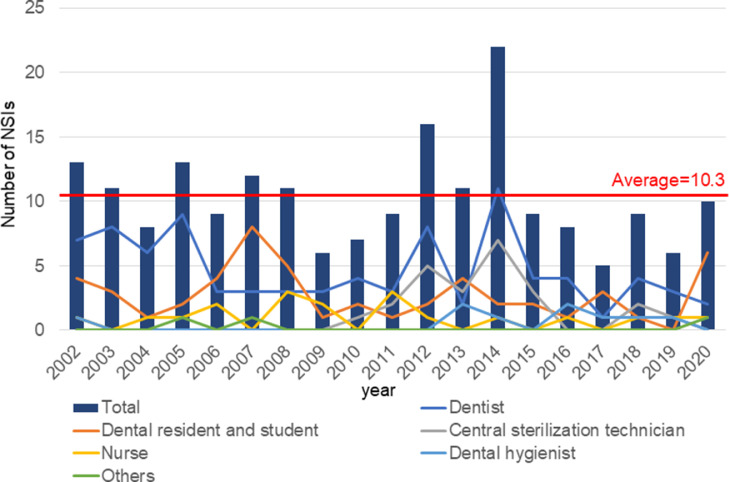
Needlestick and sharps injuries (NSIs) are serious problems for dental health care workers (DHCWs) because they are at risk for occupational blood-borne infections. In this study, risk factors for NSIs in DHCWs at Tohoku University Hospital (TUH) in Japan over 19 years were analysed.
NSI data of DHCWs at TUH from April 2002 to March 2020 were collected from the Exposure Prevention Information Network (EPINet) and statistically analysed.
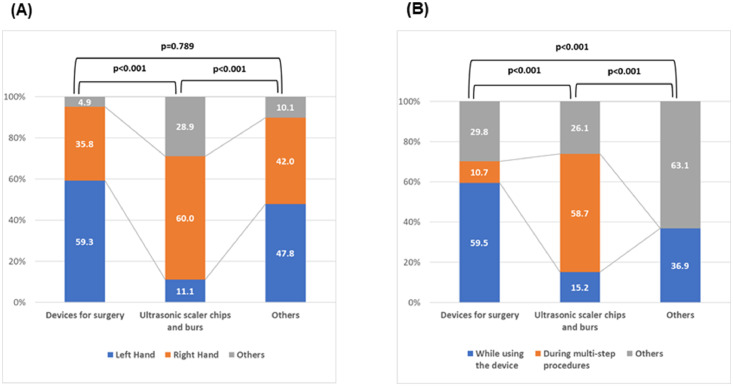
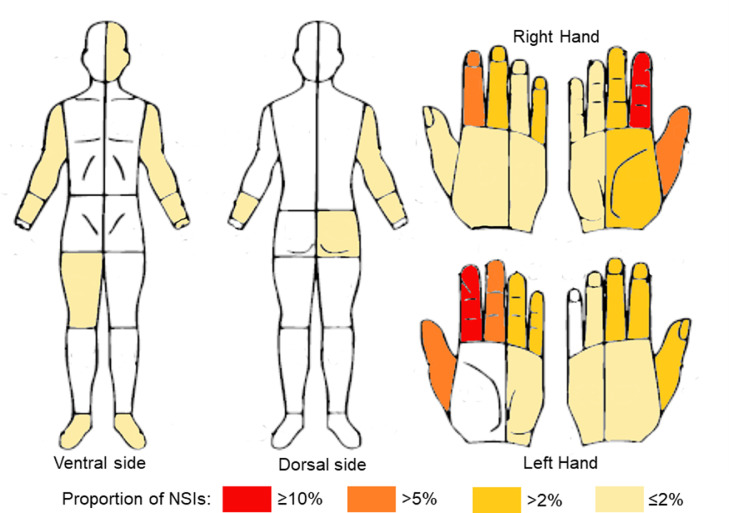
A total of 195 NSIs occurred during the 19-year study period. Approximately 58.5% of NSIs occurred in DHCWs with less than 5 years of experience. Injection needles were the most frequent cause of NSIs (19.0%) followed by suture needles (13.3%) and ultrasonic scaler chips (12.8%). Needle injuries occurred mainly on the left hand, whereas ultrasonic scaler chip and bur injuries occurred on the right hand and other body parts whilst DHCWs were placing the instruments back on the dental unit hanging holder without removing the sharps. NSIs from other instruments primarily occurred on both hands and foot insteps during cleanup. No case of occupational blood-borne infection caused by NSIs was observed during the study period at TUH.
NSIs occurred in DHCWs with less experience, and there were associations between the instruments, timing of use, and NSI site. EPINet was considered a valuable tool for monitoring NSIs in order to develop future strategies for minimising NSIs.
针刺和锐器伤(NSI)是牙科医护人员(DHCWs)面临的严重问题,因为他们面临职业性血源感染的风险。在本研究中,分析了日本东北大学医院(TUH)超过 19 年来 DHCWs 发生 NSI 的危险因素。
从 2002 年 4 月至 2020 年 3 月,从暴露预防信息网络(EPINet)收集了 TUH 的 DHCWs 的 NSI 数据,并进行了统计分析。
在 19 年的研究期间,共发生 195 例 NSI。大约 58.5%的 NSI 发生在工作经验不足 5 年的 DHCWs 中。注射针是 NSI 最常见的原因(19.0%),其次是缝合针(13.3%)和超声洁牙机片(12.8%)。针伤主要发生在左手,而超声洁牙机片和牙钻伤发生在右手和其他身体部位,当 DHCWs 将器械放回牙科单元悬挂架上而不清除锐器时。其他器械造成的 NSI 主要发生在双手和脚背在清理时。在 TUH 研究期间,未观察到因 NSI 导致的职业性血源感染病例。
经验不足的 DHCWs 发生了 NSI,仪器、使用时机和 NSI 部位之间存在关联。EPINet 被认为是监测 NSI 的有价值的工具,以便制定未来减少 NSI 的策略。