Clinical Laboratory of Integrative Medicine, The First Affiliated Hospital of Dalian Medical University, Dalian, China.
College of Integrative Medicine, Dalian Medical University, Dalian, China.
Front Cell Infect Microbiol. 2022 Jun 22;12:838340. doi: 10.3389/fcimb.2022.838340. eCollection 2022.
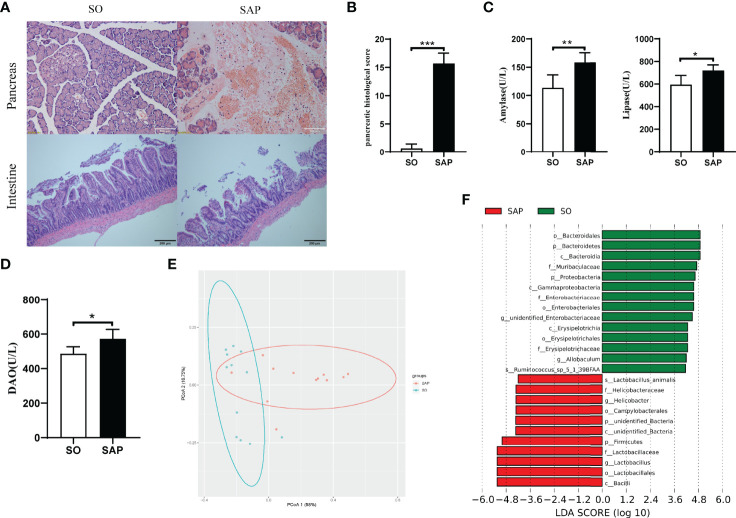
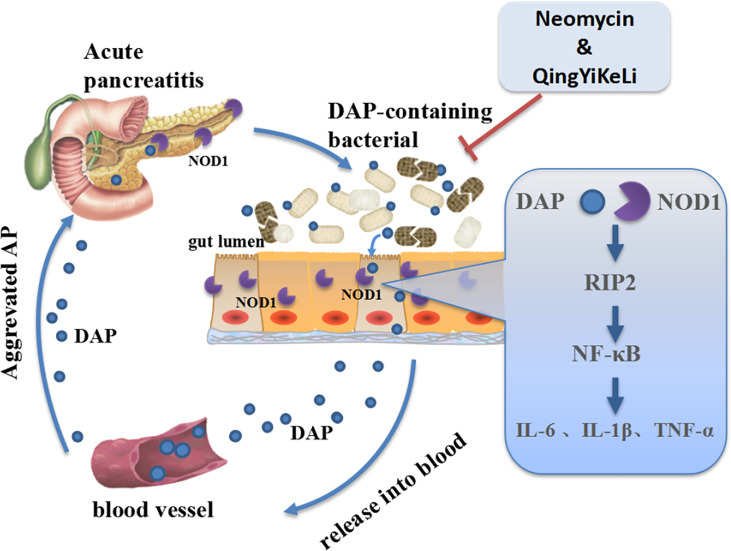
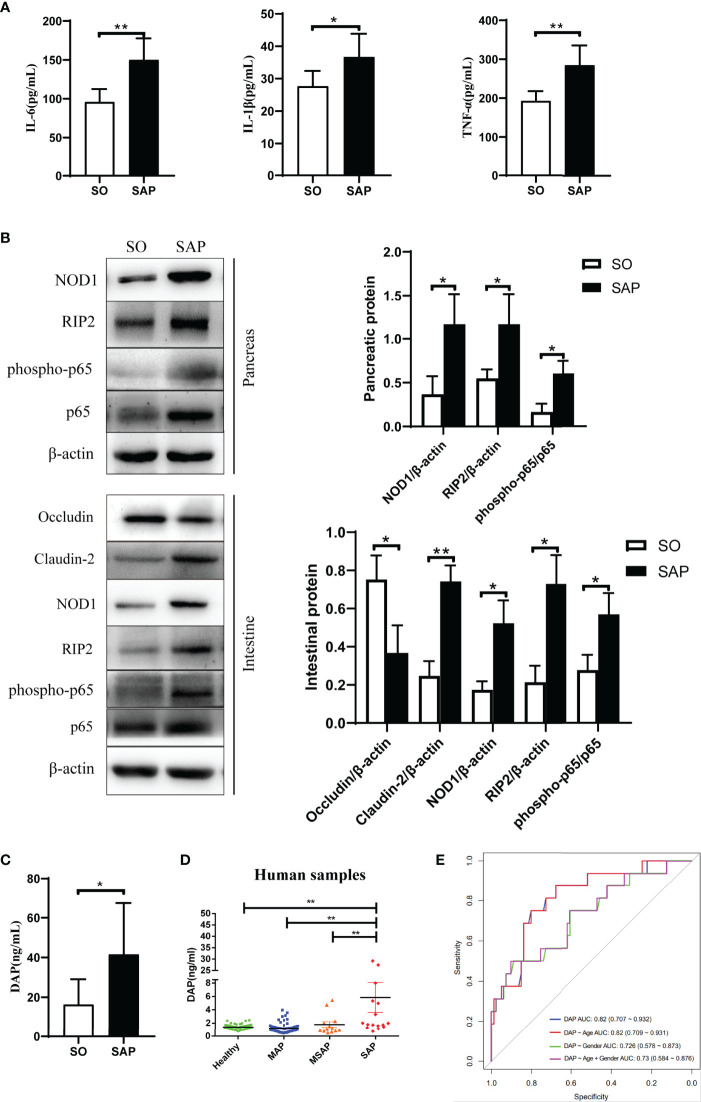
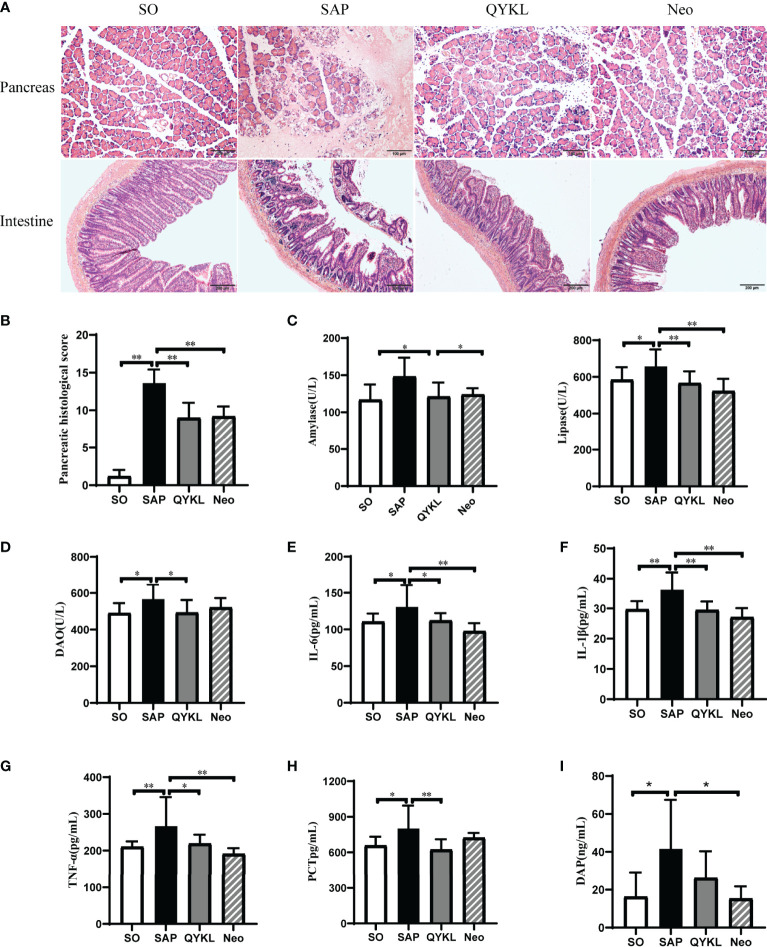
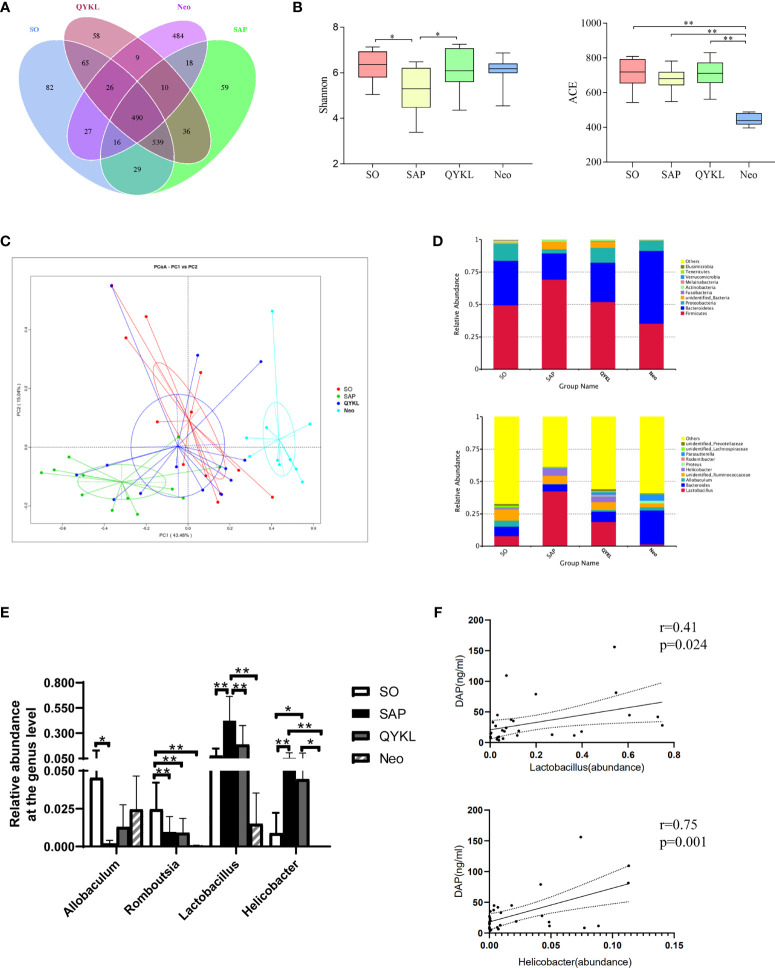
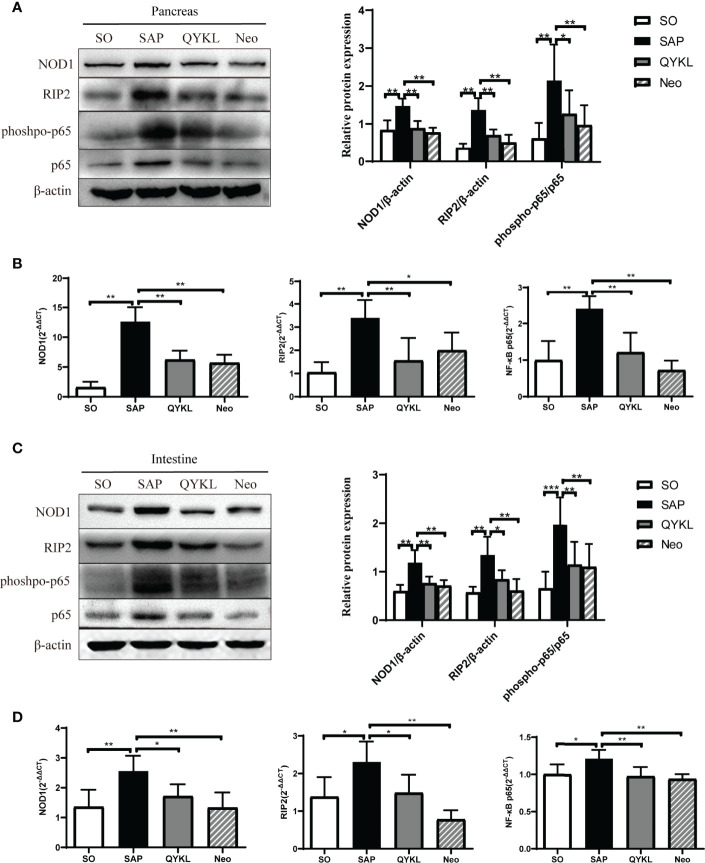
Impaired intestinal barrier function and gut microbiota dysbiosis are believed to be related to exacerbation of acute pancreatitis (AP). As a bacterial cell wall peptidoglycan component, diaminopimelic acid (DAP) is a specific ligand of NOD1 that regulates the NOD1/RIP2/NF-kB signaling pathway. Here, we investigated the role of DAP in the crosstalk between the gut microbiota and pancreas during the occurrence of AP. Upregulation of NOD1/RIP2/NF-kB and elevated serum DAP levels were found in severe AP (SAP) model rats. The accumulation of DAP in SAP patients corroborated its ability to serve as an indicator of disease severity. Subsequently, SAP rats were treated with oral administration of the traditional Chinese medicine Qingyi Keli (QYKL) as well as neomycin, which can widely eliminate DAP-containing bacteria. Both QYKL and neomycin intervention ameliorated intestinal and pancreatic damage and systemic inflammation in SAP rats. Through 16S rDNA sequencing, we found that QYKL could rehabilitate the gut microbiota structure and selectively inhibit the overgrowth of enteric bacteria, such as Helicobacter and Lactobacillus, in SAP rats without affecting some protective strains, including Romboutsia and Allobaculum. Interestingly, we demonstrated that the decrease in serum DAP was accompanied by suppression of the NOD1/RIP2/NF-kB signaling pathway in both the intestine and pancreas of the two intervention groups. Taken together, these results suggested that the gut microbiota-DAP-NOD1/RIP2 signaling pathway might play a critical role in the progression of AP and that SAP could be alleviated intervention in the signaling pathway. Our work provides new potential early warning indicators of SAP and targets for intervention.
肠屏障功能障碍和肠道微生物失调被认为与急性胰腺炎(AP)的恶化有关。二氨基庚二酸(DAP)作为细菌细胞壁肽聚糖的组成部分,是 NOD1 的特异性配体,调节 NOD1/RIP2/NF-κB 信号通路。在这里,我们研究了 DAP 在 AP 发生过程中肠道微生物群与胰腺之间相互作用中的作用。在重症 AP(SAP)模型大鼠中发现 NOD1/RIP2/NF-κB 上调和血清 DAP 水平升高。SAP 患者中 DAP 的积累证实了它作为疾病严重程度指标的能力。随后,SAP 大鼠接受口服中药清胰颗粒(QYKL)和新霉素治疗,新霉素可广泛消除含 DAP 的细菌。QYKL 和新霉素干预均改善了 SAP 大鼠的肠和胰腺损伤以及全身炎症。通过 16S rDNA 测序,我们发现 QYKL 可以恢复肠道微生物群结构,并选择性抑制 SAP 大鼠肠道中肠杆菌(如幽门螺杆菌和乳杆菌)的过度生长,而不影响一些保护性菌株,包括 Romboutsia 和 Allobaculum。有趣的是,我们证明了血清 DAP 的减少伴随着两种干预组的肠道和胰腺中 NOD1/RIP2/NF-κB 信号通路的抑制。综上所述,这些结果表明,肠道微生物群-DAP-NOD1/RIP2 信号通路可能在 AP 的进展中起关键作用,SAP 可以通过干预该信号通路得到缓解。我们的工作为 SAP 的新的潜在早期预警指标和干预靶点提供了依据。