Ke Yuan-Dun, Huang Ying-Wen, Viswanath Kotapati Kasi, Hu Chung-Chi, Yeh Chuan-Ming, Mitsuda Nobutaka, Lin Na-Sheng, Hsu Yau-Heiu
Graduate Institute of Biotechnology, National Chung Hsing University, Taichung, Taiwan.
Advanced Plant Biotechnology Center, National Chung Hsing University, Taichung, Taiwan.
Front Plant Sci. 2022 Jun 23;13:924482. doi: 10.3389/fpls.2022.924482. eCollection 2022.
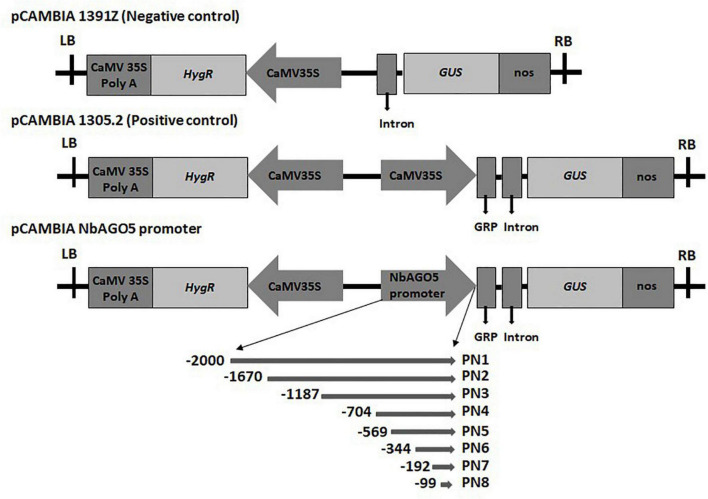
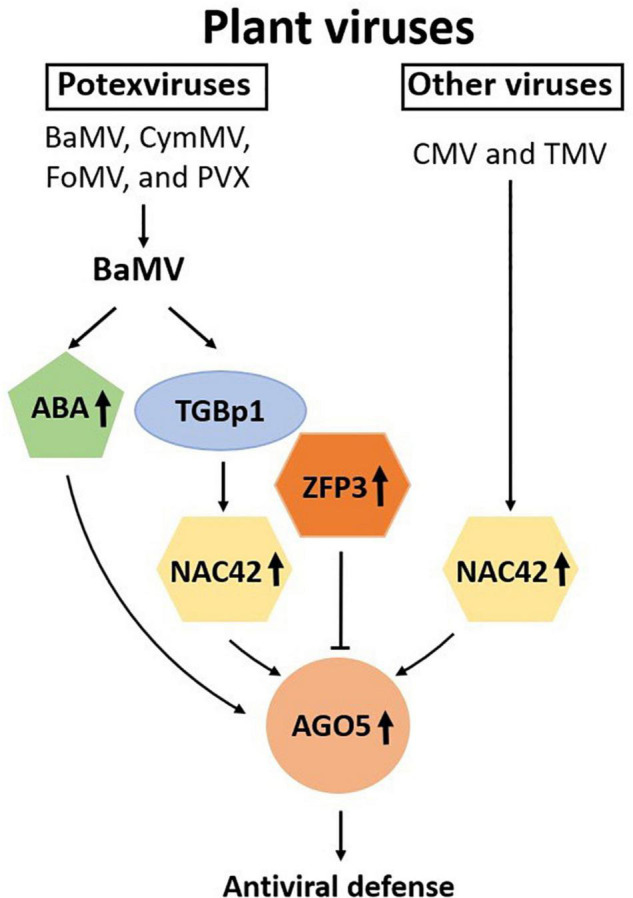
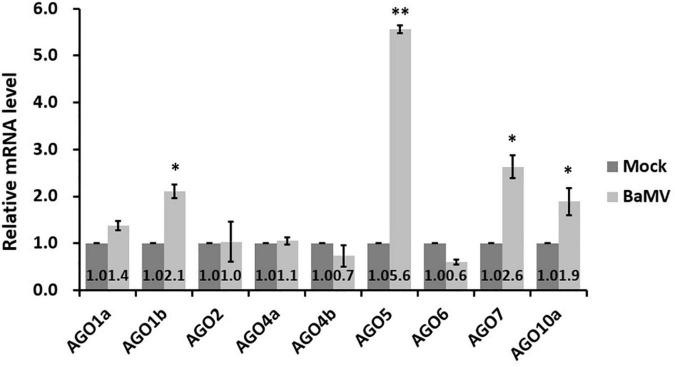
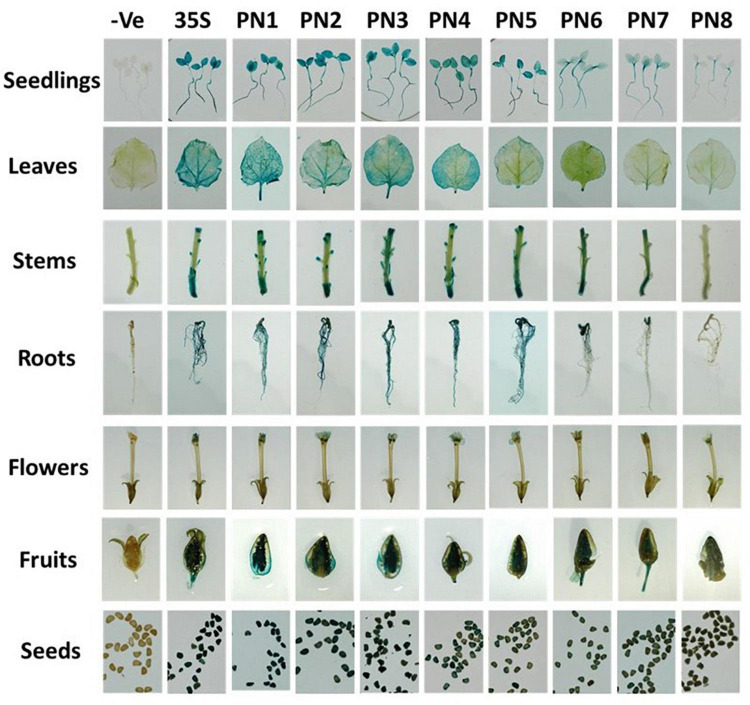
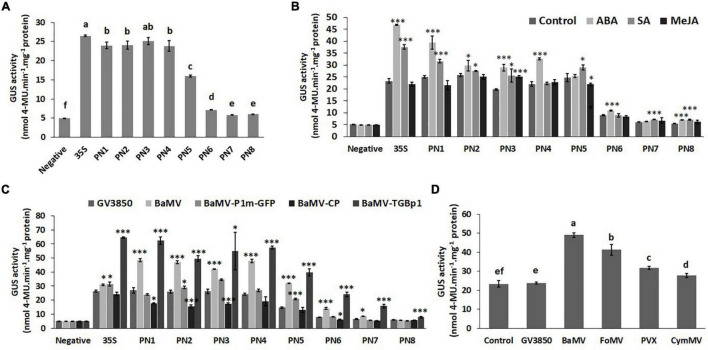
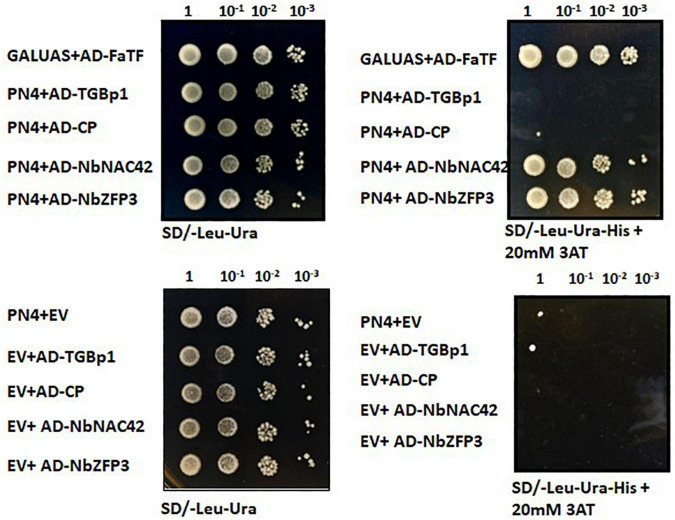
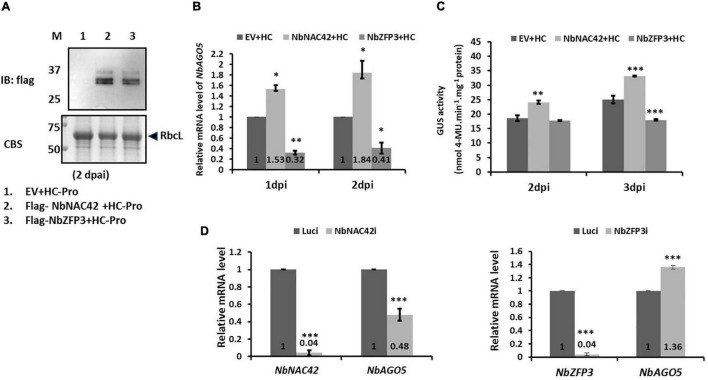
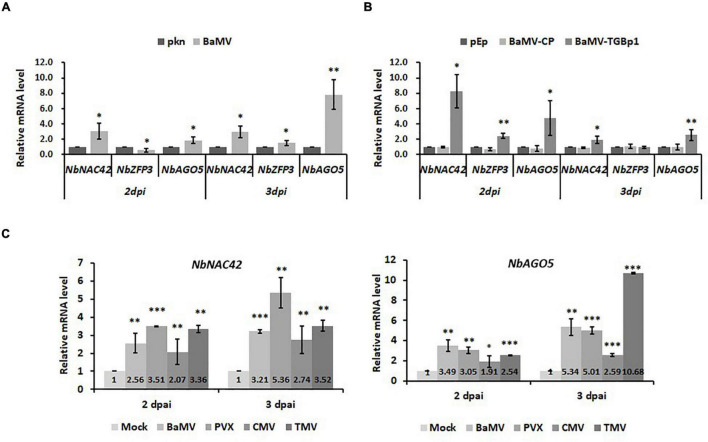
Plant argonautes (AGOs) play important roles in the defense responses against viruses. The expression of gene () is highly induced by (BaMV) infection; however, the underlying mechanisms remain elusive. In this study, we have analyzed the potential promoter activities of and its interactions with viral proteins by using a 2,000 bp fragment, designated as PN1, upstream to the translation initiation of PN1 and seven serial 5'-deletion mutants (PN2-PN8) were fused with a β-glucuronidase (GUS) reporter and introduced into the genome by -mediated transformation for further characterization. It was found that PN4-GUS transgenic plants were able to drive strong GUS expression in the whole plant. In the virus infection tests, the GUS activity was strongly induced in PN4-GUS transgenic plants after being challenged with potexviruses. Infiltration of the transgenic plants individually with BaMV coat protein (CP) or triple gene block protein 1 (TGBp1) revealed that only TGBp1 was crucial for inducing the promoter. To identify the factors responsible for controlling the activity of the promoter, we employed yeast one-hybrid screening on a transcription factor cDNA library. The result showed that NbNAC42 and NbZFP3 could directly bind the 704 bp promoter regions of . By using overexpressing and virus-induced gene silencing techniques, we found that NbNAC42 and NbZFP3 regulated and downregulated, respectively, the expression of the gene. Upon virus infection, NbNAC42 played an important role in regulating the expression of NbAGO5. Together, these results provide new insights into the modulation of the defense mechanism of against viruses. This virus inducible promoter could be an ideal candidate to drive the target gene expression that could improve the anti-virus abilities of crops in the future.
植物AGO蛋白(AGOs)在抵御病毒的防御反应中发挥着重要作用。基因()的表达在感染芜菁花叶病毒(BaMV)后被高度诱导;然而,其潜在机制仍不清楚。在本研究中,我们通过使用位于翻译起始位点上游2000bp的片段(命名为PN1),分析了其潜在的启动子活性以及与病毒蛋白的相互作用。PN1和7个连续的5'-缺失突变体(PN2-PN8)与β-葡萄糖醛酸酶(GUS)报告基因融合,并通过农杆菌介导的转化导入基因组进行进一步表征。结果发现,PN4-GUS转基因植物能够在整个植株中驱动强烈的GUS表达。在病毒感染试验中,PN4-GUS转基因植物在受到马铃薯X病毒属病毒攻击后,GUS活性被强烈诱导。用BaMV外壳蛋白(CP)或三基因块蛋白1(TGBp1)分别浸润转基因植物,结果表明只有TGBp1对诱导启动子至关重要。为了鉴定负责控制启动子活性的因子,我们对转录因子cDNA文库进行了酵母单杂交筛选。结果表明,NbNAC42和NbZFP3可以直接结合的704bp启动子区域。通过使用过表达和病毒诱导的基因沉默技术,我们发现NbNAC42和NbZFP3分别上调和下调了基因的表达。在病毒感染时,NbNAC42在调节NbAGO5的表达中起重要作用。总之,这些结果为NbAGO5抗病毒防御机制的调控提供了新的见解。这种病毒诱导型启动子可能是驱动目标基因表达的理想候选者,未来可提高作物的抗病毒能力。