Ling Kenny, Kashanchi Kevin I, VanHelmond Taylor, Nazemi Alireza, Kim Matthew, Komatsu David E, Wang Edward D
Renaissance School of Medicine at Stony Brook University, Stony Brook, NY, USA.
Charles E. Schmidt College of Medicine at Florida Atlantic University, Boca Raton, FL, USA.
JSES Int. 2022 Mar 7;6(4):573-580. doi: 10.1016/j.jseint.2022.02.008. eCollection 2022 Jul.
Proximal humerus fractures (PHFs) are generally surgically treated with open reduction internal fixation (ORIF), hemiarthroplasty (HA), or total shoulder arthroplasty (TSA). Diverse fracture patterns and a high prevalence in the elderly population make it difficult to establish objective guidelines for the decision to undergo surgical treatment. The purpose of this study was to investigate risk factors associated with readmission, reoperation, and nonhome discharge following ORIF, HA, and TSA for PHFs.
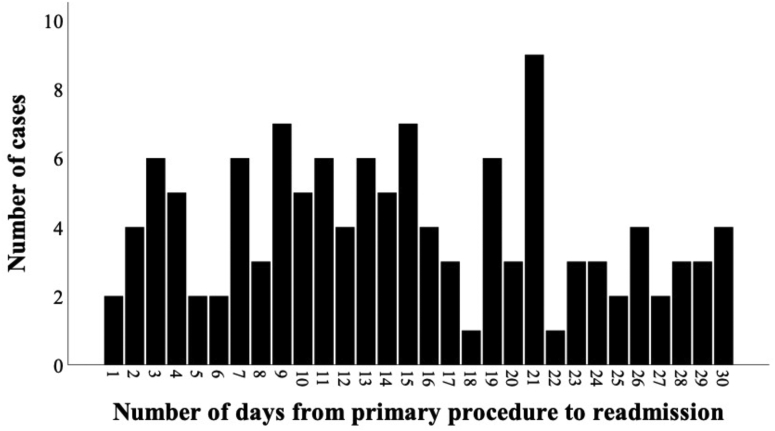
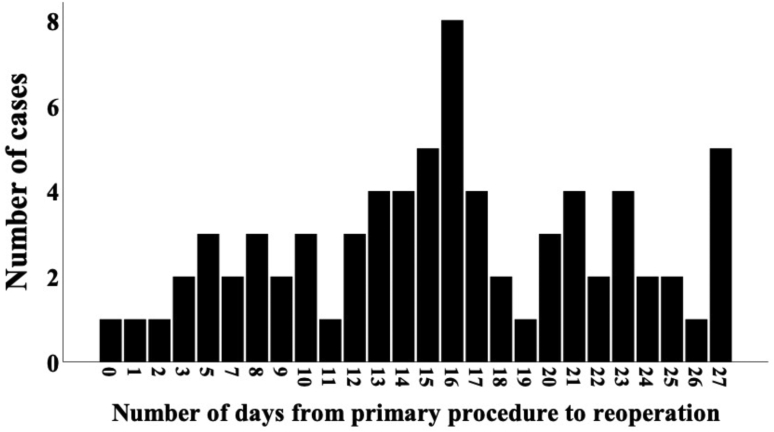
Data on all patients who underwent ORIF, TSA, or HA for treatment of closed PHF between 2015 and 2017 were obtained by querying the American College of Surgeons National Surgical Quality Improvement database. Rates of postoperative readmission, nonhome discharge, and reoperation within 30 days were collected. Multivariate logistic regression was employed to identify predictors of readmission, nonhome discharge, and reoperation.
A total of 2825 patients were included in this study: 1829 underwent ORIF, 707 underwent TSA, and 289 underwent HA. The significant predictors for readmission were having an American Society of Anesthesiologists class ≥ 3 (odds ratio [OR] 1.95, = .003) and being of dependent functional status (OR 3.15, < .001). The significant predictors for reoperation were male sex (OR 2.41, < .001) and dependent functional status (OR 2.92, = .006). The significant predictors for nonhome discharge were age 66-80 years (OR 7.00, < .001), age ≥ 81 years (OR 16.31, < .001), American Society of Anesthesiologists ≥3 (OR 2.34, < .001), dependent functional status (OR 2.48, < .001), and inpatient status (OR 3.32, < .001). TSA showed slightly higher rates of nonhome discharge than HA and ORIF.
Significant risk factors for readmission, reoperation, and nonhome discharge within 30 days following surgical treatment for PHF were identified. Additionally, TSA was significantly associated with nonhome discharge compared with HA and ORIF.
肱骨近端骨折(PHF)通常采用切开复位内固定术(ORIF)、半关节置换术(HA)或全肩关节置换术(TSA)进行手术治疗。多样的骨折类型以及老年人群中的高发病率使得制定手术治疗决策的客观指南变得困难。本研究的目的是调查与肱骨近端骨折行切开复位内固定术、半关节置换术和全肩关节置换术后再入院、再次手术及非家庭出院相关的危险因素。
通过查询美国外科医师学会国家外科质量改进数据库,获取2015年至2017年间所有因闭合性肱骨近端骨折接受切开复位内固定术、全肩关节置换术或半关节置换术治疗的患者的数据。收集术后30天内的再入院率、非家庭出院率和再次手术率。采用多因素逻辑回归分析确定再入院、非家庭出院和再次手术的预测因素。
本研究共纳入2825例患者:1829例行切开复位内固定术,707例行全肩关节置换术,289例行半关节置换术。再入院的显著预测因素为美国麻醉医师协会分级≥3级(比值比[OR]1.95,P = 0.003)和功能依赖状态(OR 3.15,P < 0.001)。再次手术的显著预测因素为男性(OR 2.41,P < 0.001)和功能依赖状态(OR 2.92,P = 0.006)。非家庭出院的显著预测因素为年龄66 - 80岁(OR 7.00,P < 0.001)、年龄≥81岁(OR 16.31,P < 0.001)、美国麻醉医师协会分级≥3级(OR 2.34,P < 0.001)、功能依赖状态(OR 2.48,P < 0.001)和住院状态(OR 3.32,P < 0.001)。全肩关节置换术的非家庭出院率略高于半关节置换术和切开复位内固定术。
确定了肱骨近端骨折手术治疗后30天内再入院、再次手术和非家庭出院的显著危险因素。此外,与半关节置换术和切开复位内固定术相比,全肩关节置换术与非家庭出院显著相关。