Zou Tian, Chen Qingxing, Chen Chaofeng, Liu Guijian, Ling Yunlong, Pang Yang, Xu Ye, Cheng Kuan, Zhu Wenqing, Wang Ru-Xing, Qian Ling-Ling, Ge Junbo
Department of Cardiology, Zhongshan Hospital, Fudan University, Shanghai Institute of Cardiovascular Disease, Shanghai, China.
Department of Cardiology, The Affiliated Wuxi People's Hospital of Nanjing Medical University, Wuxi, China.
J Thorac Dis. 2022 Jun;14(6):2187-2200. doi: 10.21037/jtd-22-534.
Enhanced late sodium current (INaL) is reportedly related to an increased risk of atrial fibrillation (AF). Moricizine, as a widely used anti-arrhythmia drug for suppressing ventricular tachycardia, has also been shown to prevent paroxysmal AF. However, the mechanism of its therapeutic effect remains poorly understood.
Angiotensin II (Ang II) was induced in C57Bl/6 mice (male wild-type) for 4 weeks to increase the susceptibility of AF, and acetylcholine-calcium chloride was used to induce AF. The whole-cell patch-clamp technique was used to detect INaL from isolated atrial myocytes. The expression of proteins in atrial of mice and HL-1 cells were examined by Western-blot.
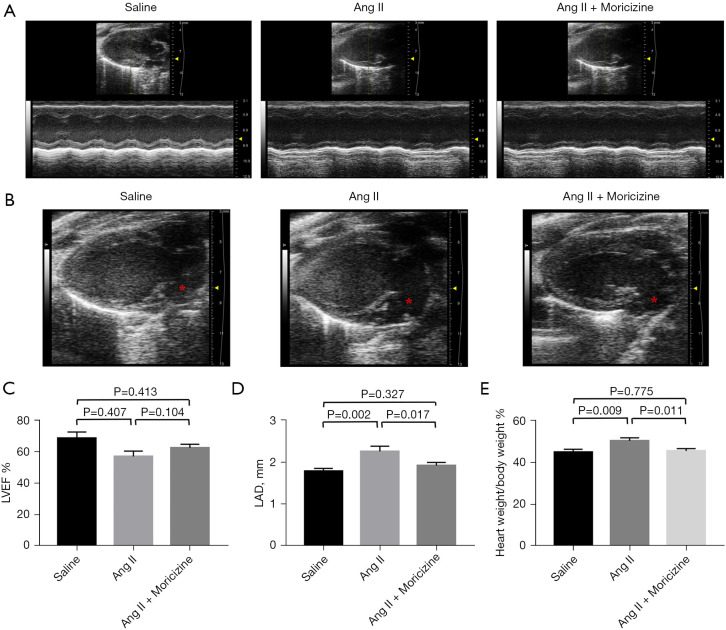
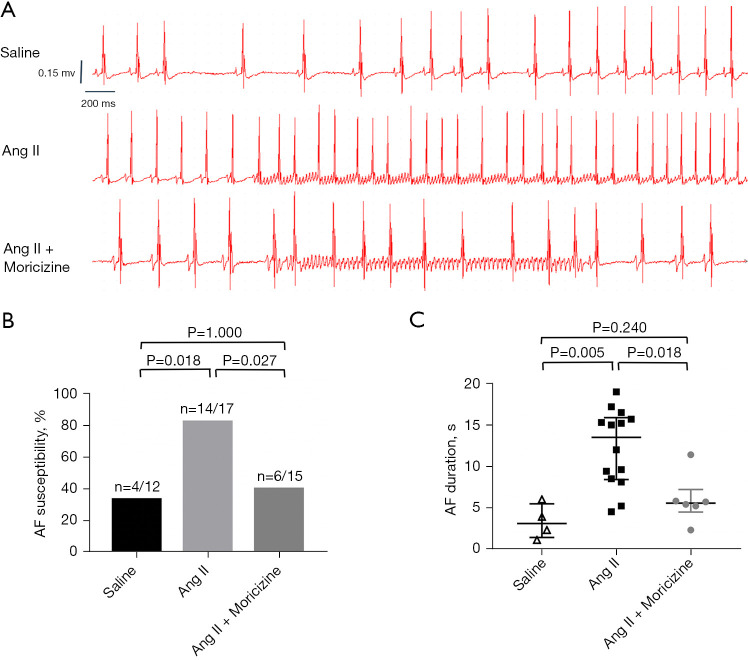
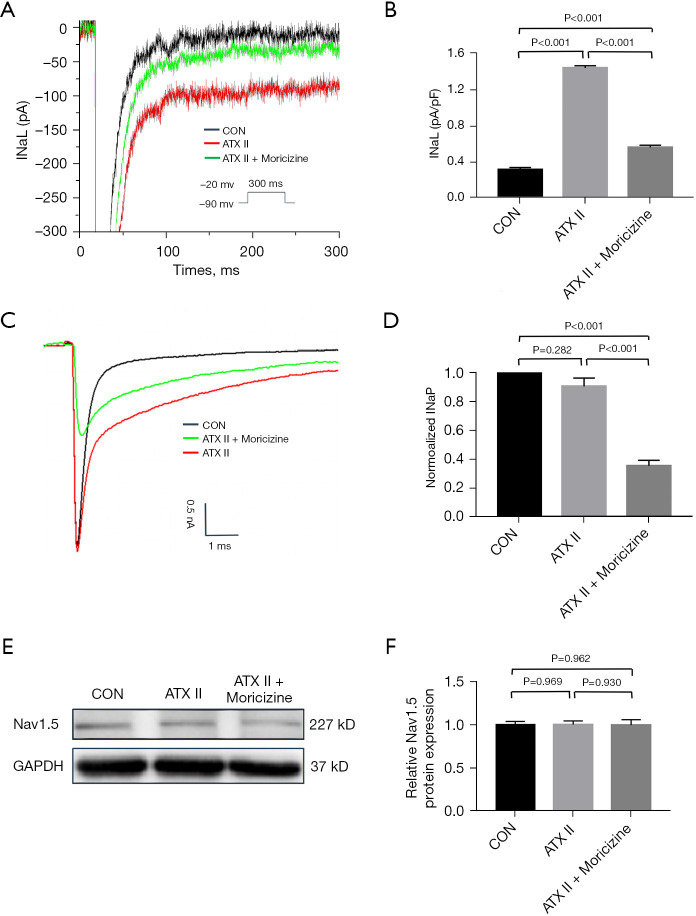
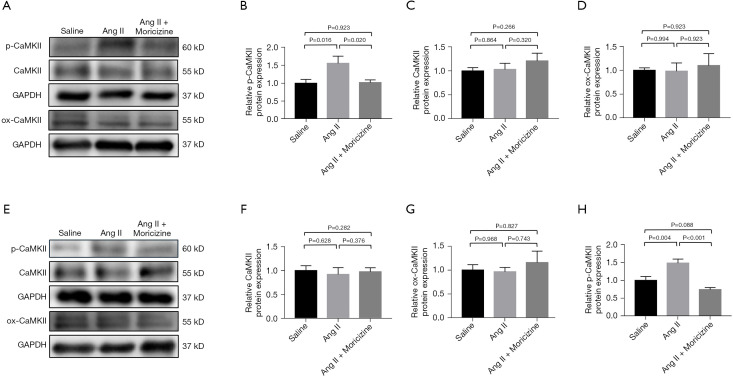
The results showed that moricizine significantly inhibited Ang II-mediated atrial enlargement and reduced AF vulnerability. We found that the densities of INaL were enhanced in Ang II-treated left and right atrial cardiomyocytes. Simultaneously, the Ang II-induced increase in INaL currents density was alleviated by the administration of moricizine, and no alteration in Nav1.5 expression was observed. In normal isolated atrial myocytes, moricizine significantly reduced Sea anemone toxin II (ATX II)-enhanced INaL density with a reduction of peak sodium currents. In addition, moricizine reduced the Ang II-induced upregulation of phosphorylated calcium/calmodulin-dependent protein kinase-II (p-CaMKII) in both the left and right atria. In HL-1 cells, moricizine also reduced the upregulation of p-CaMKII with Ang II and ATX II intervention, respectively.
Our results indicate that Ang II enhances the INaL via activation of CaMKII. Moricizine inhibits INaL and reduces CaMKII activation, which may be one of the mechanisms of moricizine suppression of AF.
据报道,晚钠电流增强(INaL)与心房颤动(AF)风险增加有关。莫雷西嗪作为一种广泛用于抑制室性心动过速的抗心律失常药物,也已被证明可预防阵发性AF。然而,其治疗作用的机制仍知之甚少。
在C57Bl/6小鼠(雄性野生型)中诱导血管紧张素II(Ang II)4周以增加AF易感性,并用乙酰胆碱-氯化钙诱导AF。采用全细胞膜片钳技术检测分离的心房肌细胞中的INaL。通过蛋白质免疫印迹法检测小鼠心房和HL-1细胞中蛋白质的表达。
结果表明,莫雷西嗪显著抑制Ang II介导的心房扩大并降低AF易感性。我们发现,Ang II处理的左、右心房心肌细胞中INaL密度增强。同时,给予莫雷西嗪可减轻Ang II诱导的INaL电流密度增加,且未观察到Nav1.5表达的改变。在正常分离的心房肌细胞中,莫雷西嗪显著降低海葵毒素II(ATX II)增强的INaL密度,同时钠电流峰值降低。此外,莫雷西嗪降低了Ang II诱导的左、右心房中磷酸化钙/钙调蛋白依赖性蛋白激酶-II(p-CaMKII)的上调。在HL-1细胞中,莫雷西嗪也分别降低了Ang II和ATX II干预引起的p-CaMKII上调。
我们的结果表明,Ang II通过激活CaMKII增强INaL。莫雷西嗪抑制INaL并降低CaMKII激活,这可能是莫雷西嗪抑制AF的机制之一。