Sumi Tomonari, Harada Kouji
Research Institute for Interdisciplinary Science, Okayama University, 3-1-1 Tsushima-Naka, Kita-ku, Okayama 700-8530, Japan.
Department of Chemistry, Faculty of Science, Okayama University, 3-1-1 Tsushima-Naka, Kita-ku, Okayama 700-8530, Japan.
iScience. 2022 Aug 19;25(8):104723. doi: 10.1016/j.isci.2022.104723. Epub 2022 Jul 4.
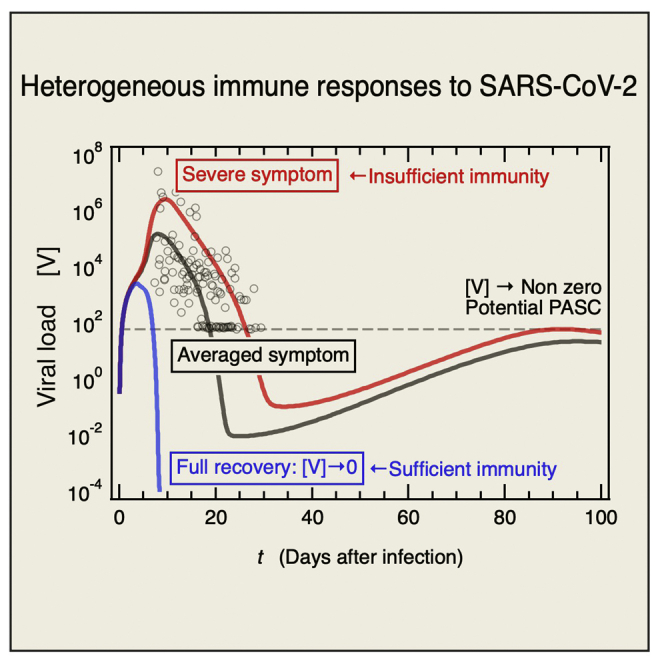
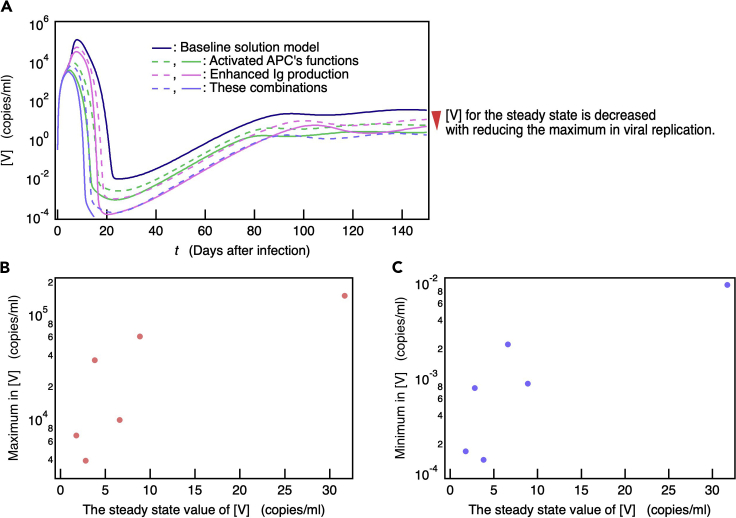
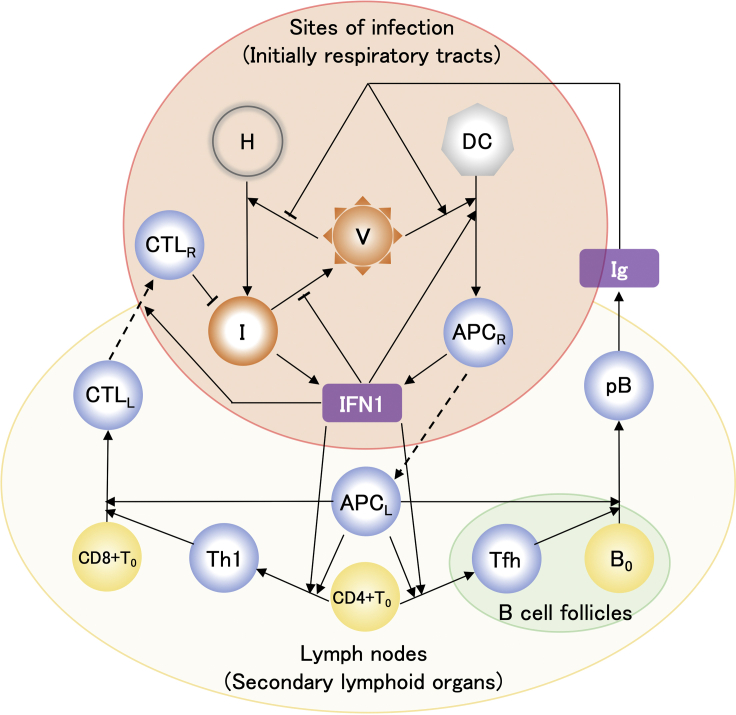
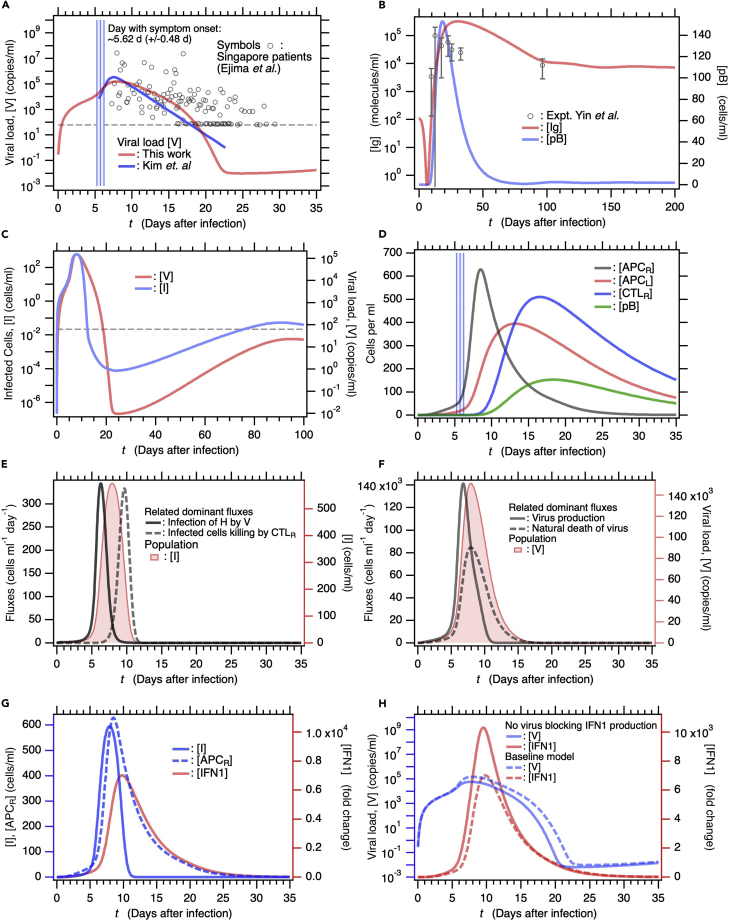
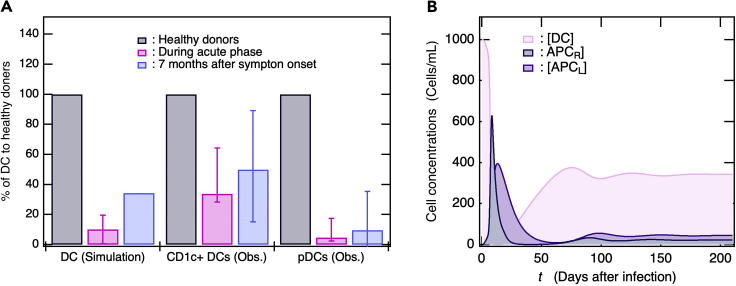
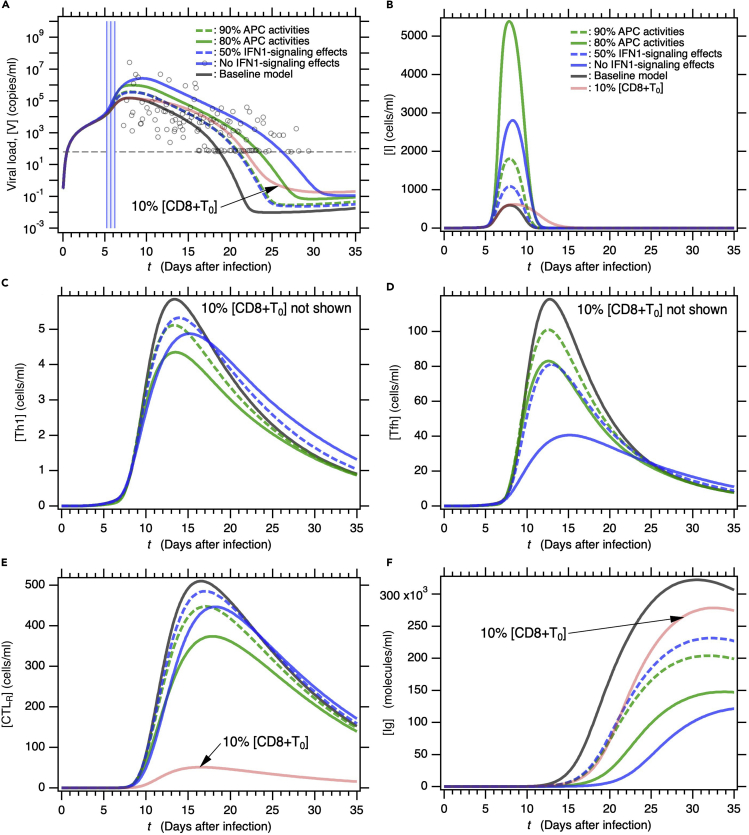
COVID-19 is mild to moderate in otherwise healthy individuals but may nonetheless cause life-threatening disease and/or a wide range of persistent symptoms. The general determinant of disease severity is age mainly because the immune response declines in aging patients. Here, we developed a mathematical model of the immune response to SARS-CoV-2 and revealed that typical age-related risk factors such as only a several 10% decrease in innate immune cell activity and inhibition of type-I interferon signaling by autoantibodies drastically increased the viral load. It was reported that the numbers of certain dendritic cell subsets remained less than half those in healthy donors even seven months after infection. Hence, the inflammatory response was ongoing. Our model predicted the persistent DC reduction and showed that certain patients with severe and even mild symptoms could not effectively eliminate the virus and could potentially develop long COVID.
新型冠状病毒肺炎(COVID-19)在其他方面健康的个体中症状较轻至中度,但仍可能导致危及生命的疾病和/或一系列持续症状。疾病严重程度的一般决定因素是年龄,主要原因是老年患者的免疫反应会下降。在此,我们建立了一个针对严重急性呼吸综合征冠状病毒2(SARS-CoV-2)免疫反应的数学模型,并揭示了典型的与年龄相关的风险因素,如固有免疫细胞活性仅降低百分之几十以及自身抗体对I型干扰素信号传导的抑制,会大幅增加病毒载量。据报道,即使在感染七个月后,某些树突状细胞亚群的数量仍不到健康供体的一半。因此,炎症反应持续存在。我们的模型预测了树突状细胞的持续减少,并表明某些有严重甚至轻微症状的患者无法有效清除病毒,可能会发展为长期新冠症状。