Flaherty Joseph H, Rodin Miriam B, Morley John E
Regional Medical Director of Geriatrics, Envision Physician Services, Dallas, Texas, Division of Geriatrics, University of Texas Southwestern, Dallas, Texas, USA.
Division of Geriatrics, Department of Internal Medicine, Saint Louis University, St Louis, Missouri.
Gerontol Geriatr Med. 2022 Jul 4;8:23337214221109005. doi: 10.1177/23337214221109005. eCollection 2022 Jan-Dec.
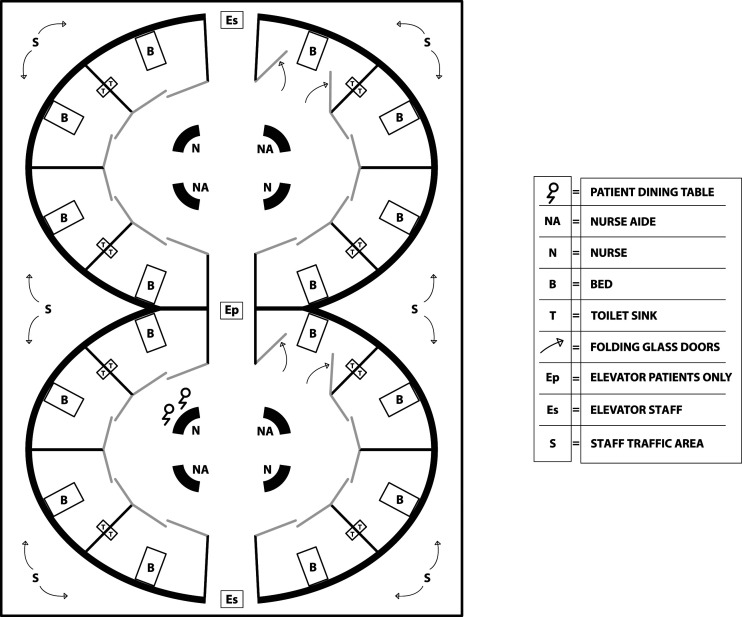
Hospital care of frail older adults is far from optimal. Although some geriatric models of care have been shown to improve outcomes, the effect size is small and models are difficult to fully implement, sustain and replicate. The two root causes for these shortcomings are competing interests (high revenue generating diseases, procedures and surgeries) and current hospital cultures (for example a culture of safety that emphasizes bed alarms and immobility rather than frequent ambulation). Geriatric hospitals would be hospitals completely dedicated to the care of frail older patients, a group which is most vulnerable to the negative consequences of a hospitalization. They would differ from a typical adult hospital because they could implement evidence based principles of successful geriatric models of care on a hospital wide basis, which would make them sustainable and allow for scaling up of proven outcomes. Innovative structural designs, unachievable in a typical adult hospital, would enhance mobility while maintaining safety. Financial viability and stability would be a challenge but should be feasible, likely through affiliation with larger health care systems with other hospitals because of cost savings associated with geriatric models of care (decreased length of stay, increased likelihood of discharge home, without increasing costs).
对体弱老年人的医院护理远未达到最佳状态。尽管一些老年护理模式已被证明能改善治疗效果,但效应量较小,且这些模式难以全面实施、维持和推广。造成这些不足的两个根本原因是利益冲突(高收益的疾病、诊疗程序和手术)以及当前的医院文化(例如强调床旁警报和限制活动而非频繁走动的安全文化)。老年医院将是完全致力于护理体弱老年患者的医院,这一群体最容易受到住院负面影响。它们将与典型的成人医院不同,因为它们可以在全院范围内实施基于成功老年护理模式的循证原则,这将使它们具有可持续性,并能扩大已证实的治疗效果。典型成人医院无法实现的创新结构设计将在确保安全的同时增强患者的活动能力。财务可行性和稳定性将是一项挑战,但应该是可行的,可能通过与其他医院所属的更大医疗系统建立附属关系来实现,因为老年护理模式可节省成本(缩短住院时间、增加出院回家的可能性,且不增加成本)。