Li Quan-Wang, Ma Long-Fei, Liu Chuan-Bo, Zhou Jie, Ma Bin-Ya, Zhuang Yao-Xue, Zhang Ke-Rui
Department of Oncology, Dongfang Hospital, Beijing University of Chinese Medicine, Beijing, China.
Basic College of Peking Union Medical College, Beijing, China.
Evid Based Complement Alternat Med. 2022 Jun 30;2022:3719857. doi: 10.1155/2022/3719857. eCollection 2022.
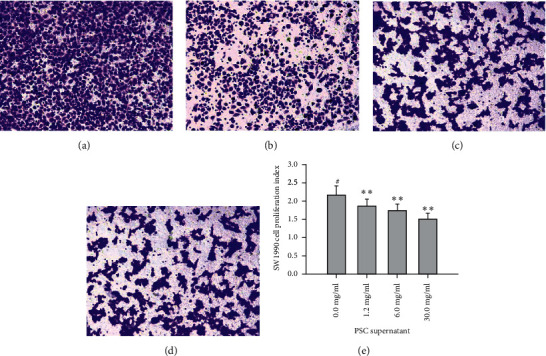
This study aimed to test cinobufacini therapeutic potential for pancreatic cancer, verify its potential molecular mechanism, and evaluate the cinobufacini impact on pancreatic cancer microenvironment. First, the effect of cinobufacini-treated pancreatic stellate cells (PSCs) supernatant on the value-added ability of pancreatic cancer (PCCs) was tested. The results show that cinobufacini can effectively reduce the ability of PSCs supernatant to promote the value-added PCCs. Further results show that cinobufacini can effectively reduce the concentration of TGF in the supernatant of PSCs. Subsequently, the impact of cinobufacini on the transcription and translation levels of key genes in the TGF/Smads pathway was examined. The results showed that the impact of cinobufacini on the transcription levels of Smad2, Smad3, and Smad7 was in a concentration-dependent manner, while the transcriptional activity of collagen I mRNA was decreased with the increase of cinobufacini concentration. The results of protein expression showed that cinobufacini could upregulate the expression of inhibitory protein Smad7, inhibit the phosphorylation level of p-Smad2/3, and then suppress the expression of type I collagen (collagen I). On the one hand, this study shows that cinobufacini can inhibit the promotion of PSCs on the proliferation of PCCs. On the other hand, cinobufacini can upregulate the expression of the inhibitory molecule, Smad7, through the TGF/Smads pathway and reduce the phosphorylation level of p-Smad2/3, thereby inhibiting the expression of collagen I and pancreatic fibrosis. cinobufacin can inhibit the proliferation of SW1900 cells by blocking the TGF/Smads pathway of pancreatic stellate cells. These results provide a clinical basis for the treatment of pancreatic cancer.
本研究旨在测试华蟾素对胰腺癌的治疗潜力,验证其潜在分子机制,并评估华蟾素对胰腺癌微环境的影响。首先,测试了经华蟾素处理的胰腺星状细胞(PSCs)上清液对胰腺癌细胞(PCCs)增殖能力的影响。结果表明,华蟾素可有效降低PSCs上清液促进PCCs增殖的能力。进一步结果显示,华蟾素可有效降低PSCs上清液中转化生长因子(TGF)的浓度。随后,检测了华蟾素对TGF/Smads信号通路关键基因转录和翻译水平的影响。结果显示,华蟾素对Smad2、Smad3和Smad7转录水平的影响呈浓度依赖性,而I型胶原mRNA的转录活性随华蟾素浓度的增加而降低。蛋白质表达结果表明,华蟾素可上调抑制性蛋白Smad7的表达,抑制p-Smad2/3的磷酸化水平,进而抑制I型胶原(collagen I)的表达。一方面,本研究表明华蟾素可抑制PSCs对PCCs增殖的促进作用。另一方面,华蟾素可通过TGF/Smads信号通路上调抑制性分子Smad7的表达,降低p-Smad2/3的磷酸化水平,从而抑制I型胶原的表达和胰腺纤维化。华蟾素可通过阻断胰腺星状细胞的TGF/Smads信号通路抑制SW1900细胞的增殖。这些结果为胰腺癌的治疗提供了临床依据。