Department of Emerging Infectious Diseases, Institute of Tropical Medicine (NEKKEN), Nagasaki University, Nagasaki, Japan.
Program for Nurturing Global Leaders in Tropical and Emerging Communicable Diseases, Graduate School of Biomedical Sciences, Nagasaki University, Nagasaki, Japan.
PLoS Pathog. 2022 Jul 11;18(7):e1010689. doi: 10.1371/journal.ppat.1010689. eCollection 2022 Jul.
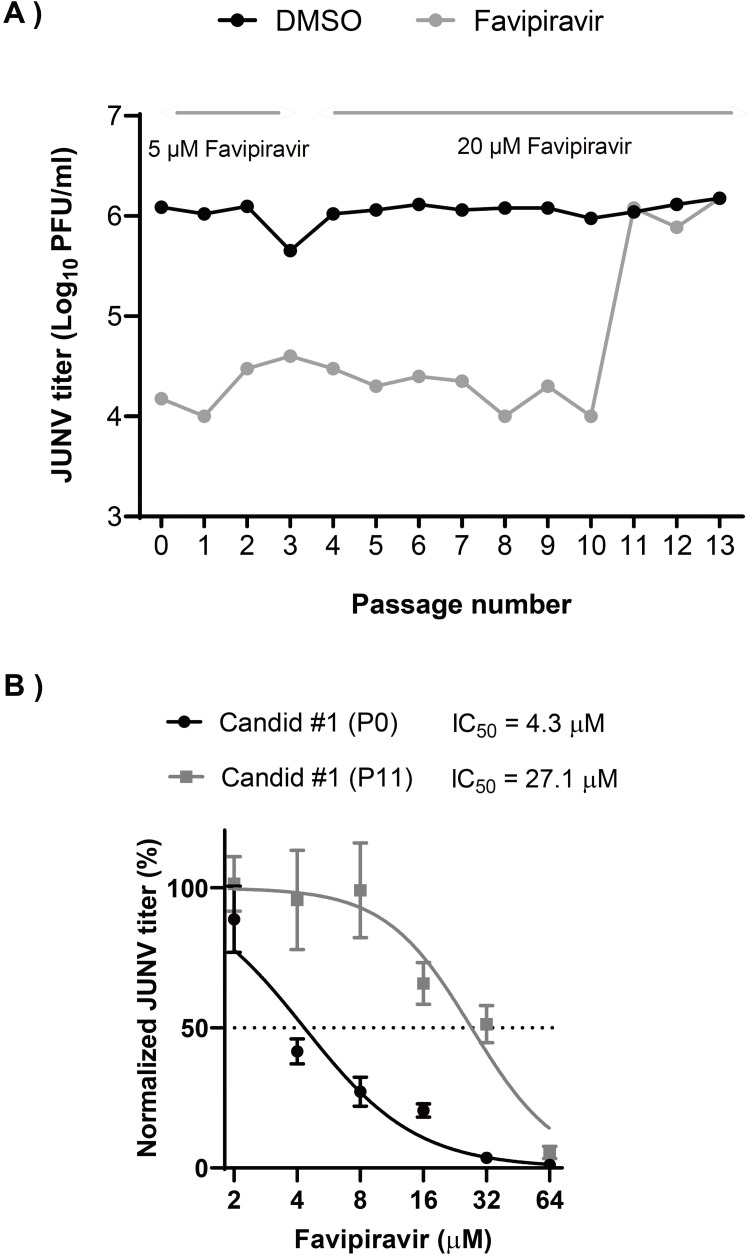
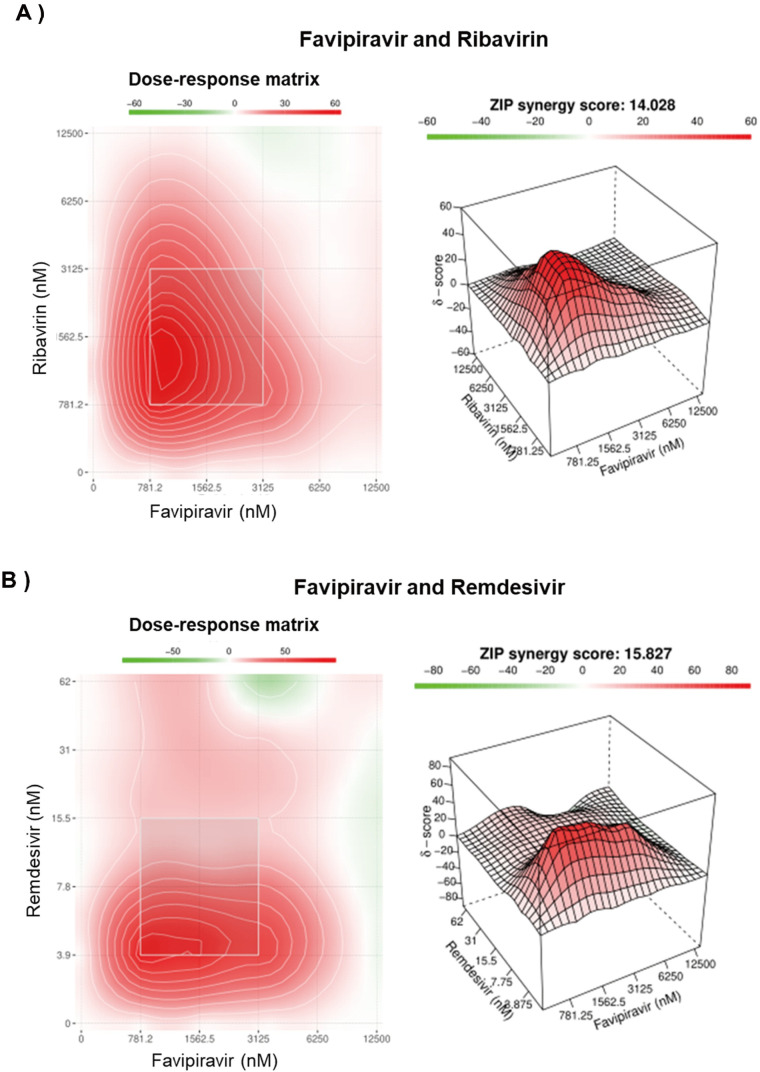
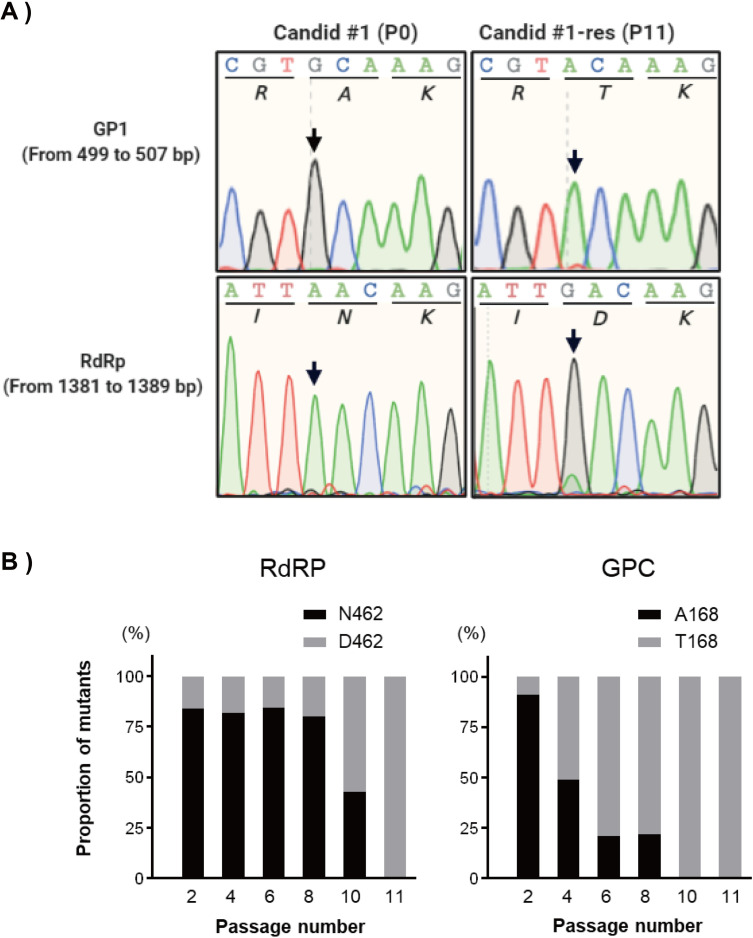
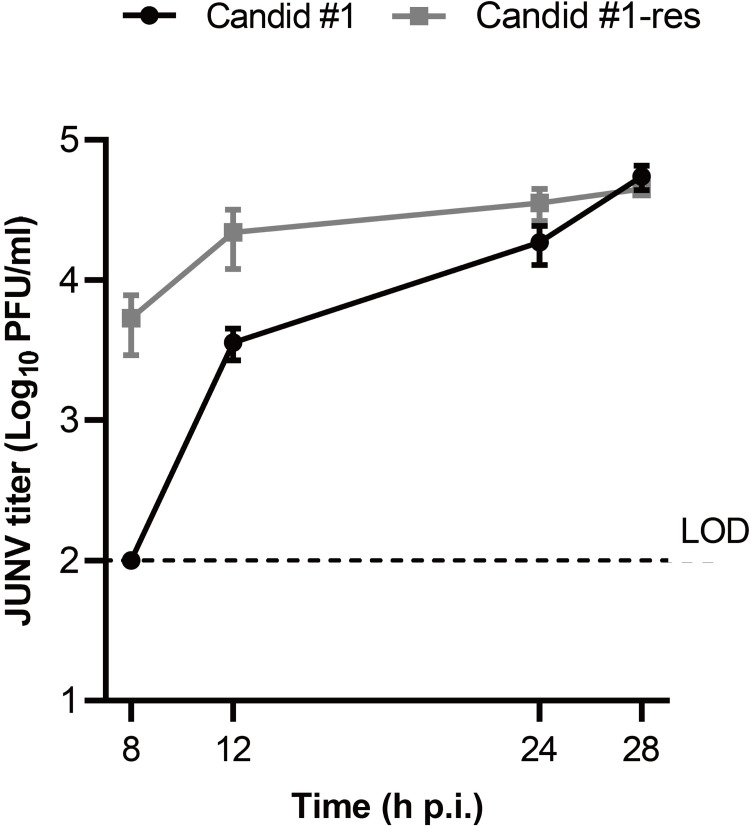
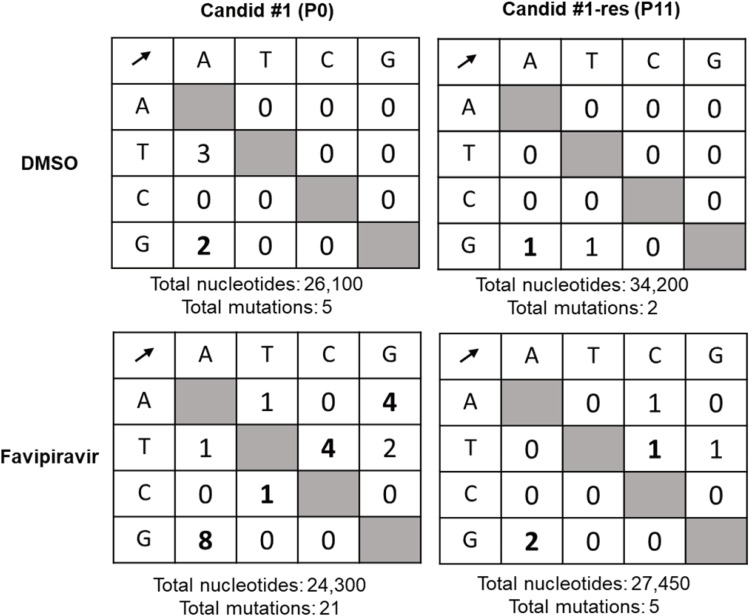
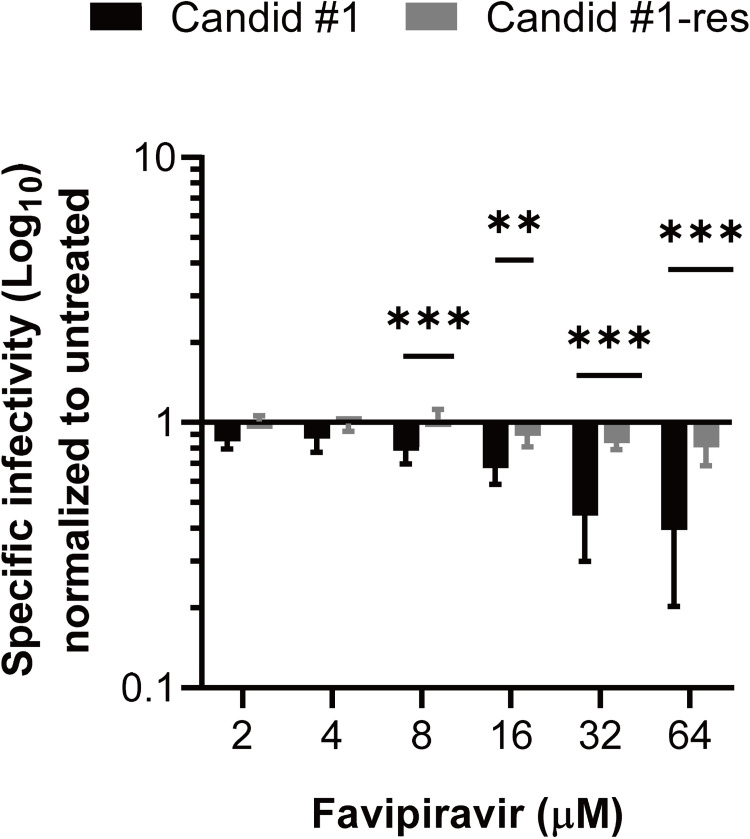
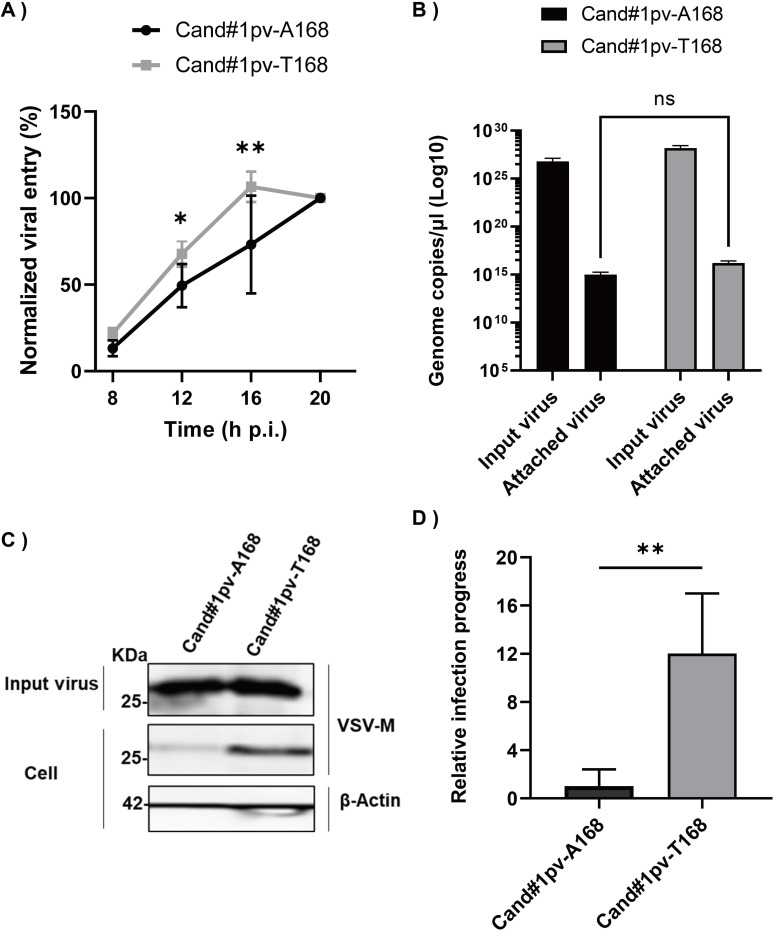
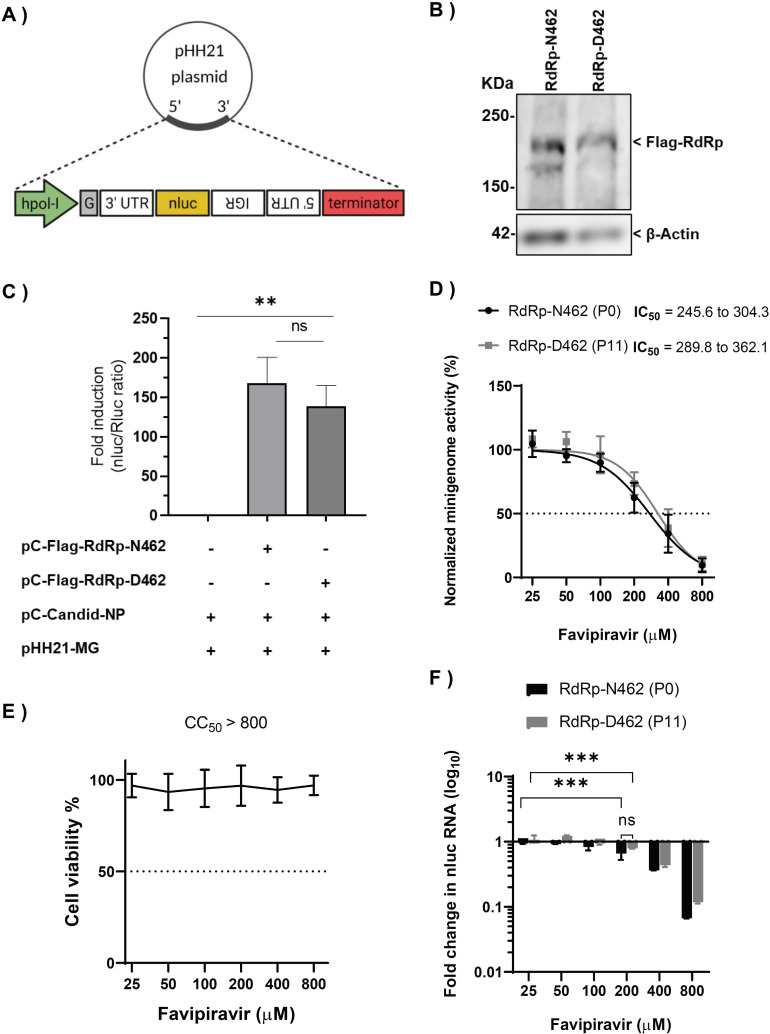
Favipiravir is a nucleoside analogue that inhibits the replication and transcription of a broad spectrum of RNA viruses, including pathogenic arenaviruses. In this study, we isolated a favipiravir-resistant mutant of Junin virus (JUNV), which is the causative agent of Argentine hemorrhagic fever, and analyzed the antiviral mechanism of favipiravir against JUNV. Two amino acid substitutions, N462D in the RNA-dependent RNA polymerase (RdRp) and A168T in the glycoprotein precursor GPC, were identified in the mutant. GPC-A168T substitution enhanced the efficiency of JUNV internalization, which explains the robust replication kinetics of the mutant in the virus growth analysis. Although RdRp-N462D substitution did not affect polymerase activity levels in a minigenome system, comparisons of RdRp error frequencies showed that the virus with RdRp-D462 possessed a significantly higher fidelity. Our next generation sequence (NGS) analysis showed a gradual accumulation of both mutations as we passaged the virus in presence of favipiravir. We also provided experimental evidence for the first time that favipiravir inhibited JUNV through the accumulation of transition mutations, confirming its role as a purine analogue against arenaviruses. Moreover, we showed that treatment with a combination of favipiravir and either ribavirin or remdesivir inhibited JUNV replication in a synergistic manner, blocking the generation of the drug-resistant mutant. Our findings provide new insights for the clinical management and treatment of Argentine hemorrhagic fever.
法匹拉韦是一种核苷类似物,可抑制广泛的 RNA 病毒,包括致病沙粒病毒的复制和转录。在这项研究中,我们分离到一株 Junin 病毒(JUNV)的法匹拉韦耐药突变株,JUNV 是阿根廷出血热的病原体,并分析了法匹拉韦抗 JUNV 的抗病毒机制。突变株中鉴定出 RNA 依赖性 RNA 聚合酶(RdRp)中的 N462D 和糖蛋白前体 GPC 中的 A168T 两个氨基酸取代。GPC-A168T 取代增强了 JUNV 的内化效率,这解释了突变体在病毒生长分析中的强大复制动力学。尽管 RdRp-N462D 取代不影响小基因组系统中的聚合酶活性水平,但 RdRp 错误频率的比较表明,具有 RdRp-D462 的病毒具有更高的保真度。我们的下一代测序(NGS)分析表明,随着我们在法匹拉韦存在的情况下传代病毒,这两种突变逐渐积累。我们还首次提供了实验证据,证明法匹拉韦通过过渡突变的积累抑制 JUNV,证实了它作为沙粒病毒嘌呤类似物的作用。此外,我们表明,法匹拉韦与利巴韦林或瑞德西韦联合治疗以协同方式抑制 JUNV 复制,阻止耐药突变体的产生。我们的研究结果为阿根廷出血热的临床管理和治疗提供了新的见解。