Paterson Emily, Blenkiron Cherie, Danielson Kirsty, Henry Claire
Department of Obstetrics, Gynaecology and Women's Health, University of Otago, Wellington, New Zealand.
Faculty of Medical and Health Sciences, University of Auckland, Auckland, New Zealand.
Transl Oncol. 2022 Sep;23:101478. doi: 10.1016/j.tranon.2022.101478. Epub 2022 Jul 9.
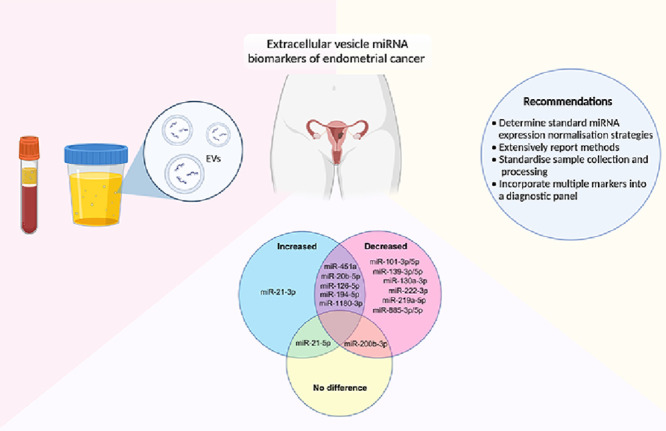
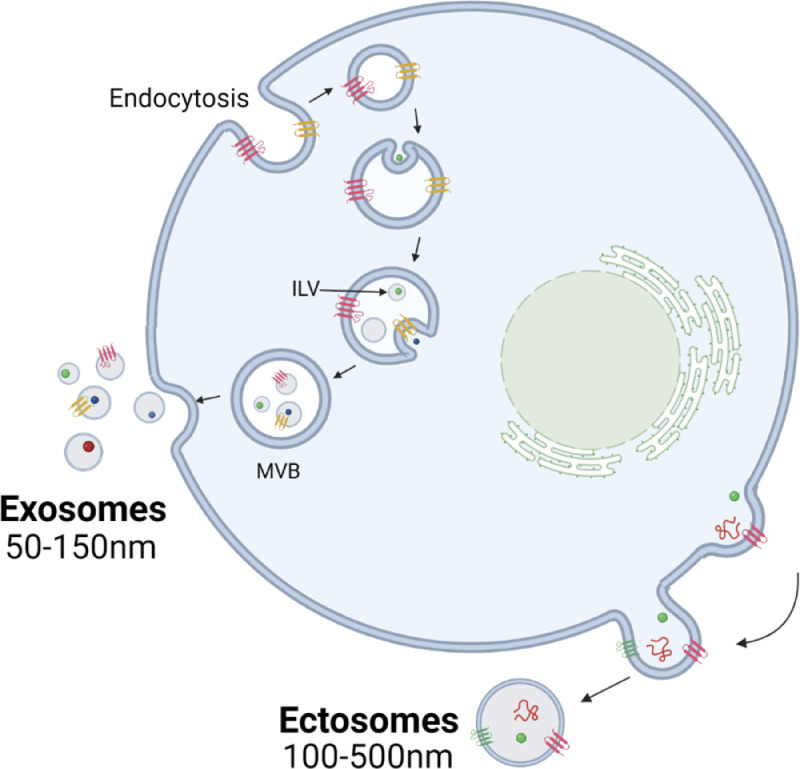
Endometrial cancer (EC) is the most common gynaecological malignancy in the developed world, and concerningly incidence is rising, particularly in younger people. Therefore, there is increased interest in novel diagnostic and prognostic biomarkers. Extracellular vesicles (EVs) are membrane-bound particles present in bodily fluids that have the potential to facilitate non-invasive, early diagnosis of EC and could aid with monitoring of recurrence and treatment response. EV cargo provides molecular insight into the tumor, with the lipid bilayer providing stability for RNA species usually prone to degradation. miRNAs have recently become a focus for EV biomarker research due to their ability to regulate cancer related pathways and influence cancer development and progression. This review evaluates the current literature on EV miRNA biomarkers with a focus on EC, and discusses the challenges facing this research. This review finally highlights areas of focus for EV miRNA biomarker research going forward, such as standardization of normalization approaches, sample storage and processing, extensive reporting of methodologies and moving away from single miRNA biomarkers.
子宫内膜癌(EC)是发达国家最常见的妇科恶性肿瘤,令人担忧的是其发病率正在上升,尤其是在年轻人中。因此,人们对新型诊断和预后生物标志物的兴趣日益增加。细胞外囊泡(EVs)是存在于体液中的膜结合颗粒,有可能促进子宫内膜癌的非侵入性早期诊断,并有助于监测复发和治疗反应。细胞外囊泡的内容物提供了对肿瘤的分子洞察,脂质双层为通常易于降解的RNA种类提供了稳定性。由于其能够调节癌症相关途径并影响癌症的发展和进展,微小RNA(miRNAs)最近已成为细胞外囊泡生物标志物研究的焦点。本综述评估了目前关于细胞外囊泡微小RNA生物标志物的文献,重点是子宫内膜癌,并讨论了该研究面临的挑战。本综述最后强调了未来细胞外囊泡微小RNA生物标志物研究的重点领域,如标准化归一化方法、样本储存和处理、广泛报告方法以及摆脱单一微小RNA生物标志物。