Genomics Research Center, Academia Sinica, 128 Academia Road, Sec. 2, Nankang, Taipei, 115, Taiwan.
Institute of Biomedical Sciences, Academia Sinica, Taipei, Taiwan.
J Biomed Sci. 2022 Jul 11;29(1):52. doi: 10.1186/s12929-022-00832-z.
Coronavirus-induced disease 19 (COVID-19) infects more than three hundred and sixty million patients worldwide, and people with severe symptoms frequently die of acute respiratory distress syndrome (ARDS). Recent studies indicated that excessive neutrophil extracellular traps (NETs) contributed to immunothrombosis, thereby leading to extensive intravascular coagulopathy and multiple organ dysfunction. Thus, understanding the mechanism of severe acute respiratory syndrome coronavirus 2 (SARS-CoV-2)-induced NET formation would be helpful to reduce thrombosis and prevent ARDS in severe acute respiratory syndrome coronavirus 2 (SARS-CoV-2) infection.
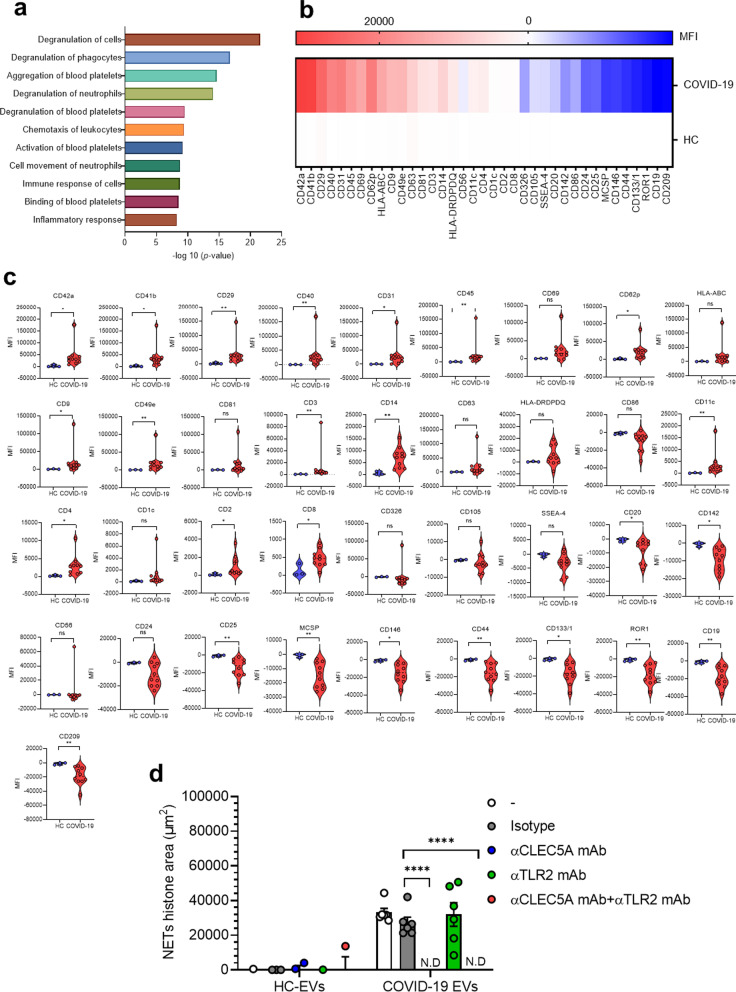
We incubated SARS-CoV-2 with neutrophils in the presence or absence of platelets to observe NET formation. We further isolated extracellular vesicles from COVID-19 patients' sera (COVID-19-EVs) to examine their ability to induce NET formation.
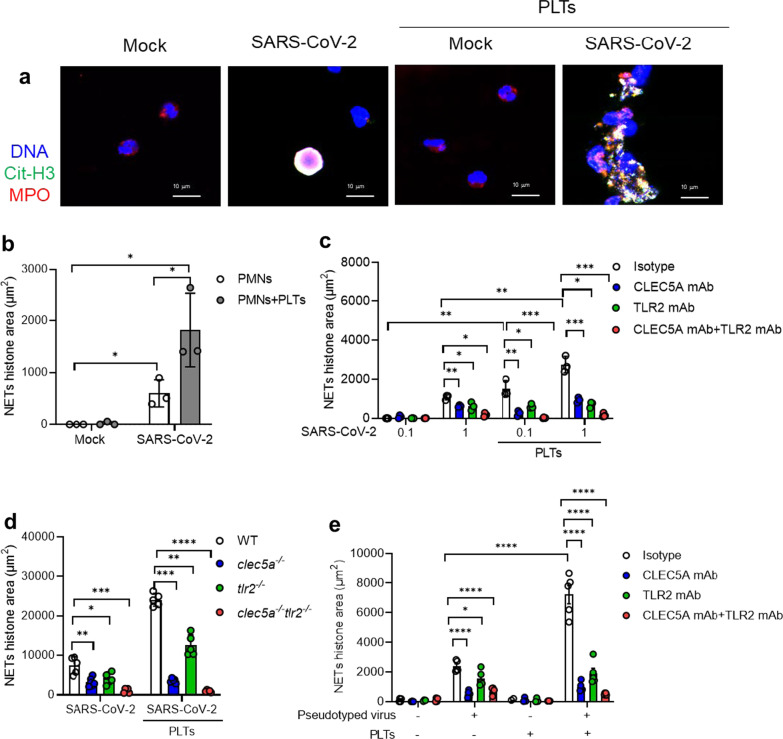
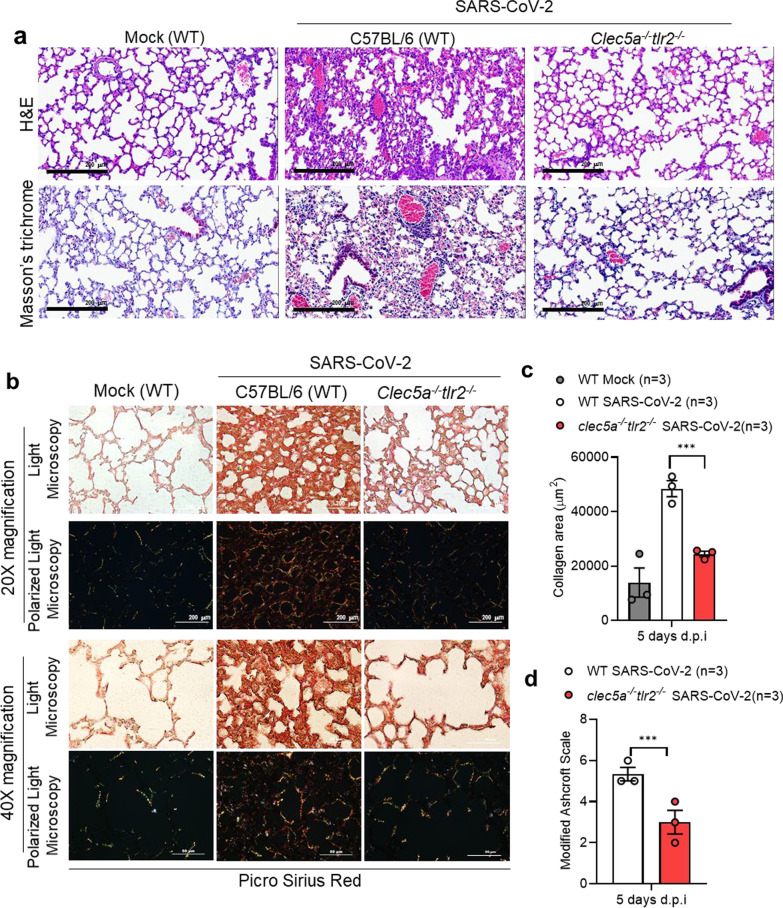
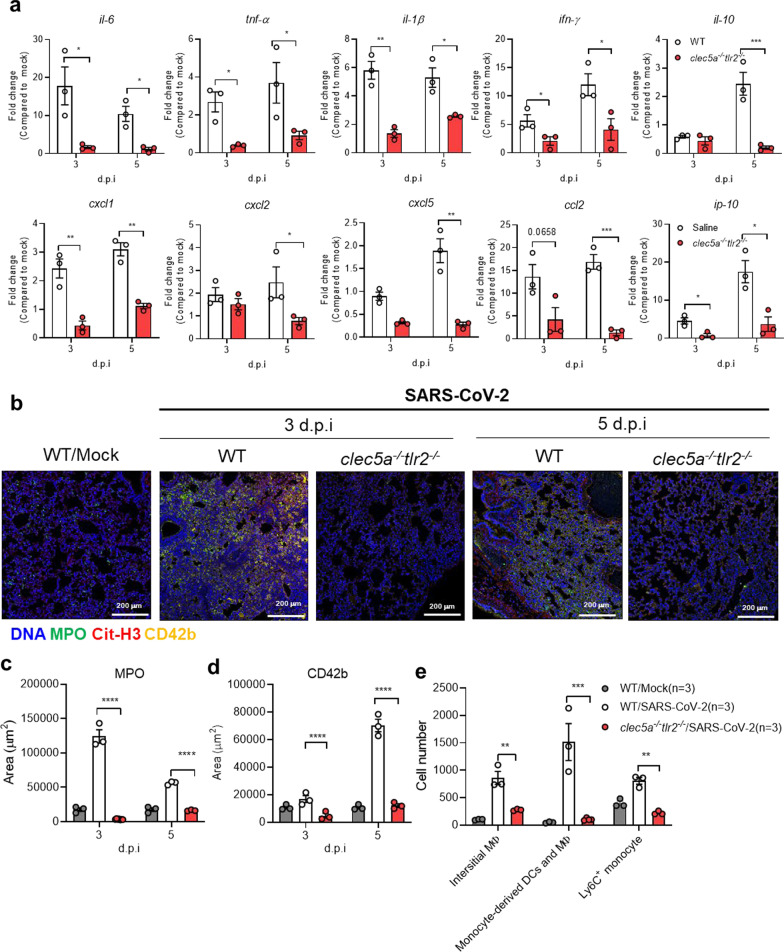
We demonstrated that antagonistic mAbs against anti-CLEC5A mAb and anti-TLR2 mAb can inhibit COVID-19-EVs-induced NET formation, and generated clec5a/tlr2 mice to confirm the critical roles of CLEC5A and TLR2 in SARS-CoV-2-induced lung inflammation in vivo. We found that virus-free extracellular COVID-19 EVs induced robust NET formation via Syk-coupled C-type lectin member 5A (CLEC5A) and TLR2. Blockade of CLEC5A inhibited COVID-19 EVs-induced NETosis, and simultaneous blockade of CLEC5A and TLR2 further suppressed SARS-CoV-2-induced NETosis in vitro. Moreover, thromboinflammation was attenuated dramatically in clec5a/tlr2 mice.
This study demonstrates that SARS-CoV-2-activated platelets produce EVs to enhance thromboinflammation via CLEC5A and TLR2, and highlight the importance of CLEC5A and TLR2 as therapeutic targets to reduce the risk of ARDS in COVID-19 patients.
冠状病毒病 19(COVID-19)在全球感染了超过 3.6 亿患者,严重症状患者常死于急性呼吸窘迫综合征(ARDS)。最近的研究表明,过量的中性粒细胞胞外诱捕网(NETs)导致免疫血栓形成,从而导致广泛的血管内凝血和多器官功能障碍。因此,了解严重急性呼吸综合征冠状病毒 2(SARS-CoV-2)诱导 NET 形成的机制有助于减少血栓形成并预防严重急性呼吸综合征冠状病毒 2(SARS-CoV-2)感染引起的 ARDS。
我们在存在或不存在血小板的情况下将 SARS-CoV-2 与中性粒细胞孵育,以观察 NET 形成。我们进一步从 COVID-19 患者的血清中分离细胞外囊泡(COVID-19-EVs),以检查它们诱导 NET 形成的能力。
我们证明了针对抗 CLEC5A mAb 和抗 TLR2 mAb 的拮抗 mAb 可以抑制 COVID-19-EVs 诱导的 NET 形成,并生成 clec5a/tlr2 小鼠以确认 CLEC5A 和 TLR2 在 SARS-CoV-2 诱导的体内肺炎症中的关键作用。我们发现无病毒的细胞外 COVID-19 EV 通过 Syk 偶联 C 型凝集素成员 5A(CLEC5A)和 TLR2 诱导强烈的 NET 形成。CLEC5A 阻断抑制 COVID-19-EVs 诱导的 NET 形成,同时阻断 CLEC5A 和 TLR2 进一步抑制体外 SARS-CoV-2 诱导的 NET 形成。此外,clec5a/tlr2 小鼠的血栓炎症明显减轻。
这项研究表明,SARS-CoV-2 激活的血小板通过 CLEC5A 和 TLR2 产生 EV 来增强血栓炎症,并强调 CLEC5A 和 TLR2 作为治疗靶点的重要性,以降低 COVID-19 患者发生 ARDS 的风险。