Ministério da Saúde, Departamento de Análise em Saúde e Vigilância de Doenças Não Transmissíveis, Brasília, DF, Brasil.
Organização Pan-Americana da Saúde, Brasília, DF, Brasil.
Epidemiol Serv Saude. 2022 Jul 8;31(spe1):e2021384. doi: 10.1590/SS2237-9622202200006.especial. eCollection 2022.
To describe the prevalence of self-reported depression among Brazilian adults in the 2019 National Health Survey (PNS) and compare to the 2013 PNS.
Cross-sectional study of Brazilian adults using data from the 2019 and 2013 PNS. Prevalence and 95% confidence intervals (95%CI) of self-reported depression were estimated by region and demographic characteristics. Bivariate analyses were conducted using chi-squared tests.
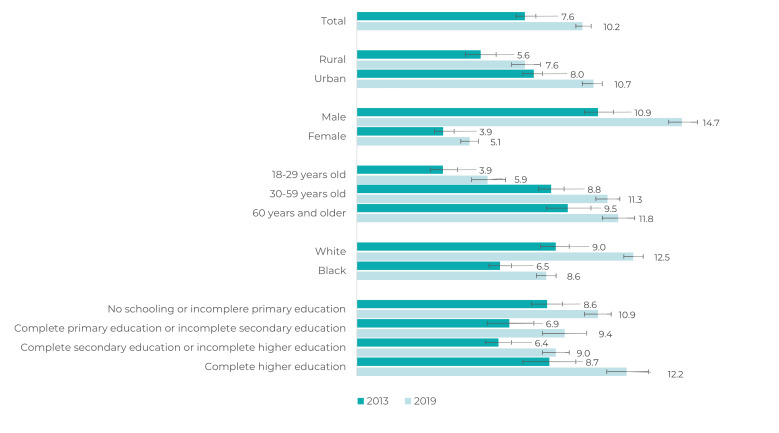
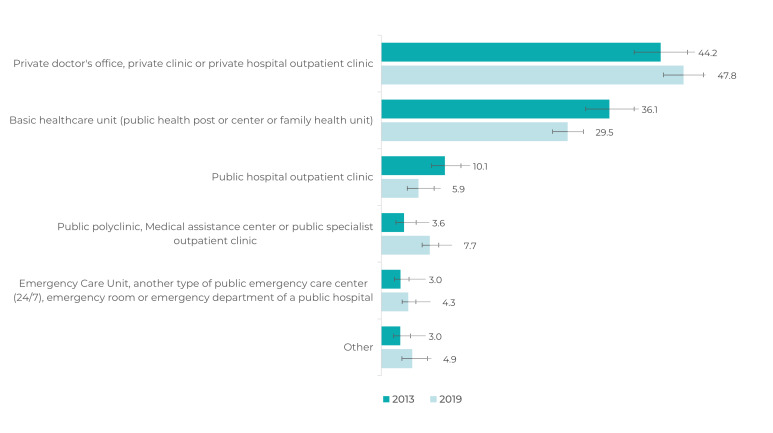
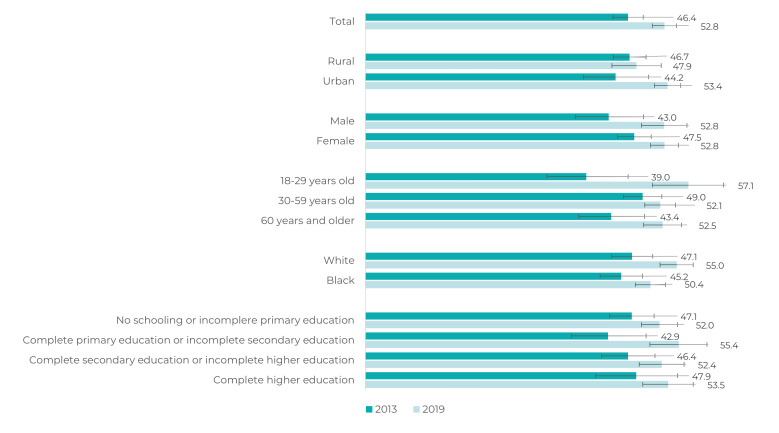
There were 90,846 participants aged ≥ 18 years in 2019, and 60,202 in 2013. Between 2013 and 2019, prevalence of self-reported depression increased from 7.6% (95%CI 7.2;8.1) to 10.2% (95%CI 9.9;10.6) and of individuals who sought healthcare, from 46.4% (95%CI 43.8;49.1) to 52.8% (95%CI 50.7;55.0). Private clinics were the main source of healthcare.
Depression is highly prevalent in Brazil. Prevalence of diagnosis of depression and use of health services increased in the studied period. The predominance of care in private clinics suggests inequalities in the improvement of mental healthcare coverage.
描述 2019 年巴西全国健康调查(PNS)中成年人自我报告抑郁症的患病率,并与 2013 年 PNS 进行比较。
使用 2019 年和 2013 年 PNS 的巴西成年人的横断面研究。根据地区和人口统计学特征,估计自我报告抑郁症的患病率和 95%置信区间(95%CI)。使用卡方检验进行了双变量分析。
2019 年有 90846 名年龄≥18 岁的参与者,2013 年有 60202 名。与 2013 年相比,2019 年自我报告抑郁症的患病率从 7.6%(95%CI 7.2;8.1)增加到 10.2%(95%CI 9.9;10.6),寻求医疗保健的个体比例从 46.4%(95%CI 43.8;49.1)增加到 52.8%(95%CI 50.7;55.0)。私人诊所是医疗保健的主要来源。
巴西的抑郁症患病率很高。在研究期间,诊断抑郁症和使用卫生服务的比例有所增加。私人诊所护理的优势表明在改善精神保健覆盖范围方面存在不平等。