CSIR-Institute of Himalayan Bioresource Technology, Council of Scientific and Industrial Research, Palampur, Himachal Pradesh, 176 061, India.
Sci Rep. 2022 Jul 13;12(1):11925. doi: 10.1038/s41598-022-15907-y.
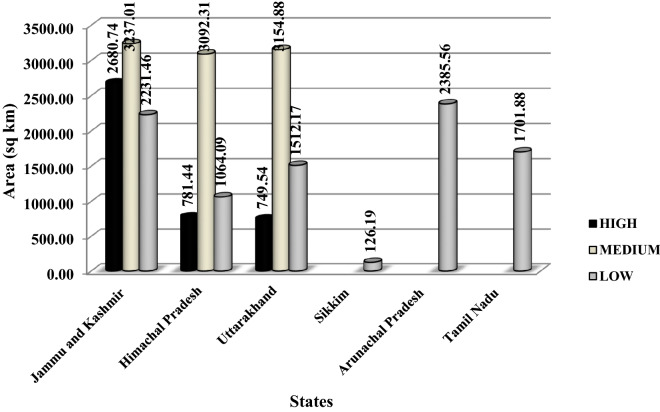
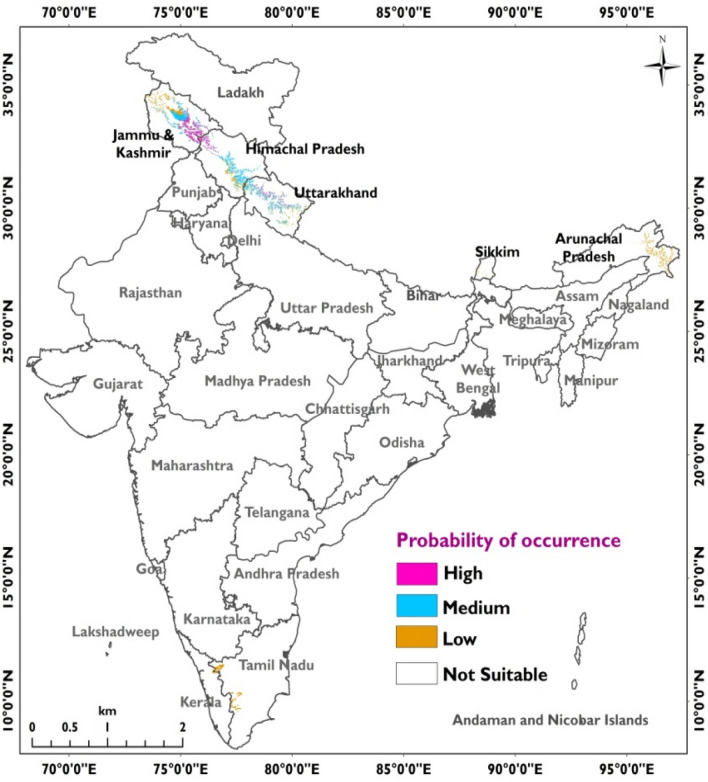
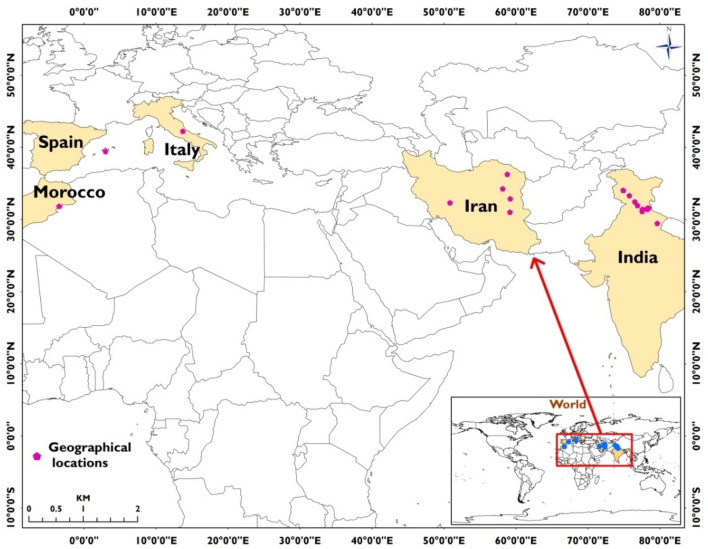
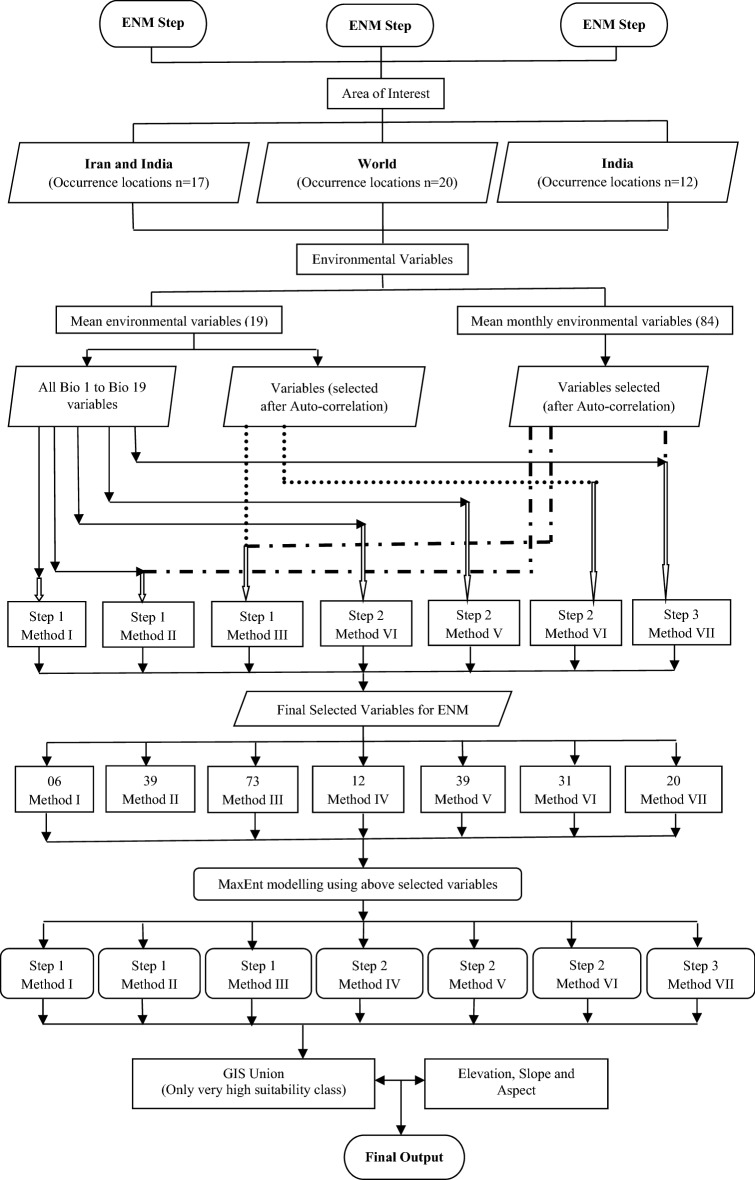
Crocus sativus L. (saffron) is a globally used expensive spice. There are a few countries like Iran, Greece, Morocco, Spain, Italy, Turkey, France, Switzerland, Pakistan, China, Japan and Australia where this spice is cultivated and exported to other countries. India contributes 5% of the world's total production of which 90% is supplied only from its Jammu and Kashmir (J&K) regions. In India, the production of saffron from J&K is 3.83 tonnes whereas its annual demand is approximately 100 tonnes. In this country, there are geographical regions that have similar environmental and ecological conditions to J&K and possess the possibility of introducing this crop. Identification of such regions can be made using Ecological Niche Modelling (ENM). Therefore, 'MaxEnt' ENM was carried out using 103 environmental variables, 20 presence data and topographic parameters (elevation, slope and aspect) to find suitable regions for saffron production in unconventional areas of India. The achieved area under the curve for the model was 0.99. The precipitation and temperature were the main environmental variable influencing its cultivation. The saffron was sowed in these new modelled locations in India representing its various states such as Himachal Pradesh, Uttarakhand, Arunachal Pradesh, Sikkim, Manipur and Tamil Nadu. The quality, as well as yield of saffron produced in some of these regions, were evaluated and found at par with the saffron grown traditionally in India. Based on the promising results obtained in this work, we are expanding saffron cultivation to more modelled areas in India to meet our national demand.
藏红花(番红花)是一种全球广泛使用的昂贵香料。有几个国家,如伊朗、希腊、摩洛哥、西班牙、意大利、土耳其、法国、瑞士、巴基斯坦、中国、日本和澳大利亚,这些国家种植和向其他国家出口这种香料。印度的番红花产量占世界总产量的 5%,其中 90%仅来自其查谟和克什米尔(J&K)地区。在印度,J&K 的番红花产量为 3.83 吨,而其年需求量约为 100 吨。在这个国家,有一些地理区域具有与 J&K 相似的环境和生态条件,并有可能引入这种作物。可以使用生态位建模(ENM)来识别这些区域。因此,使用 103 个环境变量、20 个存在数据和地形参数(海拔、坡度和方位)进行了“MaxEnt”ENM,以找到印度非传统地区种植番红花的适宜区域。该模型的曲线下面积达到 0.99。降水和温度是影响其种植的主要环境变量。番红花被播种在印度的这些新建模的地点,代表了它的各个邦,如喜马偕尔邦、北阿坎德邦、阿鲁纳恰尔邦、锡金邦、曼尼普尔邦和泰米尔纳德邦。在这些地区中的一些地区评估了番红花的质量和产量,发现与印度传统种植的番红花相当。基于这项工作中获得的有希望的结果,我们正在将番红花种植扩展到印度更多的建模地区,以满足我们的国家需求。