Li Chunlin, Wang Yuangeng, Li Baopeng, Su Shanshan
Department of Encephalopathy, Affiliated Hospital of Shandong University of Traditional Chinese Medicine, Jinan, People's Republic of China.
First College of Clinical Medicine, Shandong University of Traditional Chinese Medicine, Jinan, People's Republic of China.
Neuropsychiatr Dis Treat. 2022 Jul 6;18:1375-1384. doi: 10.2147/NDT.S368227. eCollection 2022.
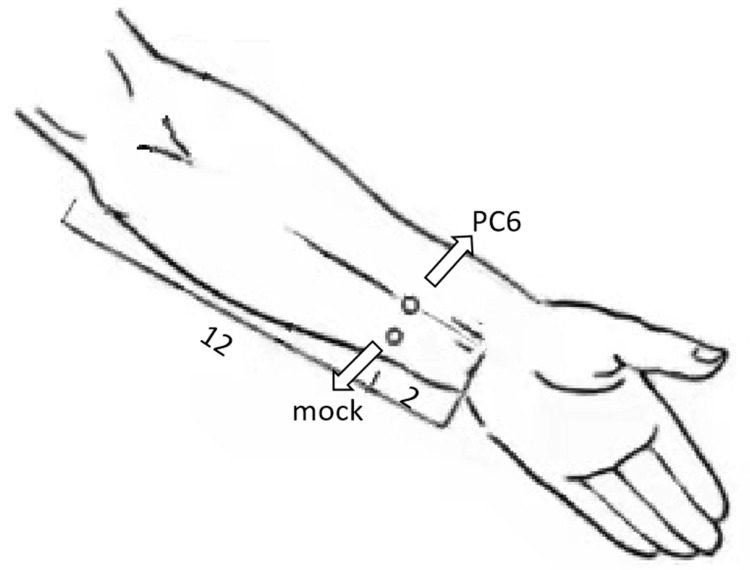
Acupuncture of PC6 points has the effects of calming, tranquilizing, regulating qi, and relieving pain and has been clinically found to alleviate anxiety disorders. To explore the mechanism of improvement at the Neiguan point acupuncture in anxiety patients, we used fMRI to observe the changes in brain function in patients with immediate anxiety before and after acupuncture at the Neiguan point.
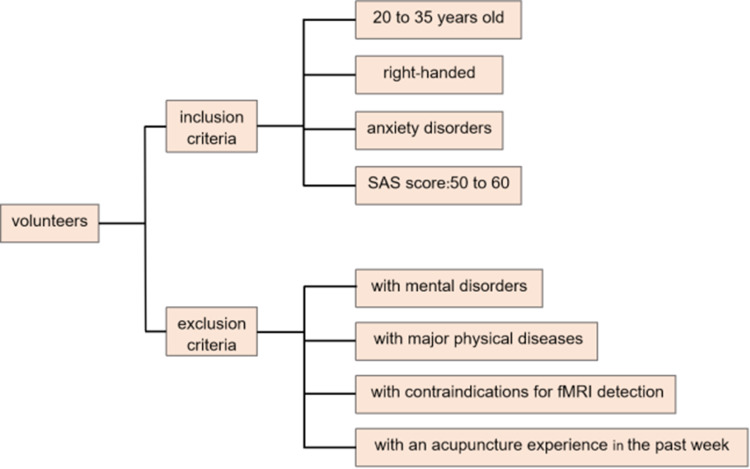
The experiment followed the principle of randomized, single-blind design. Twenty-four anxiety volunteers (14 males and 10 females, 20-35 years old) were divided randomly into two groups: a group of acupuncture at Neiguan and a group of acupuncture at non-acupoint. Functional magnetic resonance imaging (fMRI) was applied to measure brain activity pre- and post-acupuncture. The amplitude of low-frequency fluctuations (ALFF) and seed-based functional connectivity (FC) was used to analyze the activity and network of brain regions. Statistical analysis was done using SPSS 21.0 and REST 1.8 software.
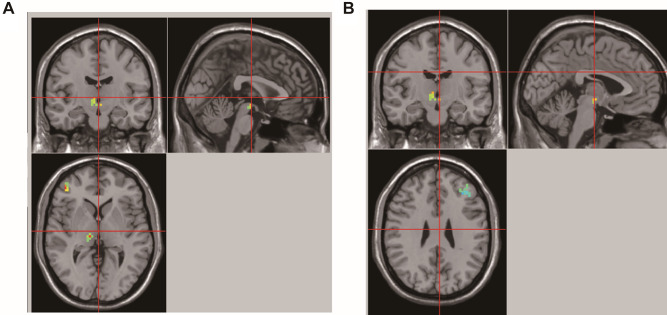
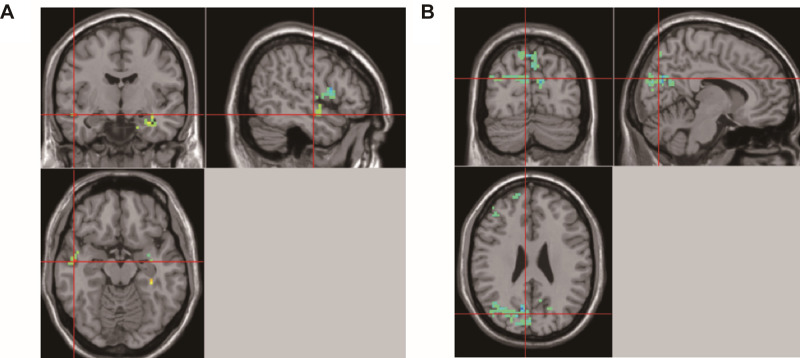
ALFF results revealed that post-acupuncture at Neiguan increased the activity of the left parahippocampal gyrus, fusiform gyrus, and right superior temporal gyrus and decreased the activity of the right middle frontal gyrus, right precuneus, and cuneus. Post-acupuncture at non-acupoint led to a significant ALFF increase in the thalamus and middle frontal gyrus. The ALFF in the left middle frontal gyrus was decreased. Functional connectivity in several anterior default mode network (DMN) regions and vermis cerebelli at left parahippocampal/fusiform gyri was increased, and connectivity in bilateral superior temporal gyri was decreased. FC with posterior DMN regions decreased at the right middle frontal gyrus, right precuneus, and cuneus.
Our study elucidates that acupuncture at Neiguan modulates anxiety by activating or deactivating these brain anxiety-related regions and provides potential explanations for the application of PC6 acupuncture in mental diseases.
针刺内关穴具有安神、定志、理气、止痛的作用,临床发现其可缓解焦虑症。为探讨针刺内关穴改善焦虑症患者的机制,我们采用功能磁共振成像(fMRI)观察了焦虑症患者针刺内关穴前后脑功能的变化。
本实验遵循随机、单盲设计原则。将24名焦虑症志愿者(男14名,女10名,年龄20 - 35岁)随机分为两组:内关穴针刺组和非穴位针刺组。采用功能磁共振成像(fMRI)测量针刺前后的脑活动。低频振幅(ALFF)和基于种子点的功能连接(FC)用于分析脑区的活动和网络。使用SPSS 21.0和REST 1.8软件进行统计分析。
ALFF结果显示,针刺内关穴后,左侧海马旁回、梭状回和右侧颞上回的活动增强,右侧额中回、右侧楔前叶和楔叶的活动减弱。针刺非穴位后,丘脑和额中回的ALFF显著增加。左侧额中回的ALFF降低。左侧海马旁回/梭状回的几个前默认模式网络(DMN)区域和小脑蚓部的功能连接增加,双侧颞上回的连接减少。右侧额中回、右侧楔前叶和楔叶与后DMN区域的FC降低。
我们的研究表明,针刺内关穴通过激活或失活这些与焦虑相关的脑区来调节焦虑,为针刺内关穴在精神疾病中的应用提供了潜在的解释。