College of Plant Sciences, Tarim University, Alar, 843300, China.
National and Local Joint Engineering Laboratory for High-Efficiency and Quality Cultivation and Deep Processing Technology of Characteristic Fruit Trees in Southern Xinjiang, Alar, 843300, China.
Sci Rep. 2022 Jul 14;12(1):12066. doi: 10.1038/s41598-022-14850-2.
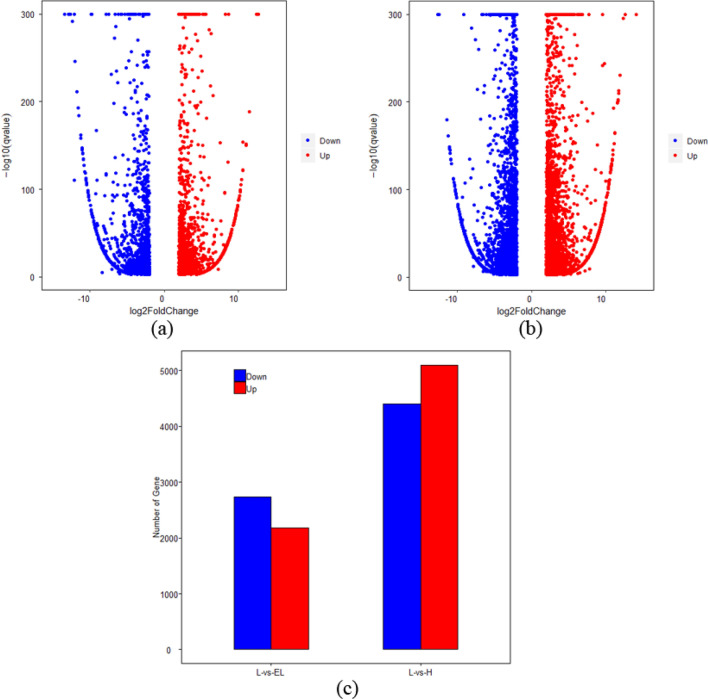
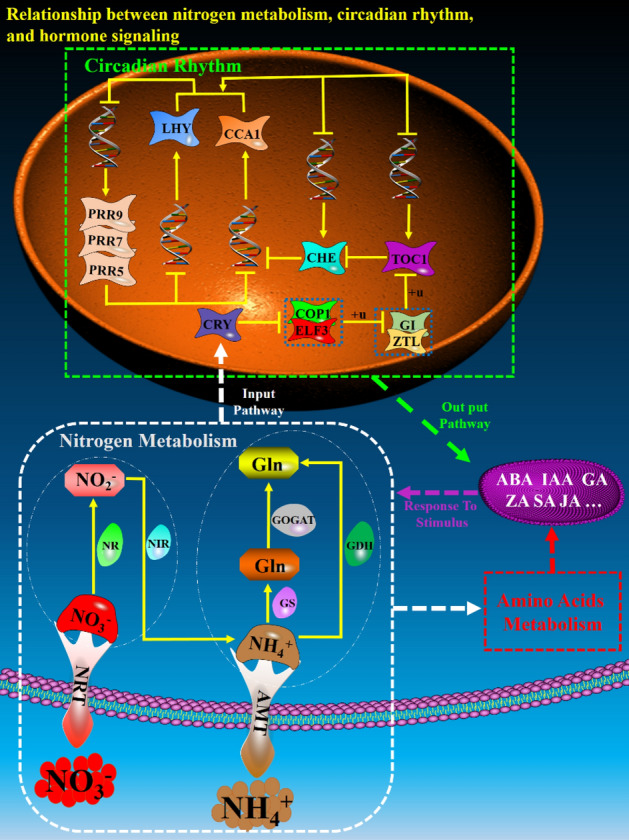
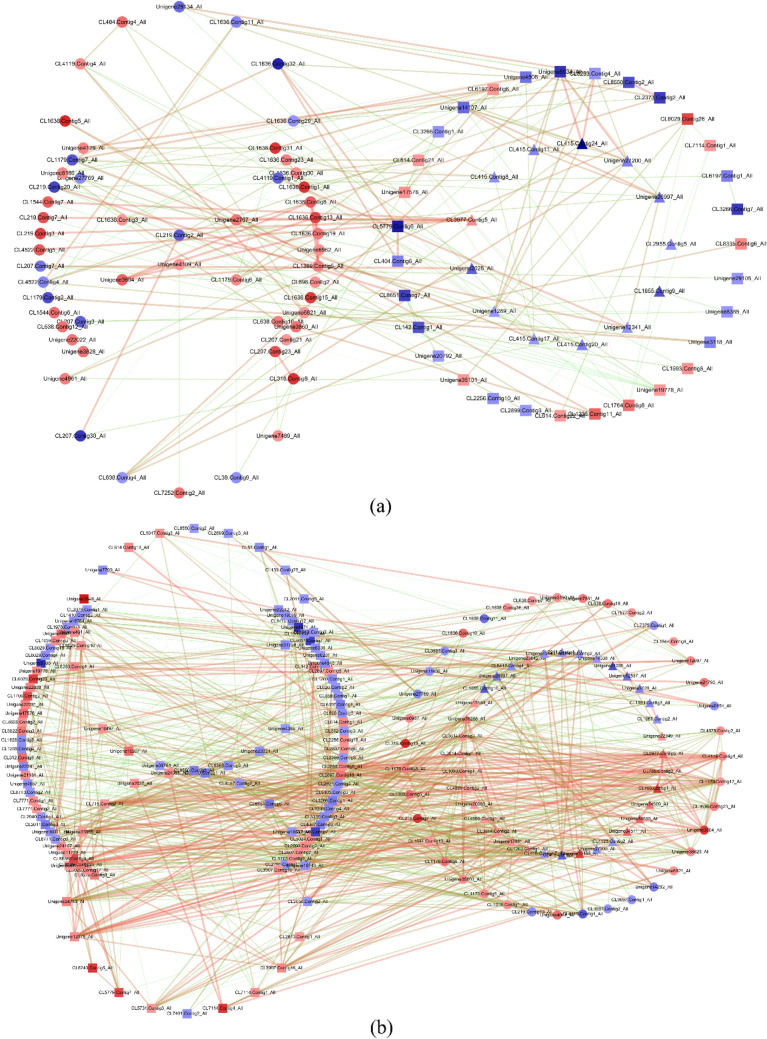
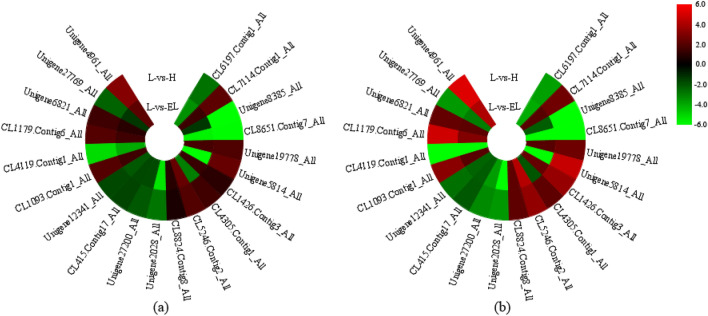
Nitrogen is an essential core element in walnut seedling growth and development. However, nitrogen starvation and excessive nitrogen stress can cause stunted growth and development of walnut seedlings, and environmental pollution is also of concern. Therefore, it is necessary to study the mechanism of walnut seedling resistance to nitrogen stress. In this study, morphological and physiological observations and transcriptome sequencing of walnut seedlings under nitrogen starvation and excess nitrogen stress were performed. The results showed that walnut seedlings under nitrogen starvation and excess stress could adapt to the changes in the nitrogen environment by changing the coordination of their root morphology and physiological indexes. Based on an analysis of transcriptome data, 4911 differential genes (DEGs) were obtained (2180 were upregulated and 2731 were downregulated) in a comparison of nitrogen starvation and control groups. A total of 9497 DEGs (5091 upregulated and 4406 downregulated) were obtained in the comparison between the nitrogen overdose and control groups. When these DEGs were analysed, the differential genes in both groups were found to be significantly enriched in the plant's circadian pathway. Therefore, we selected the circadian rhythm as the focus for further analysis. We made some discoveries by analysing the gene co-expression network of nitrogen metabolism, circadian rhythm, and hormone signal transduction. (a) Nitrite nitrogen (NO) or Glu may act as a nitrogen signal to the circadian clock. (b) Nitrogen signalling may be input into the circadian clock by regulating changes in the abundance of the CRY1 gene. (c) After the nitrogen signal enters the circadian clock, the expression of the LHY gene is upregulated, which causes a phase shift in the circadian clock. (d) The RVE protein may send information about the circadian clock's response to nitrogen stress back to the nitrogen metabolic pathway via the hormone transduction pathway. In conclusion, various metabolic pathways in the roots of walnut seedlings coordinated with one another to resist the ill effects of nitrogen stress on the root cells, and these coordination relationships were regulated by the circadian clock. This study is expected to provide valuable information on the circadian clock regulation of plant resistance to nitrogen stress.
氮是核桃幼苗生长和发育的必需核心元素。然而,氮饥饿和过量氮胁迫会导致核桃幼苗生长发育受阻,且环境污染也令人关注。因此,有必要研究核桃幼苗对氮胁迫的抗性机制。本研究对氮饥饿和过量氮胁迫下的核桃幼苗进行形态和生理观察及转录组测序。结果表明,氮饥饿和过量氮胁迫下的核桃幼苗可以通过改变根系形态和生理指标的协调来适应氮环境的变化。基于对转录组数据的分析,在氮饥饿与对照组的比较中获得了 4911 个差异基因(2180 个上调,2731 个下调)。在氮过量与对照组的比较中,共获得 9497 个差异基因(5091 个上调,4406 个下调)。对这些差异基因进行分析时,发现两组的差异基因均显著富集在植物的昼夜节律途径中。因此,我们选择昼夜节律作为进一步分析的重点。通过分析氮代谢、昼夜节律和激素信号转导的基因共表达网络,我们有了一些发现。(a)亚硝酸盐氮(NO)或 Glu 可能作为氮信号作用于生物钟。(b)氮信号可能通过调节 CRY1 基因丰度的变化输入生物钟。(c)氮信号进入生物钟后,LHY 基因的表达上调,导致生物钟相位提前。(d)RVE 蛋白可能通过激素转导途径将生物钟对氮胁迫的反应信息反馈回氮代谢途径。综上所述,核桃幼苗根系中的各种代谢途径相互协调,共同抵抗氮胁迫对根细胞的不良影响,而这些协调关系受到生物钟的调节。本研究有望为植物抵抗氮胁迫的生物钟调控提供有价值的信息。