McFadden BioStress Laboratory, Agronomy, Horticulture, and Plant Science Department, South Dakota State University, Brookings, SD, 57006, USA.
JABSOM Bioinformatics Core, Department of Complementary & Integrative Medicine, University of Hawaii, Honolulu, HI, USA.
BMC Plant Biol. 2019 Feb 13;19(1):72. doi: 10.1186/s12870-019-1664-7.
Drought is an important constraint on grapevine sustainability. Vitis riparia, widely used in rootstock and scion breeding, has been studied in isolated leaf drying response studies; however, it is essential to identify key root and shoot water deficit signaling traits in intact plants. This information will aid improved scion and rootstock selection and management practices in grapevine. RNAseq data were generated from V. riparia roots and shoots under water deficit and well-watered conditions to determine root signaling and shoot responses to water deficit.
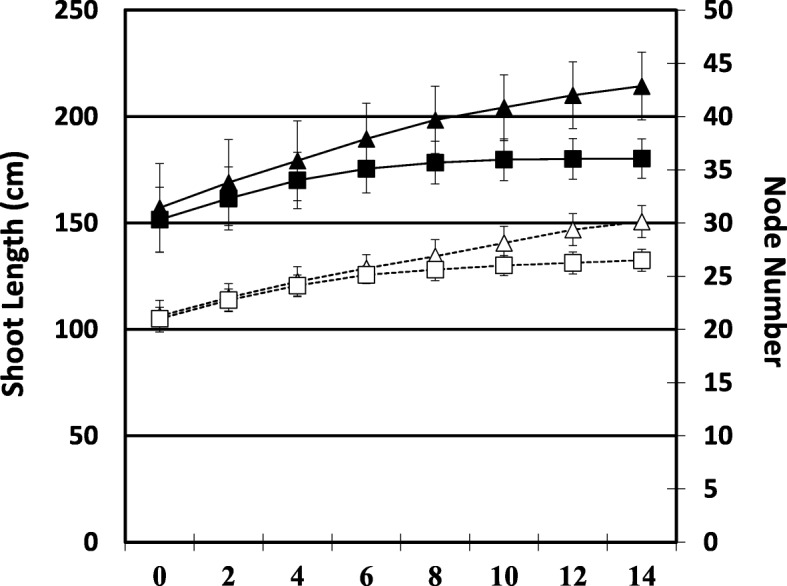
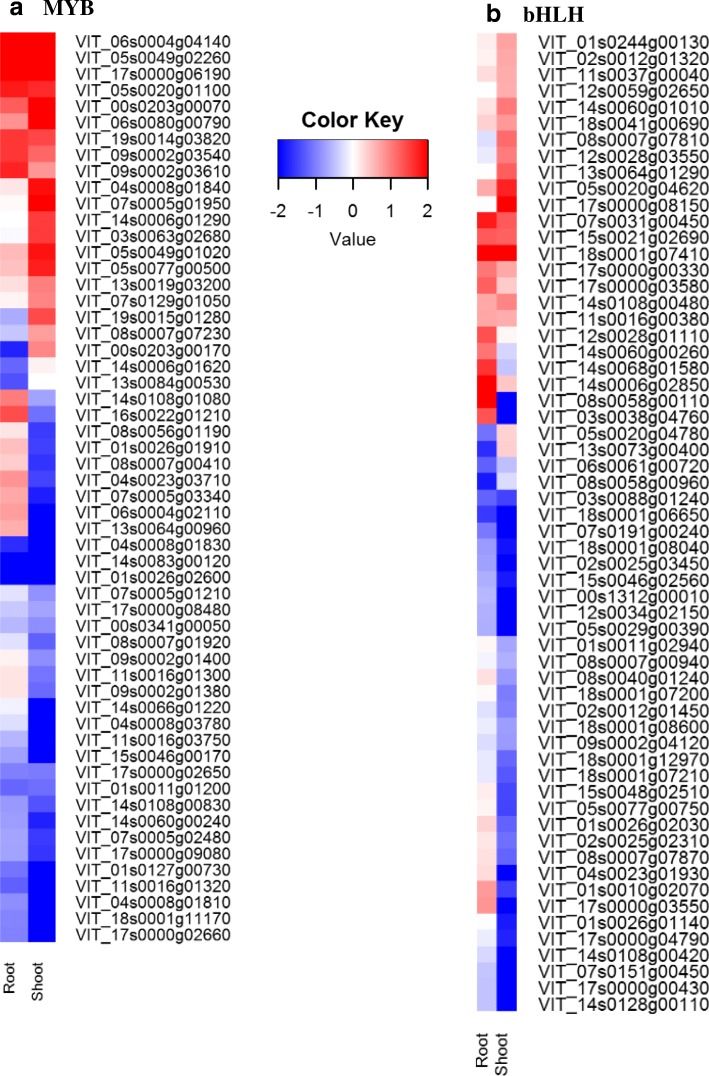
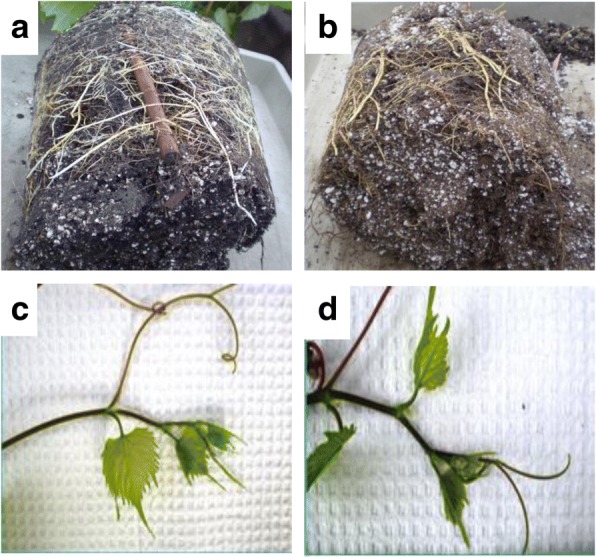
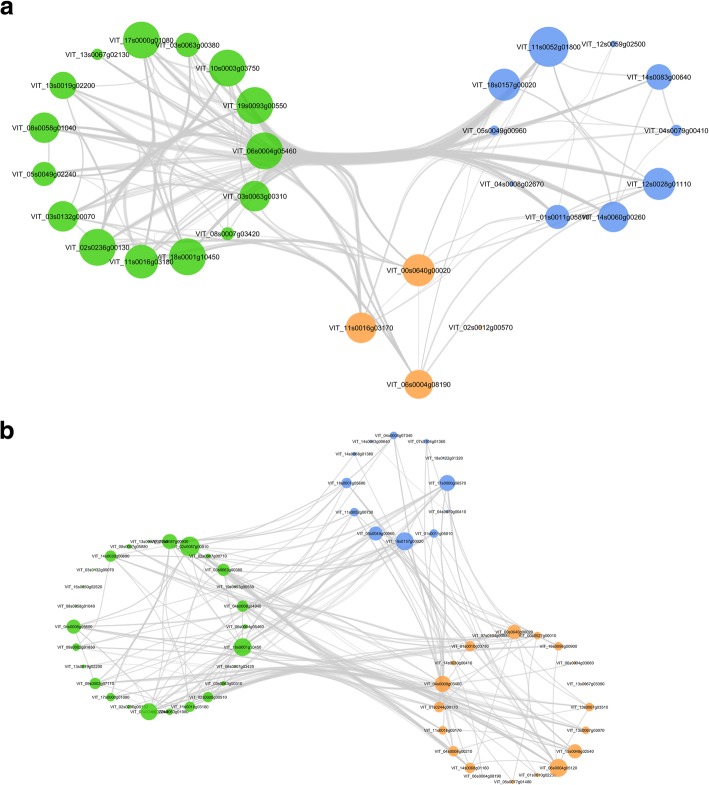
Shoot elongation, photosynthetic rate, and stomatal conductance were significantly reduced in water deficit (WD) treated than in well-watered grapevines. RNAseq analysis indicated greater transcriptional differences in shoots than in roots under WD, with 6925 and 1395 genes differentially expressed, respectively (q-value < 0.05). There were 50 and 25 VitisNet pathways significantly enriched in WD relative to well-watered treatments in grapevine shoots and roots, respectively. The ABA biosynthesis genes beta-carotene hydroxylase, zeaxanthin epoxidase, and 9-cis-epoxycarotenoid dioxygenases were up-regulated in WD root and WD shoot. A positive enrichment of ABA biosynthesis genes and signaling pathways in WD grapevine roots indicated enhanced root signaling to the shoot. An increased frequency of differentially expressed reactive oxygen species scavenging (ROS) genes were found in the WD shoot. Analyses of hormone signaling genes indicated a strong ABA, auxin, and ethylene network and an ABA, cytokinin, and circadian rhythm network in both WD shoot and WD root.
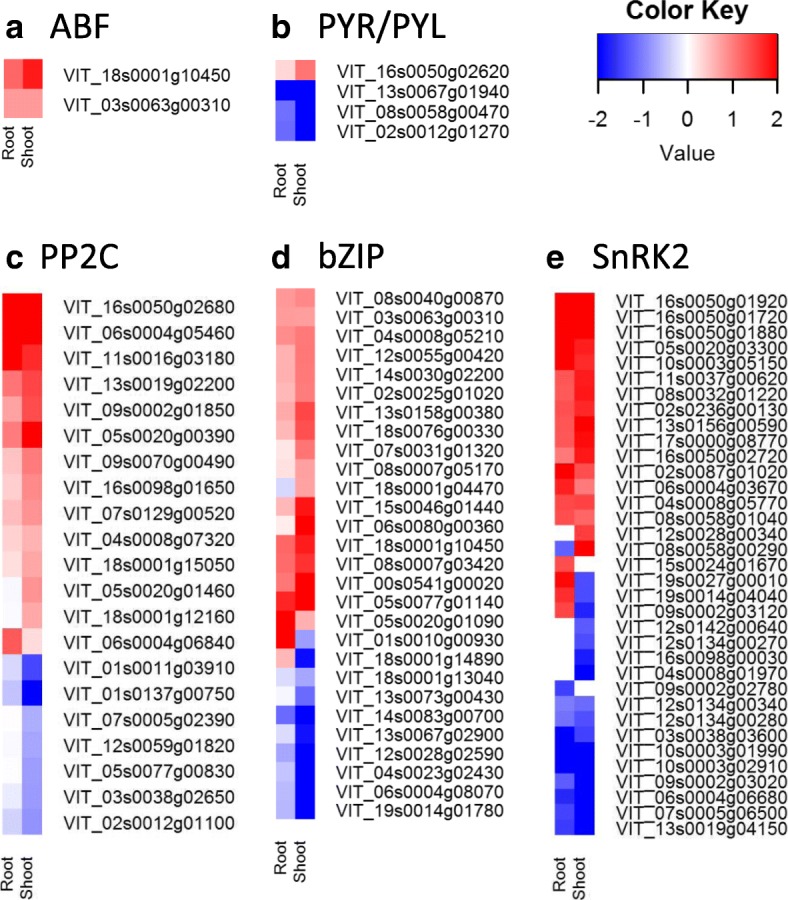
This work supports previous findings in detached leaf studies suggesting ABA-responsive binding factor 2 (ABF2) is a central regulator in ABA signaling in the WD shoot. Likewise, ABF2 may have a key role in V. riparia WD shoot and WD root. A role for ABF3 was indicated only in WD root. WD shoot and WD root hormone expression analysis identified strong ABA, auxin, ethylene, cytokinin, and circadian rhythm signaling networks. These results present the first ABA, cytokinin, and circadian rhythm signaling network in roots under water deficit. These networks point to organ specific regulators that should be explored to further define the communication network from soil to shoot.
干旱是葡萄可持续性的重要制约因素。广泛用于砧木和接穗选育的河岸葡萄,已经在孤立的叶片干燥响应研究中进行了研究;然而,在完整植株中鉴定关键的根和梢水分亏缺信号特征至关重要。这些信息将有助于改进葡萄的接穗和砧木选择和管理实践。对水分亏缺和充分供水条件下的河岸葡萄根和梢进行 RNAseq 数据分析,以确定根信号和梢对水分亏缺的响应。
与充分供水的葡萄相比,水分亏缺(WD)处理的葡萄梢伸长、光合速率和气孔导度显著降低。RNAseq 分析表明,WD 下葡萄梢的转录差异大于根,分别有 6925 个和 1395 个基因差异表达(q 值<0.05)。与充分供水处理相比,WD 下葡萄梢和根分别有 50 个和 25 个 VitisNet 途径显著富集。WD 下根和 WD 下梢的 ABA 生物合成基因β-胡萝卜素羟化酶、玉米黄质环氧化酶和 9-顺式环氧类胡萝卜素双加氧酶上调。WD 下葡萄根中 ABA 生物合成基因和信号途径的正富集表明增强了向梢的根信号。在 WD 下梢中发现了更多差异表达的活性氧(ROS)清除基因。激素信号基因分析表明,WD 下梢和 WD 下根中存在强烈的 ABA、生长素和乙烯网络以及 ABA、细胞分裂素和昼夜节律网络。
这项工作支持了先前在离体叶片研究中的发现,表明 ABA 响应结合因子 2(ABF2)是 WD 下梢 ABA 信号中的一个核心调节剂。同样,ABF2 可能在河岸葡萄 WD 下梢和 WD 下根中具有关键作用。ABF3 仅在 WD 下根中起作用。WD 下梢和 WD 下根的激素表达分析确定了强烈的 ABA、生长素、乙烯、细胞分裂素和昼夜节律信号网络。这些结果首次在水分亏缺下根系中展示了 ABA、细胞分裂素和昼夜节律信号网络。这些网络指出了器官特异性调节剂,应该对其进行探索以进一步定义从土壤到梢的通讯网络。