MRC Integrative Epidemiology Unit, University of Bristol, Bristol, UK.
Section of Translational Epidemiology, Division of Population Health Sciences, Bristol Medical School, University of Bristol, Bristol, UK.
Nat Genet. 2022 Aug;54(8):1155-1166. doi: 10.1038/s41588-022-01121-z. Epub 2022 Jul 14.
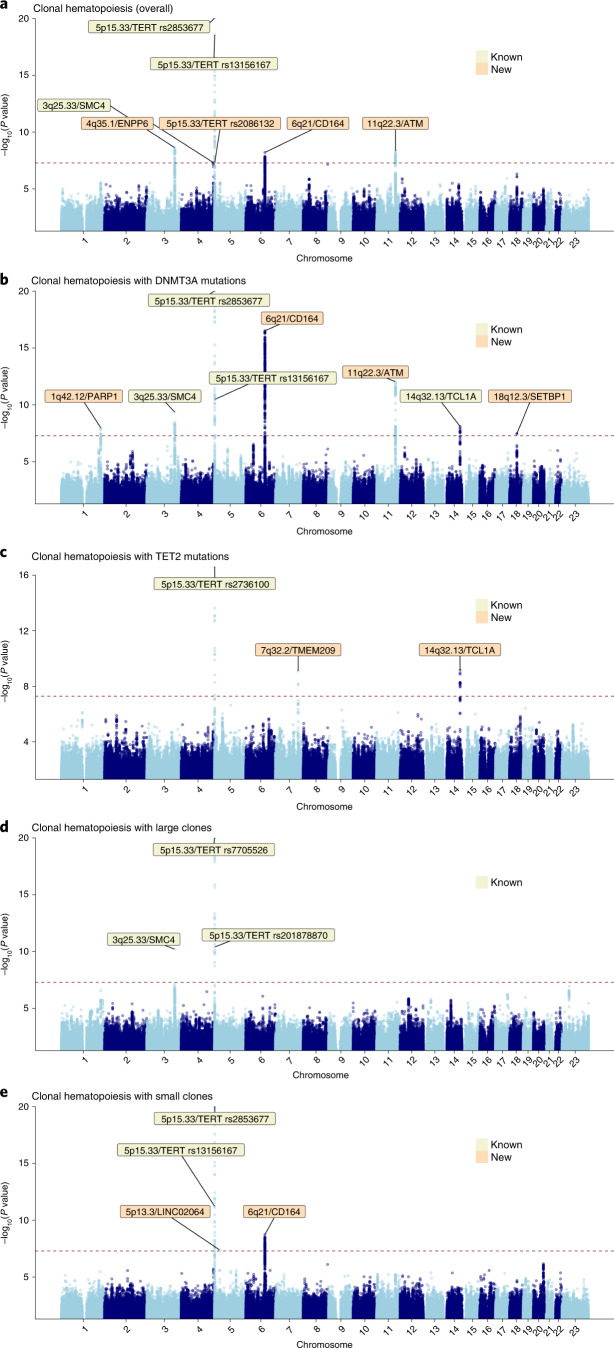
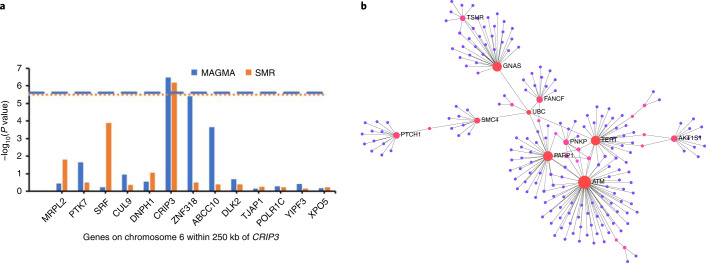
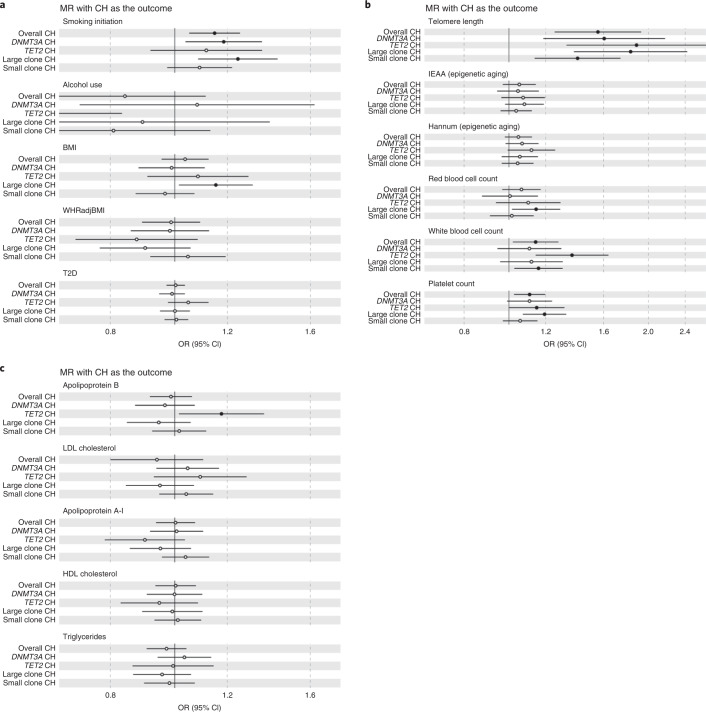
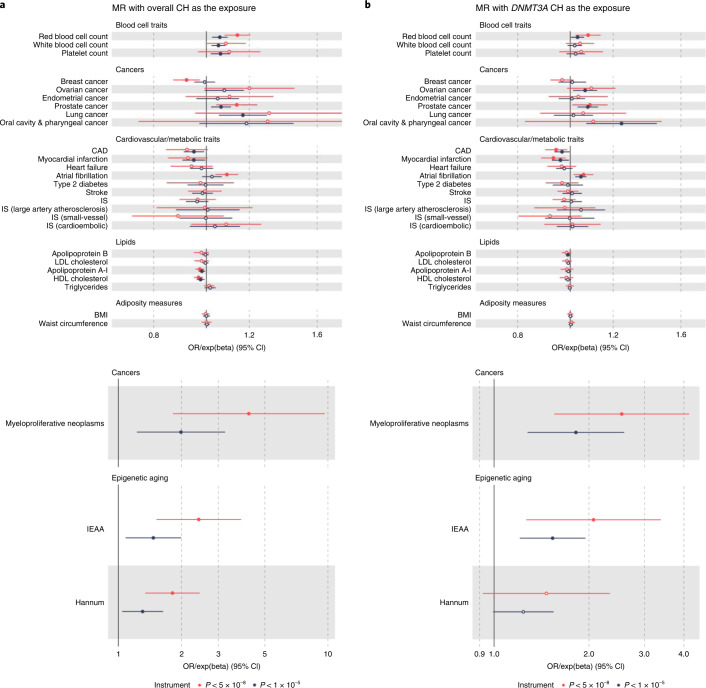
Clonal hematopoiesis (CH), the clonal expansion of a blood stem cell and its progeny driven by somatic driver mutations, affects over a third of people, yet remains poorly understood. Here we analyze genetic data from 200,453 UK Biobank participants to map the landscape of inherited predisposition to CH, increasing the number of germline associations with CH in European-ancestry populations from 4 to 14. Genes at new loci implicate DNA damage repair (PARP1, ATM, CHEK2), hematopoietic stem cell migration/homing (CD164) and myeloid oncogenesis (SETBP1). Several associations were CH-subtype-specific including variants at TCL1A and CD164 that had opposite associations with DNMT3A- versus TET2-mutant CH, the two most common CH subtypes, proposing key roles for these two loci in CH development. Mendelian randomization analyses showed that smoking and longer leukocyte telomere length are causal risk factors for CH and that genetic predisposition to CH increases risks of myeloproliferative neoplasia, nonhematological malignancies, atrial fibrillation and blood epigenetic ageing.
克隆性造血 (CH) 是由体细胞驱动突变驱动的造血干细胞及其后代的克隆性扩增,影响超过三分之一的人,但仍知之甚少。在这里,我们分析了来自 200,453 名英国生物库参与者的遗传数据,以绘制 CH 的遗传易感性图谱,将欧洲血统人群中与 CH 相关的种系关联数量从 4 个增加到 14 个。新基因座上的基因涉及 DNA 损伤修复 (PARP1、ATM、CHEK2)、造血干细胞迁移/归巢 (CD164) 和髓系肿瘤发生 (SETBP1)。一些关联是 CH 亚型特异性的,包括 TCL1A 和 CD164 中的变异,它们与 DNMT3A- 与 TET2- 突变的 CH 呈相反关联,这两种最常见的 CH 亚型,提出了这两个基因座在 CH 发展中的关键作用。孟德尔随机化分析表明,吸烟和更长的白细胞端粒长度是 CH 的因果风险因素,而 CH 的遗传易感性增加了骨髓增生性肿瘤、非血液恶性肿瘤、心房颤动和血液表观遗传衰老的风险。