The First Department of Anesthesia, Zhongshan City People's Hospital, No.2, Sunwen East Road, Shiqi District, Zhongshan, 528400, China.
Department of Anesthesiology, cancer prevention and treatment center, Sun Yat Sen University, Guangzhou, 510060, China.
BMC Cancer. 2022 Jul 14;22(1):765. doi: 10.1186/s12885-022-09848-y.
Drug resistance is a considerable challenge for chemotherapy in non-small cell lung cancer (NSCLC). Propofol, a commonly used intravenous anesthetics, has been reported to suppress the malignancy of various cancers. However, the effects of propofol on cisplatin (DDP) sensitivity in NSCLC and its molecular mechanisms have not been clearly clarified yet, and the present study aimed to resolve this problem.
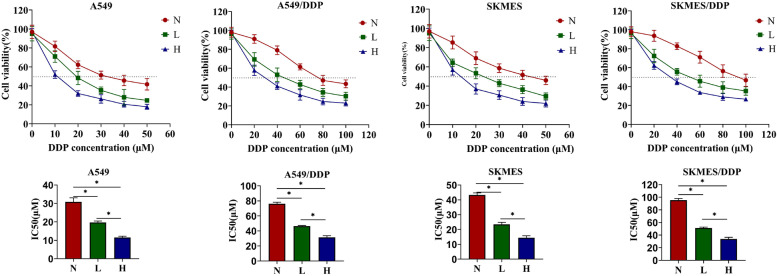
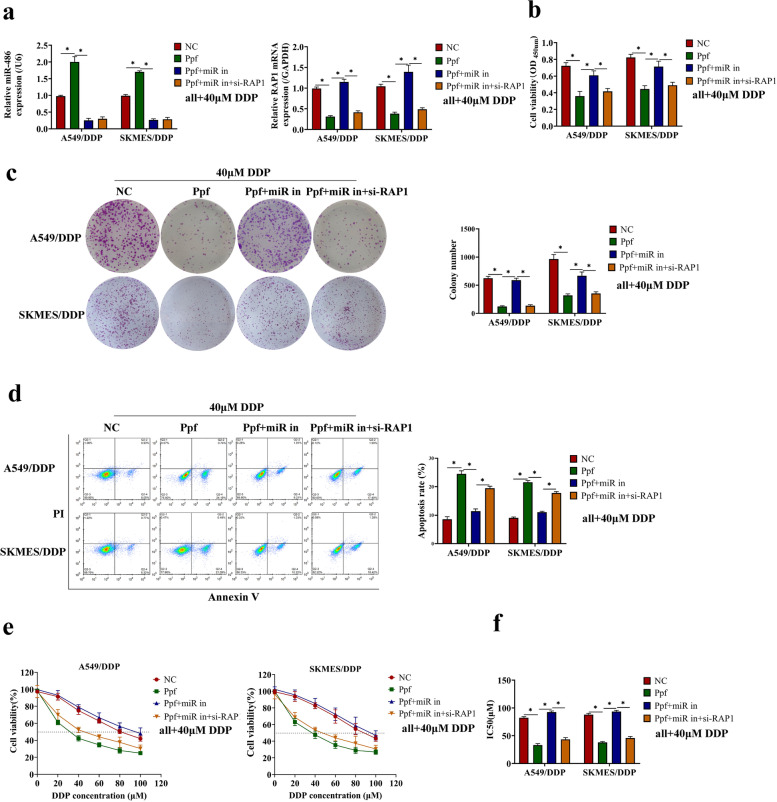
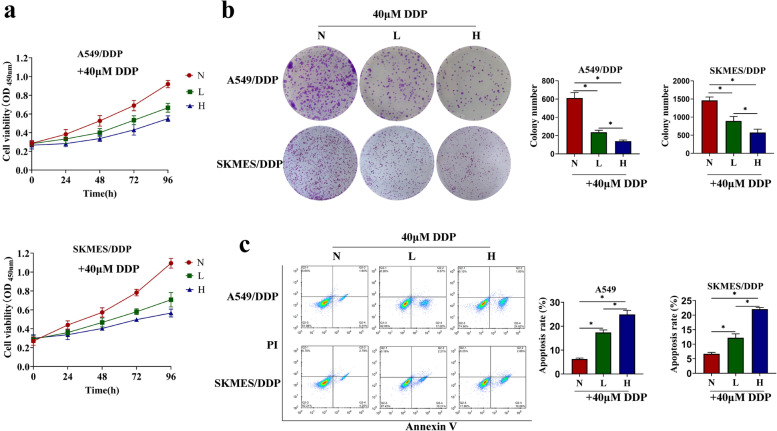
NSCLC cells were co-treated with propofol and DDP, Cell Counting kit-8 assay, colony formation assay and flow cytometry were conducted to test the role of propofol in regulating DDP-resistance in NSCLC. Next, through conducting quantitative real-time polymerase chain reaction, dual-luciferase gene reporter system and western blot, the responsible molecular axis in propofol regulating the DDP sensitivity in NSCLC was uncovered, and the function verification experiments were performed by transfection with the inhibitors or small interfering RNAs of those molecules.
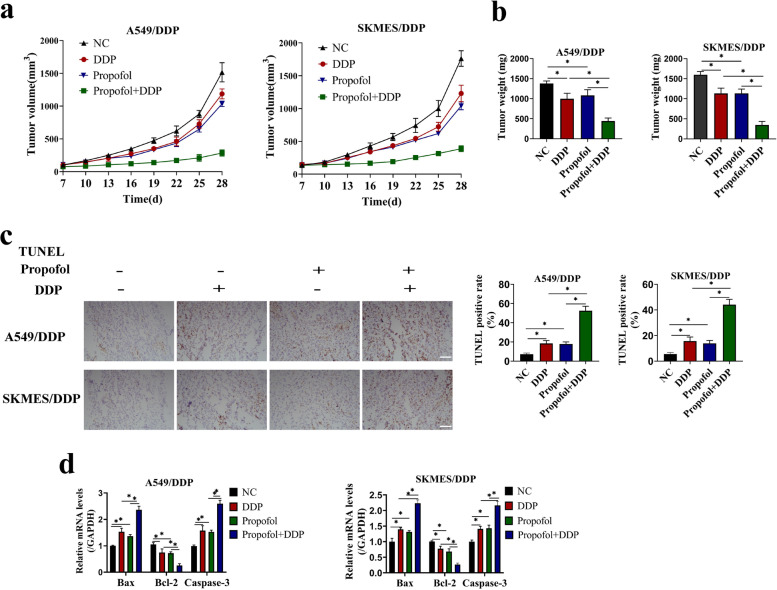
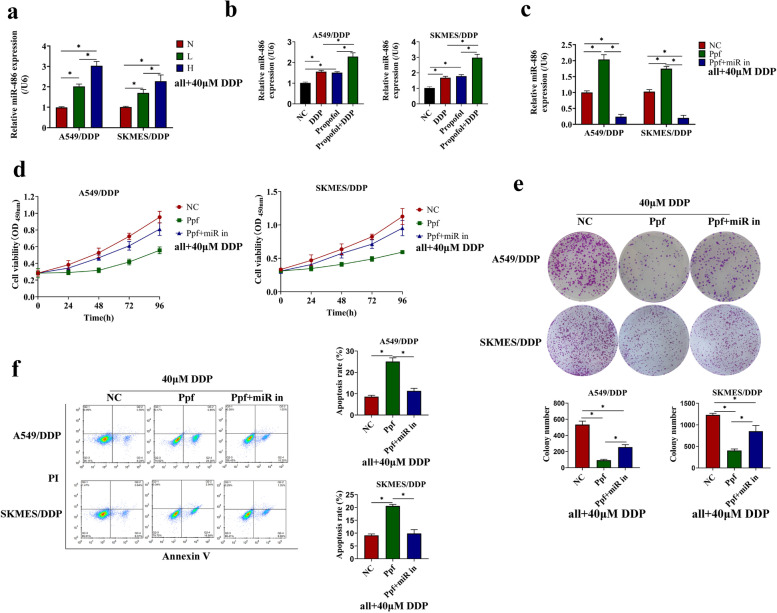
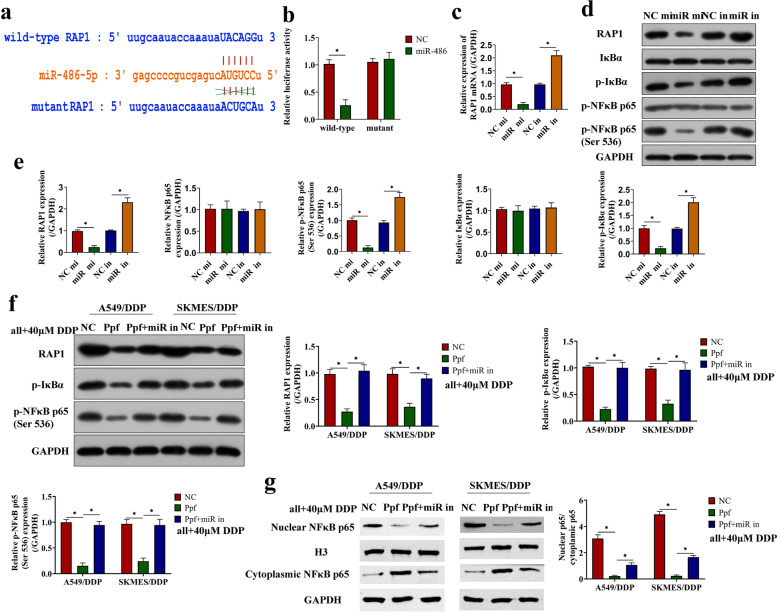
Propofol suppressed cell viability, colony formation ability, tumorigenesis, and promoted cell apoptosis to enhance DDP-sensitivity in NSCLC in vitro and in vivo. Propofol increased miR-486-5p level in NSCLC cells and xenograft tumors tissues in a N6-methyladenosine (m6A)-dependent manner, thus inactivating the Ras-associated protein1 (RAP1)-NF-kappaB (NF-κB) axis. Propofol regulated the miR-486-5p/RAP1-NF-κB axis to improve DDP-sensitivity in NSCLC.
Taken together, this study firstly investigates the detailed molecular mechanisms by which propofol enhanced DDP-sensitivity in NSCLC cells, and a novel m6A-dependent miR-486-5p/RAP1-NF-κB axis is identified to be closely associated with the process.
耐药性是化疗治疗非小细胞肺癌(NSCLC)的一个重大挑战。丙泊酚是一种常用的静脉麻醉剂,已被报道能抑制多种癌症的恶性程度。然而,丙泊酚对 NSCLC 中顺铂(DDP)敏感性的影响及其分子机制尚不清楚,本研究旨在解决这一问题。
将 NSCLC 细胞与丙泊酚和 DDP 共同处理,通过细胞计数试剂盒-8 检测、集落形成检测和流式细胞术检测丙泊酚在调节 NSCLC 中 DDP 耐药性中的作用。接下来,通过进行定量实时聚合酶链反应、双荧光素酶基因报告系统和 Western blot 分析,揭示了丙泊酚调节 NSCLC 中 DDP 敏感性的相关分子轴,并通过这些分子的抑制剂或小干扰 RNA 的转染进行功能验证实验。
丙泊酚在体外和体内均能抑制 NSCLC 细胞活力、集落形成能力、肿瘤发生,并促进细胞凋亡,从而增强 DDP 敏感性。丙泊酚以 N6-甲基腺苷(m6A)依赖的方式增加 NSCLC 细胞和异种移植肿瘤组织中的 miR-486-5p 水平,从而使 Ras 相关蛋白 1(RAP1)-核因子-κB(NF-κB)轴失活。丙泊酚通过调节 miR-486-5p/RAP1-NF-κB 轴来提高 NSCLC 中的 DDP 敏感性。
总之,本研究首次研究了丙泊酚增强 NSCLC 细胞中 DDP 敏感性的详细分子机制,并确定了一个新的与该过程密切相关的 m6A 依赖性 miR-486-5p/RAP1-NF-κB 轴。