Department of Pulmonary and Critical Care Medicine, Zhongshan Hospital of Xiamen University, School of Medicine, Xiamen University; The Third Clinical Medical College of Fujian Medical University, Xiamen, Fujian, China (mainland).
Department of Pulmonary and Critical Care Medicine, First Affiliated Hospital of Fujian Medical University, Fuzhou, Fujian, China (mainland).
Med Sci Monit. 2022 Jul 15;28:e936760. doi: 10.12659/MSM.936760.
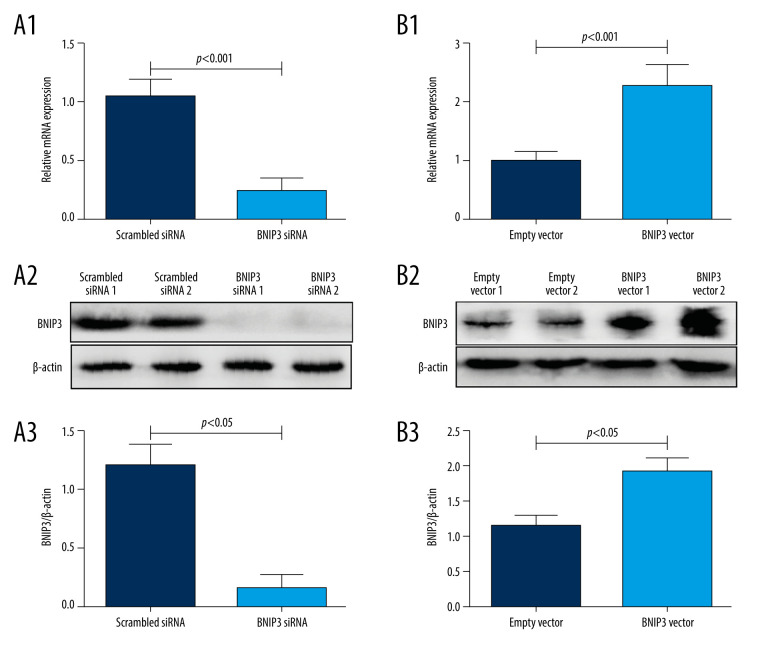
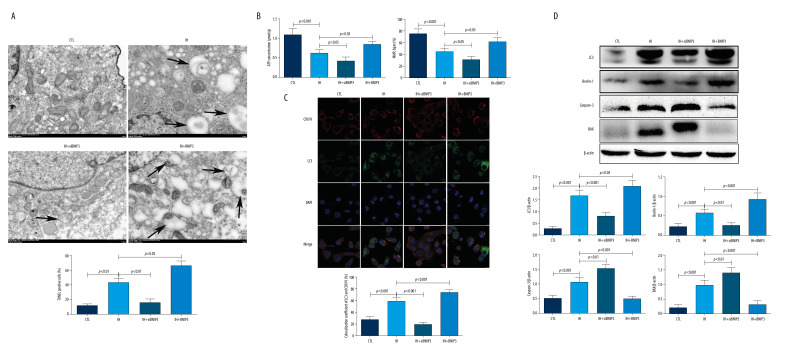
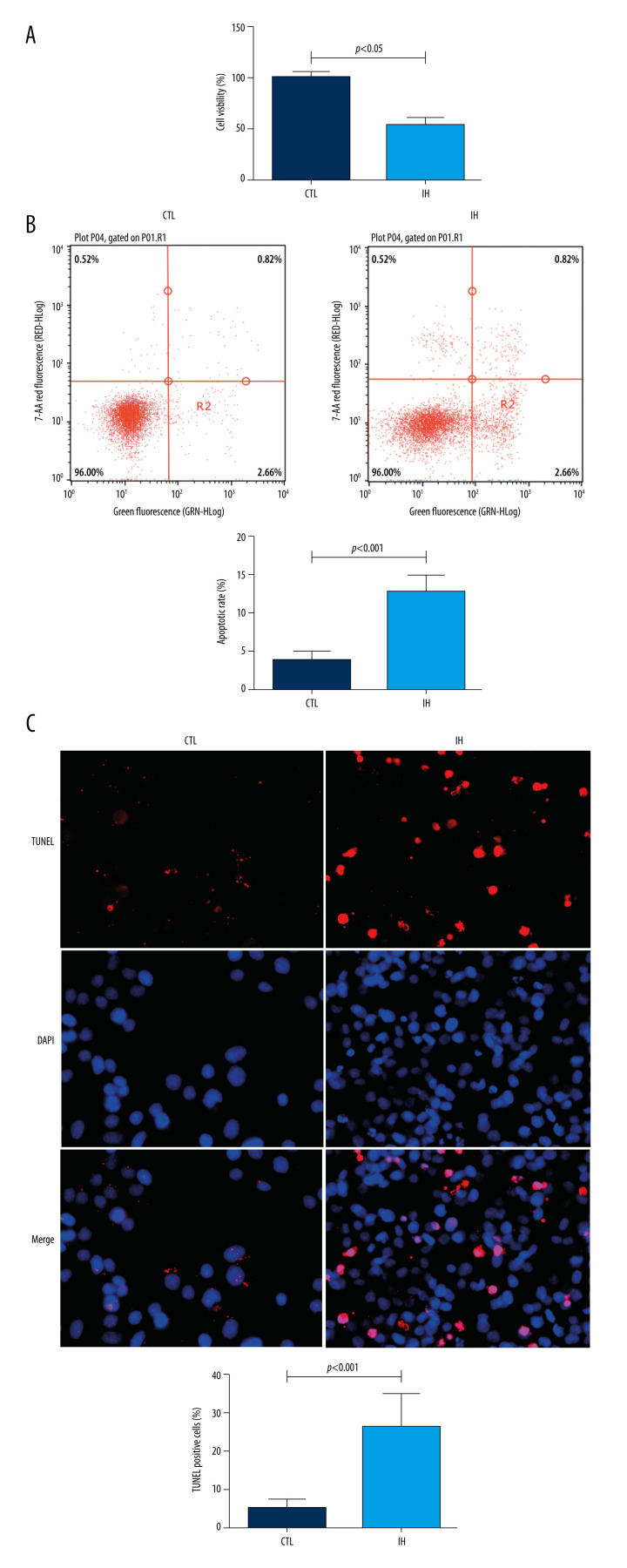
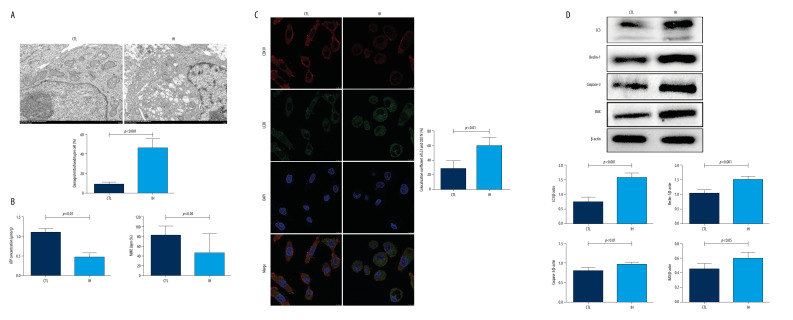
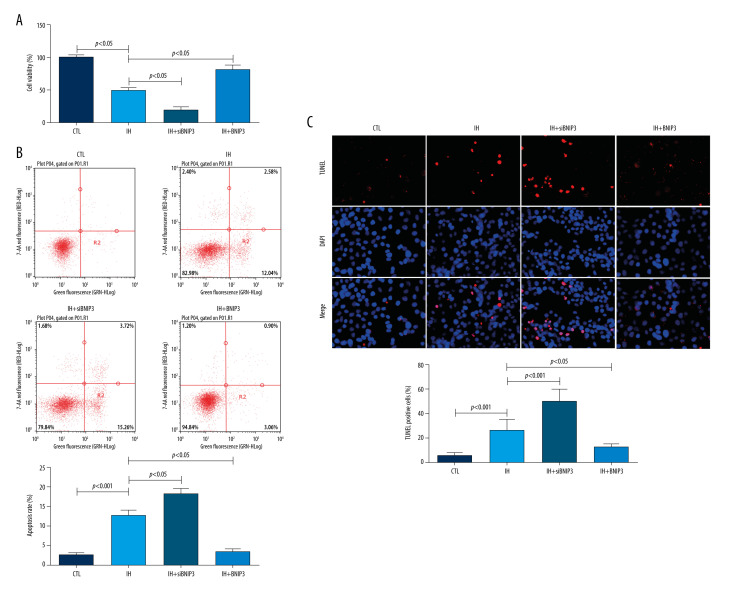
BACKGROUND As a novel pathophysiological characteristic of obstructive sleep apnea, intermittent hypoxia (IH) contributes to human renal tubular epithelial cells impairment. The underlying pathological mechanisms remain unrevealed. The present study aimed to evaluate the influence of Bcl-2 19-kDa interacting protein 3 (BNIP3)-mediated mitophagy on IH-induced renal tubular epithelial cell impairment. MATERIAL AND METHODS Human kidney proximal tubular (HK-2) cells were exposed to IH condition. IH cycles were as follows: 21% oxygen for 25 min, 21% descended to 1% for 35 min, 1% oxygen sustaining for 35 min, and 1% ascended to 21% for 25 min. The IH exposure lasted 24 h with 12 cycles of hypoxia and re-oxygenation. Both the siBNIP3 and BNIP3 vector were transfected to cells. Cell viability and apoptosis, mitochondrial morphology and function, and mitophagy were detected by cell counting kit-8, flow cytometry and TUNEL staining, transmission electron microscopy, western blotting, and immunofluorescence, respectively. RESULTS In the IH-induced HK-2 cells, inhibition of BNIP3 further aggravated mitochondrial structure damage, and decreased mitophagy level, leading to increased cell apoptosis and decreased cell viability. While overexpression of BNIP3 enhanced mitophagy, which protected mitochondrial structure, it can decrease cell death in HK-2 cells exposed to IH. CONCLUSIONS The present study showed that BNIP3-mediated mitophagy plays a protective role against IH-induced renal tubular epithelial cell impairment.
间歇性低氧( IH )作为阻塞性睡眠呼吸暂停的一种新的病理生理特征,导致人类肾小管上皮细胞损伤。其潜在的病理机制尚不清楚。本研究旨在评估 BNIP3 介导线粒体自噬对 IH 诱导的肾小管上皮细胞损伤的影响。
将人肾近端小管( HK-2 )细胞暴露于 IH 条件下。 IH 循环如下:21%氧气 25 分钟,21%下降到 1% 35 分钟,1%氧气维持 35 分钟,1%上升到 21% 25 分钟。 IH 暴露持续 24 小时,共进行 12 个缺氧和复氧循环。将 siBNIP3 和 BNIP3 载体转染到细胞中。通过细胞计数试剂盒-8 、流式细胞术和 TUNEL 染色、透射电子显微镜、western blot 和免疫荧光分别检测细胞活力和凋亡、线粒体形态和功能以及自噬。
在 IH 诱导的 HK-2 细胞中,抑制 BNIP3 进一步加重线粒体结构损伤,降低自噬水平,导致细胞凋亡增加,细胞活力降低。而过表达 BNIP3 增强了自噬,保护了线粒体结构,可减少 HK-2 细胞中 IH 诱导的细胞死亡。
本研究表明, BNIP3 介导线粒体自噬对 IH 诱导的肾小管上皮细胞损伤具有保护作用。