de Liyis Bryan Gervais, Nolan John, Maharjana Made Agus
Medical Faculty, Udayana University, Bali, Indonesia.
Department of Orthopaedic and Traumatology, Sanglah General Hospital Denpasar, Bali, Indonesia.
Biomedicine (Taipei). 2022 Jun 1;12(2):1-9. doi: 10.37796/2211-8039.1308. eCollection 2022.
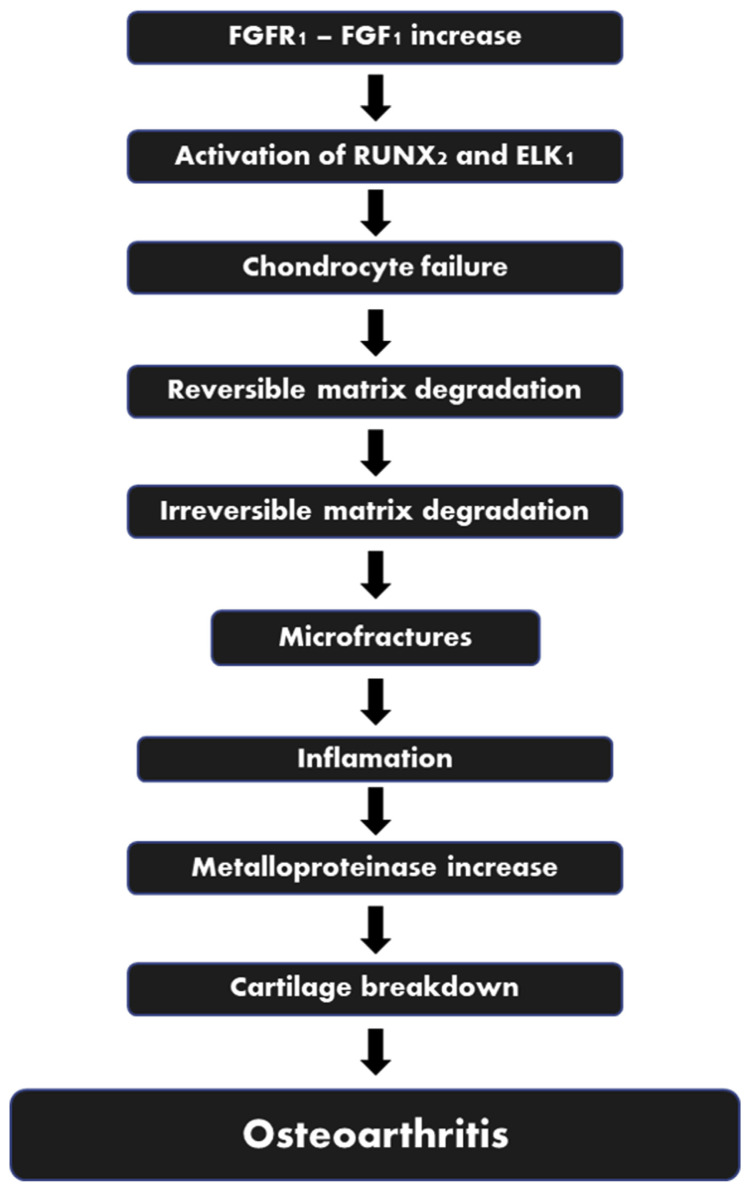
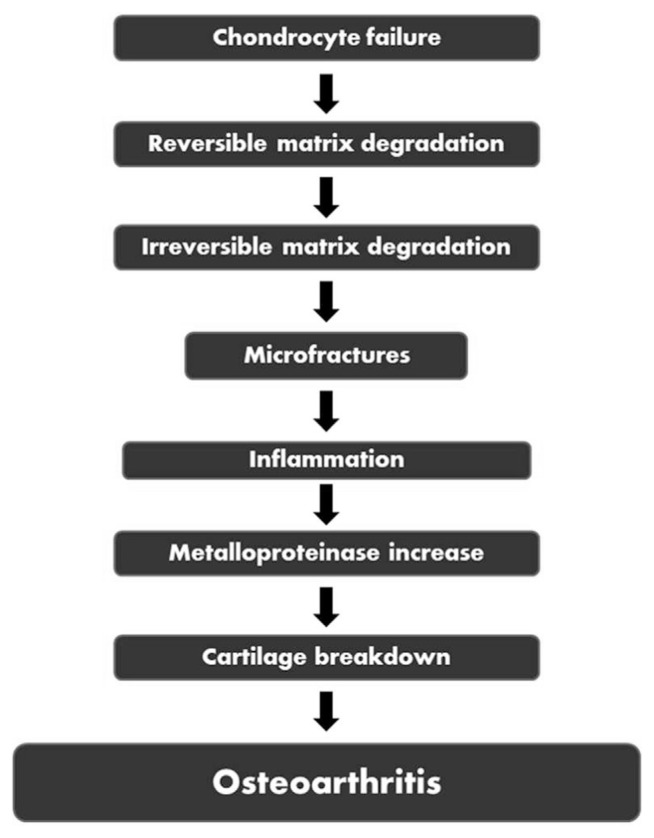
Osteoarthritis (OA) is a joint condition that causes significant impairment of the chondrocyte. The gradual degradation of the cartilage lining of one or more freely moving joints, as well as persistent inflammation, are the causes of osteoarthritis. Current medications focus on alleviating symptoms rather than curing the condition. The aim of this review is to evaluate the potential use of fibroblast growth factor receptor 1-bound extracellular vesicle as novel therapy for osteoarthritis. This review article was completed by searching for the keywords "Fibroblast Growth Factor Receptor 1", "Extracellular Vesicle", and "Osteoarthritis" in various journals in several search engines. Of the 102 scientific articles found, 95 were found suitable to be used as material in the making of this article. The upregulated amount of FGFR1 (fibroblast growth factor receptors) signalling suggesting the progression of degenerative cartilage that commonly seen in osteoarthritis (OA) patients. Several studies showed that the involvement of extracellular vesicles (EV) derived from MSCs could enhance cartilage repair and protect the cartilage from degradation. EVs have the potential to deliver effects to specific cell types through ligand-receptor interactions and several pathway mechanisms related with the FGFR1. EVs and FGFR1-bound Evs have been postulated in recent years as possible therapeutic targets in human articular cartilage. The protective benefits on both chondrocytes and synoviocytes in OA patients can be achieved by administering the MSC-EVs that may also stimulate chondrocyte proliferation and migration EVs have a promising potential to become a novel therapy for treating patients with OA. However, further researches are need to be conducted to discover further the application of this therapy.
骨关节炎(OA)是一种导致软骨细胞严重受损的关节疾病。一个或多个活动关节的软骨内衬逐渐退化以及持续炎症是骨关节炎的病因。目前的药物主要侧重于缓解症状而非治愈该疾病。本综述的目的是评估成纤维细胞生长因子受体1结合的细胞外囊泡作为骨关节炎新疗法的潜在用途。这篇综述文章是通过在多个搜索引擎中的各种期刊上搜索关键词“成纤维细胞生长因子受体1”、“细胞外囊泡”和“骨关节炎”完成的。在找到的102篇科学文章中,发现95篇适合用作本文撰写的素材。FGFR1(成纤维细胞生长因子受体)信号上调表明在骨关节炎(OA)患者中常见的退行性软骨进展。多项研究表明,源自间充质干细胞的细胞外囊泡(EV)的参与可以增强软骨修复并保护软骨免于退化。EV有潜力通过配体-受体相互作用以及与FGFR1相关的几种途径机制将作用传递给特定细胞类型。近年来,EV和FGFR1结合的EV被认为可能是人类关节软骨的治疗靶点。通过施用间充质干细胞-EV可以实现对OA患者软骨细胞和滑膜细胞的保护作用,这也可能刺激软骨细胞增殖和迁移。EV有潜力成为治疗OA患者的一种新疗法。然而,需要进一步开展研究以进一步探索这种疗法的应用。