Battersea Dogs and Cats Home, Battersea, London, UK.
Centre for Evidence-Based Veterinary Medicine, University of Nottingham, Sutton Bonington Campus, Loughborough, UK.
Sci Rep. 2022 Jul 15;12(1):12128. doi: 10.1038/s41598-022-15194-7.
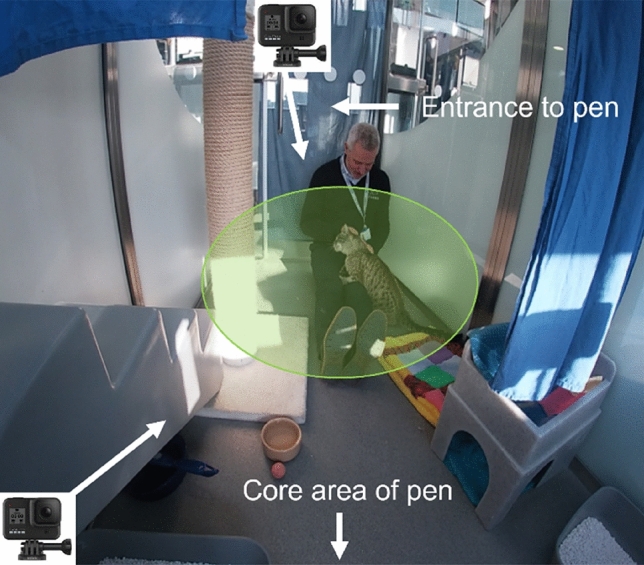
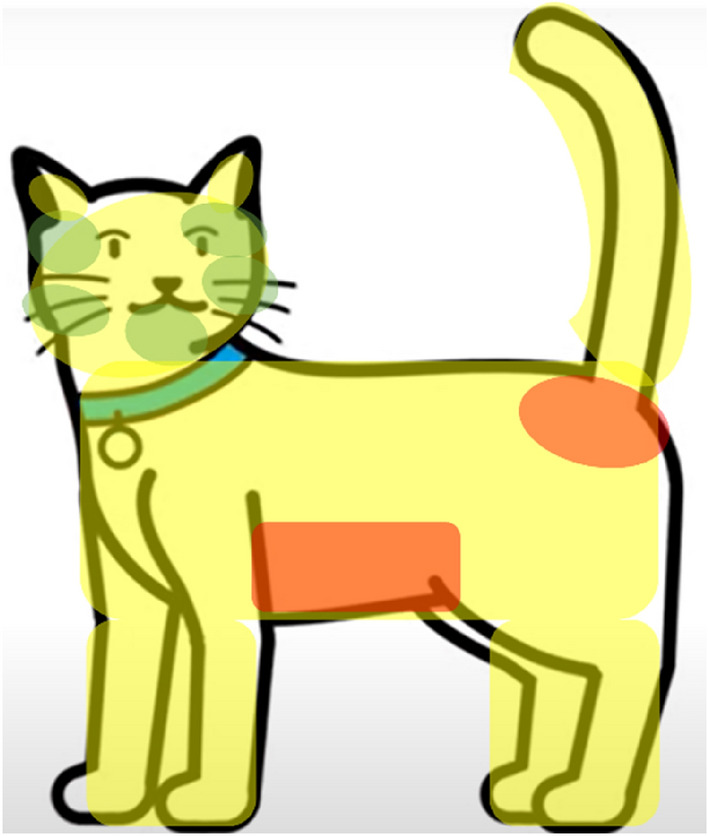
Humans' individual differences including their demographics, personality, attitudes and experiences are often associated with important outcomes for the animals they interact with. This is pertinent to companion animals such as cats and dogs, given their social and emotional importance to humans and degree of integration into human society. However, the mechanistic underpinnings and causal relationships that characterise links between human individual differences and companion animal behaviour and wellbeing are not well understood. In this exploratory investigation, we firstly quantified the underlying structure of, and variation in, human's styles of behaviour during typical human-cat interactions (HCI), focusing on aspects of handling and interaction known to be preferred by cats (i.e. 'best practice'), and their variation. We then explored the potential significance of various human individual differences as predictors of these HCI styles. Seven separate HCI styles were identified via Principal Component Analysis (PCA) from averaged observations for 119 participants, interacting with sociable domestic cats within a rehoming context. Using General Linear Models (GLMs) and an Information Theoretic (IT) approach, we found these HCI PC components were weakly to strongly predicted by factors including cat-ownership history, participant personality (measured via the Big Five Inventory, or BFI), age, work experience with animals and participants' subjective ratings of their cat behaviour knowledge. Paradoxically, greater cat ownership experiences and self-assessed cat knowledge were not positively associated with 'best practice' styles of HCI, but were instead generally predictive of HCI styles known to be less preferred by cats, as was greater participant age and Neuroticism. These findings have important implications regarding the quality of human-companion animal relationships and dyadic compatibility, in addition to the role of educational interventions and their targeting for optimal efficacy. In the context of animal adoption, these results strengthen the (limited) evidence base for decision making associated with cat-adopter screening and matching. In particular, our results suggest that greater cat ownership experiences and self-reports of cat knowledge might not necessarily convey advantages for cats in the context of HCI.
人类的个体差异,包括他们的人口统计学特征、个性、态度和经验,通常与他们互动的动物的重要结果有关。这与猫和狗等伴侣动物有关,因为它们对人类具有社交和情感上的重要性,并且已经融入了人类社会。然而,人类个体差异与伴侣动物行为和健康之间联系的机制基础和因果关系还没有得到很好的理解。在这项探索性研究中,我们首先量化了人类在典型人与猫互动(HCI)过程中行为风格的潜在结构和变化,重点关注猫喜欢的处理和互动方面(即“最佳实践”)及其变化。然后,我们探索了各种人类个体差异作为这些 HCI 风格预测指标的潜在意义。通过对 119 名参与者在再领养背景下与社交性家养猫互动的平均观察数据进行主成分分析(PCA),确定了七种不同的 HCI 风格。使用广义线性模型(GLM)和信息理论(IT)方法,我们发现这些 HCI PC 成分被包括猫的拥有史、参与者个性(通过大五人格量表或 BFI 测量)、年龄、动物工作经验以及参与者对其猫行为知识的主观评价在内的因素弱到强地预测。矛盾的是,更多的养猫经验和自我评估的猫知识与 HCI 的“最佳实践”风格没有正相关,反而通常预测了不太受猫欢迎的 HCI 风格,参与者年龄较大和神经质也是如此。这些发现除了教育干预及其针对最佳效果的目标外,对人类-伴侣动物关系的质量和对偶兼容性具有重要意义。在动物收养的背景下,这些结果为与猫收养者筛选和匹配相关的决策提供了有限的证据支持。特别是,我们的研究结果表明,在 HCI 方面,更多的养猫经验和自我报告的猫知识可能并不一定对猫有利。