Medcial School, Anhui University of Science & Technology, Huainan, 232001, China.
Institute of Environment-Friendly Materials and Occupational Health of Anhui, University of Science and Technology, Wuhu, 241003, China.
BMC Cancer. 2022 Jul 16;22(1):778. doi: 10.1186/s12885-022-09874-w.
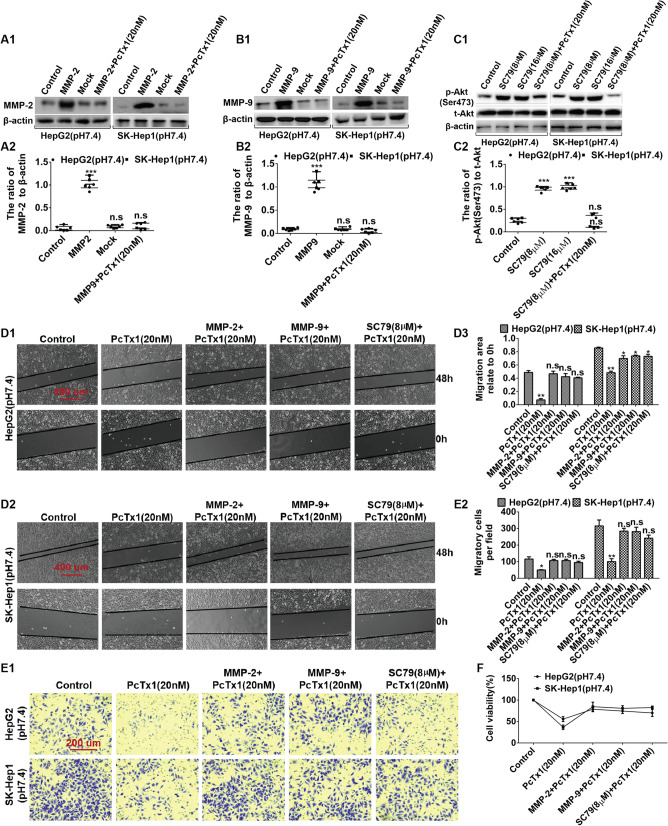
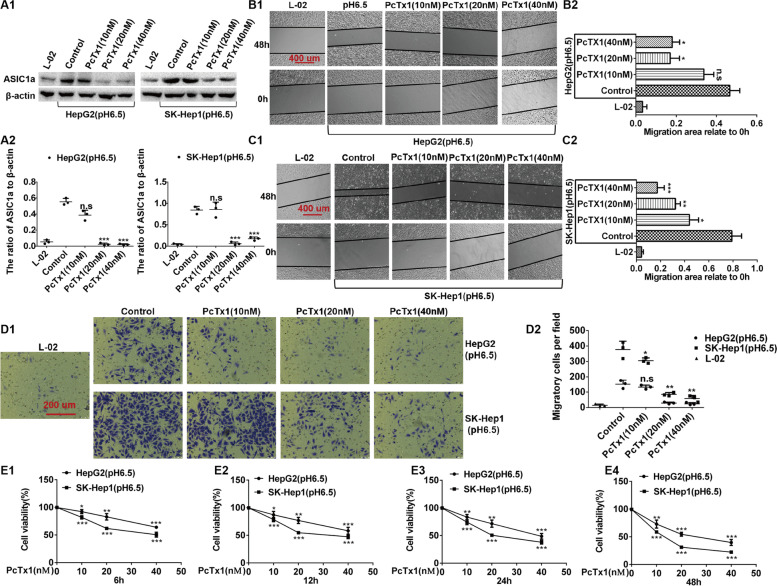
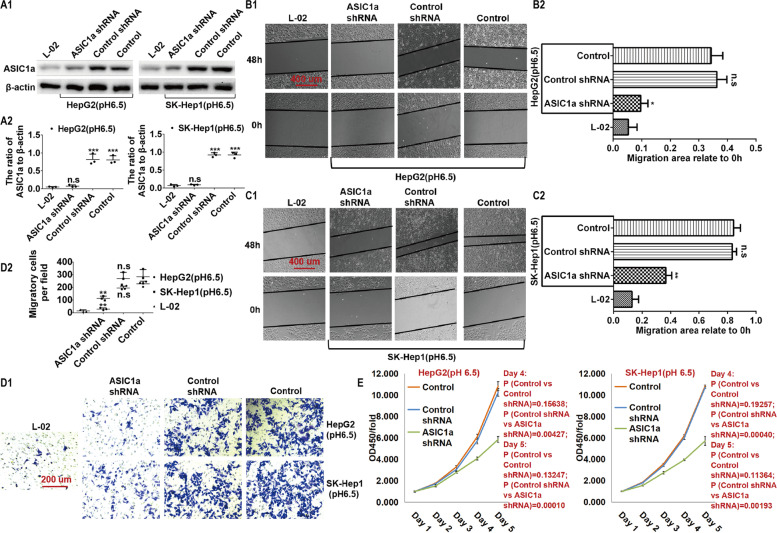
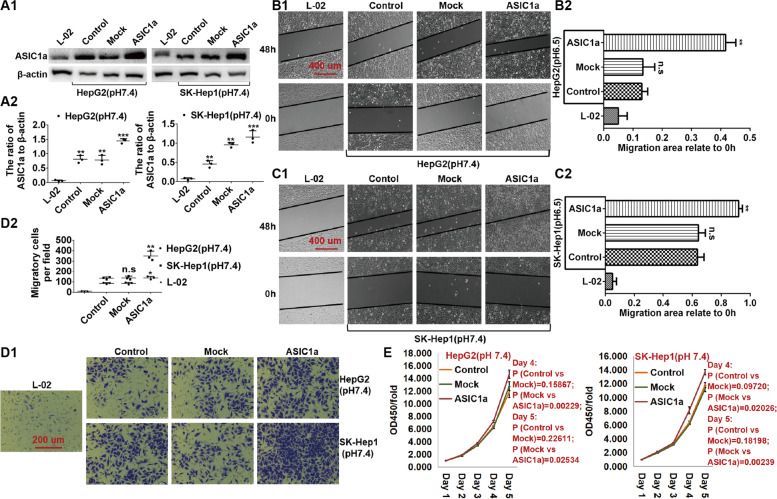
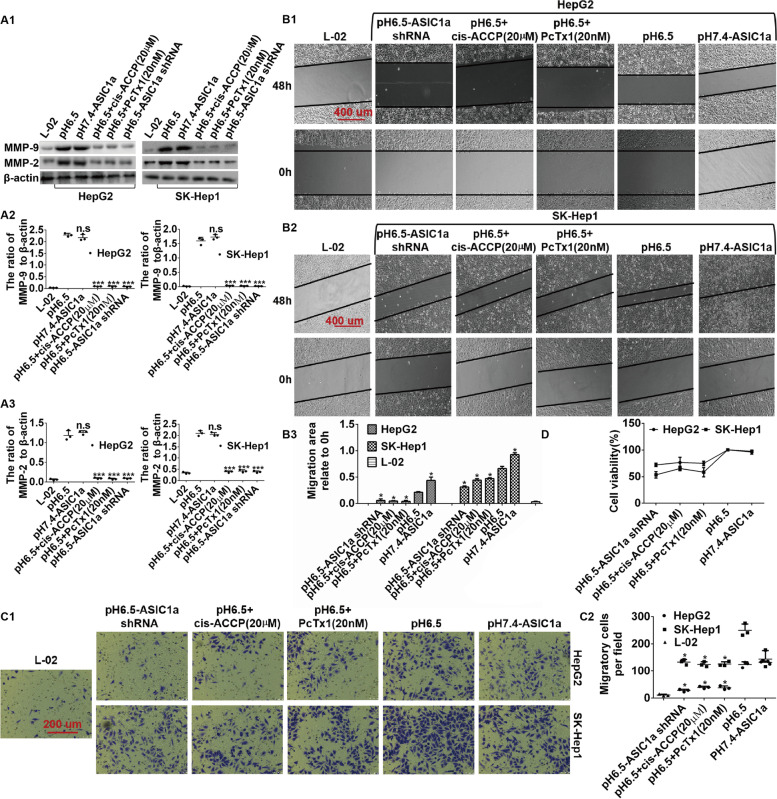
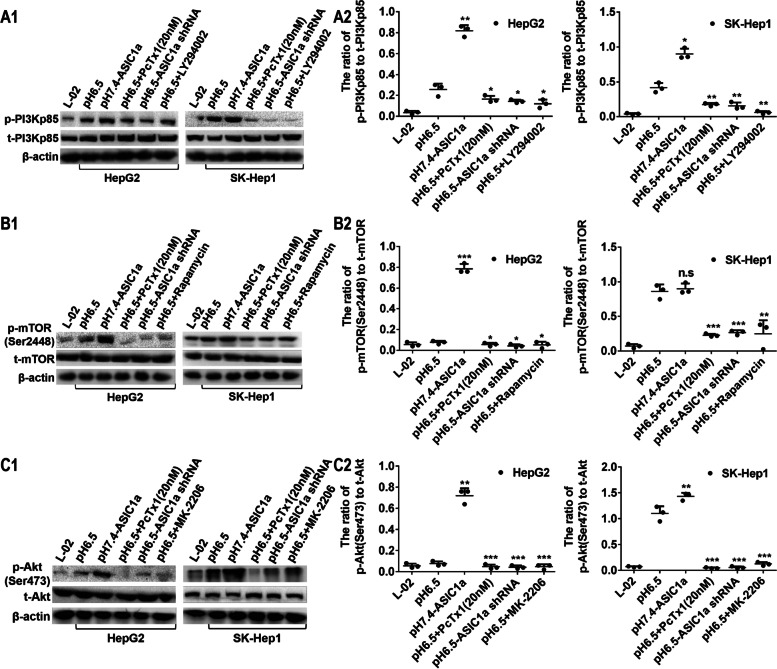
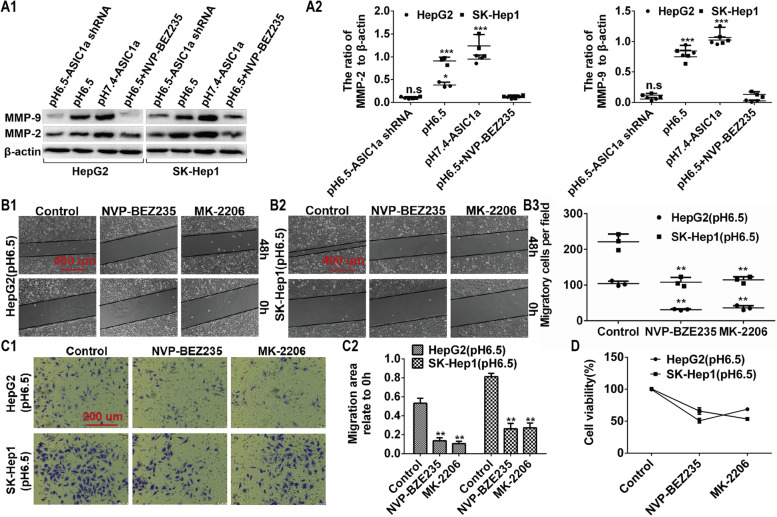
A major challenge in the treatment of liver cancer is that a large proportion of patients fail to achieve long-term disease control, with death from liver cancer cell migration and invasion. Acid-sensitive ion channel 1α (ASIC1α) is involved in the migration, invasion, and proliferation of liver cancer cells. Therefore, we explored the mechanism of ASIC1α-mediated liver cancer cell migration and invasion. We determined the levels of ASIC1α by western blotting and immunofluorescence in HepG2 and SK-Hep1 cells cultured in various acidic conditions. In addition, wound healing assay, transwell invasion assay, and MTT assay were conducted to assess the migration, invasion, and proliferation abilities of liver cancer cells. Western blotting was conducted to determine the levels of MMP2, MMP9, ASIC1α, p-PI3Kp85, t-PI3Kp85, p-AKT(Ser473), t-AKT, p-mTOR (Ser2448), t-mTOR. We first found that the levels of ASIC1α in the HepG2 and SK-Hep1 cells in acidic conditions (pH 6.5) were significantly increased. Inhibition and knockdown of ASIC1α down-regulated MMP-2/9 expression and inhibited the migration, invasion, and proliferation of HepG2 and SK-Hep1 cells; overexpression of ASIC1α had the opposite effect. We further demonstrated that ASIC1α up-regulates MMP-2/9 via activation of the PI3K/AKT/mTOR pathway, thereby promoting migration, invasion, and proliferation of liver cancer cells. Overexpression of MMP-2/9 and activation of AKT reversed these effects on liver cancer cells caused by inhibition of ASIC1α. We conclude that ASIC1α can regulate migration, invasion, and proliferation of liver cancer cells through the MMP-2/9/PI3K/AKT/mTOR pathway. These observations may provide a new reference for liver cancer chemotherapy.
肝癌治疗的一个主要挑战是,很大一部分患者无法实现长期疾病控制,导致肝癌细胞迁移和侵袭死亡。酸敏感离子通道 1α(ASIC1α)参与肝癌细胞的迁移、侵袭和增殖。因此,我们探讨了 ASIC1α 介导的肝癌细胞迁移和侵袭的机制。我们通过 Western blot 和免疫荧光法测定了在不同酸性条件下培养的 HepG2 和 SK-Hep1 细胞中 ASIC1α 的水平。此外,进行了划痕愈合试验、Transwell 侵袭试验和 MTT 试验,以评估肝癌细胞的迁移、侵袭和增殖能力。Western blot 用于测定 MMP2、MMP9、ASIC1α、p-PI3Kp85、t-PI3Kp85、p-AKT(Ser473)、t-AKT、p-mTOR(Ser2448)和 t-mTOR 的水平。我们首先发现,酸性条件(pH 6.5)下 HepG2 和 SK-Hep1 细胞中的 ASIC1α 水平显著增加。ASIC1α 的抑制和敲低下调了 MMP-2/9 的表达,并抑制了 HepG2 和 SK-Hep1 细胞的迁移、侵袭和增殖;ASIC1α 的过表达则产生相反的效果。我们进一步证明,ASIC1α 通过激活 PI3K/AKT/mTOR 通路上调 MMP-2/9,从而促进肝癌细胞的迁移、侵袭和增殖。MMP-2/9 的过表达和 AKT 的激活逆转了 ASIC1α 抑制对肝癌细胞的这些作用。我们得出结论,ASIC1α 可以通过 MMP-2/9/PI3K/AKT/mTOR 通路调节肝癌细胞的迁移、侵袭和增殖。这些观察结果可能为肝癌化疗提供新的参考。