The State Key Laboratory of Animal Nutrition, Institute of Animal Sciences, Chinese Academy of Agricultural Sciences, Beijing 100193, China.
Tianjin Biofeed Technology Co., Ltd, TianJin 301906, China.
Poult Sci. 2022 Sep;101(9):101997. doi: 10.1016/j.psj.2022.101997. Epub 2022 Jun 10.
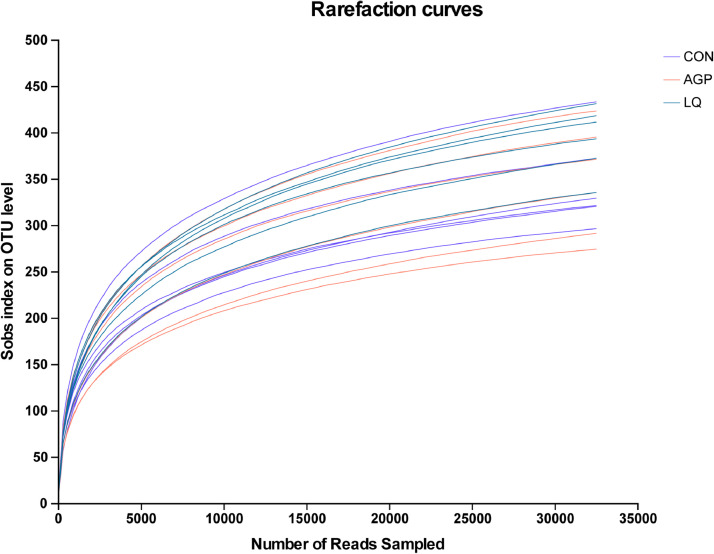
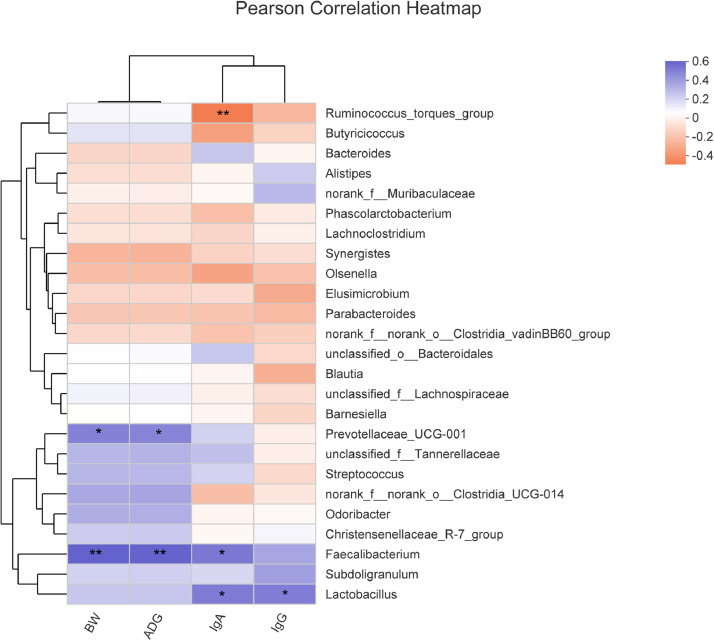
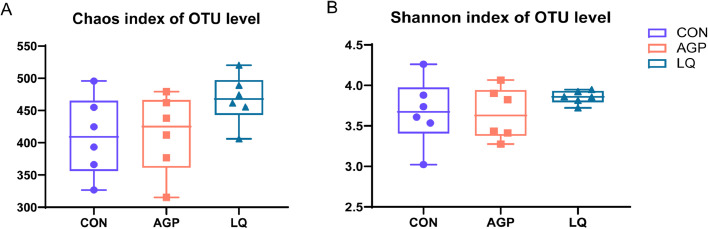
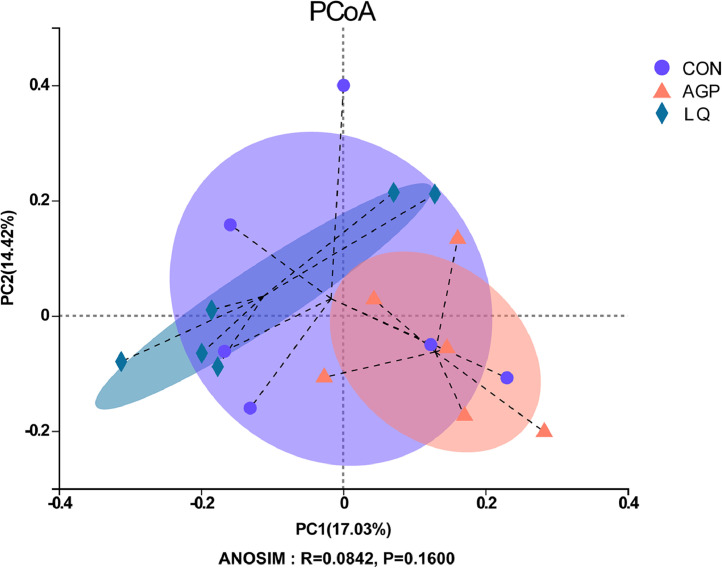
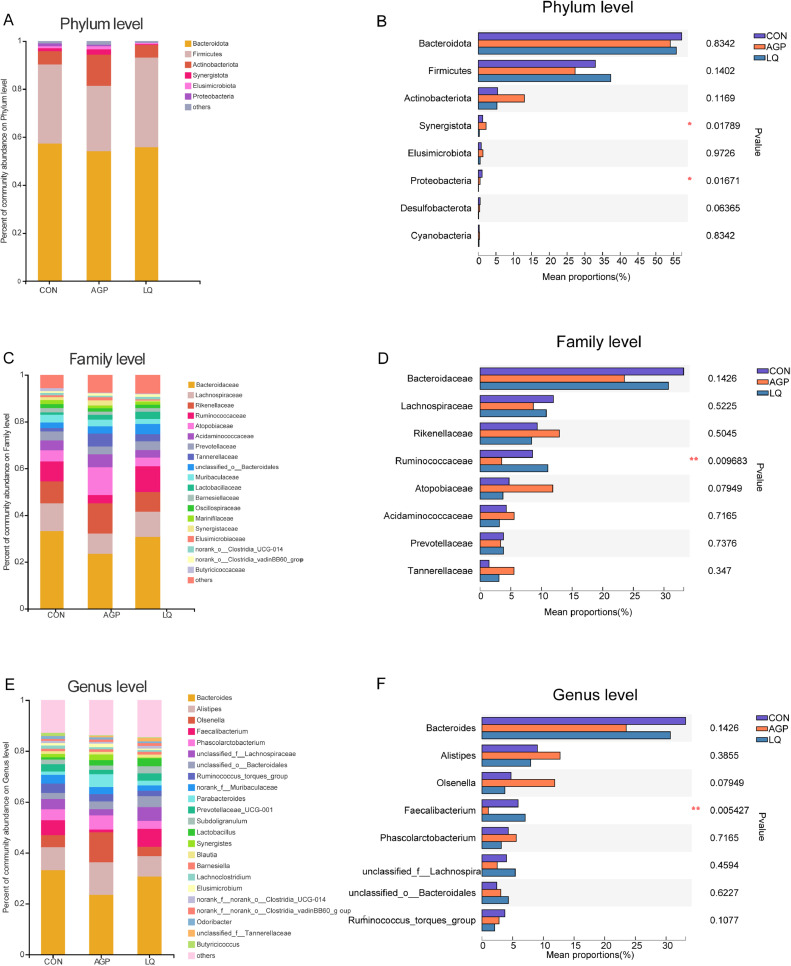
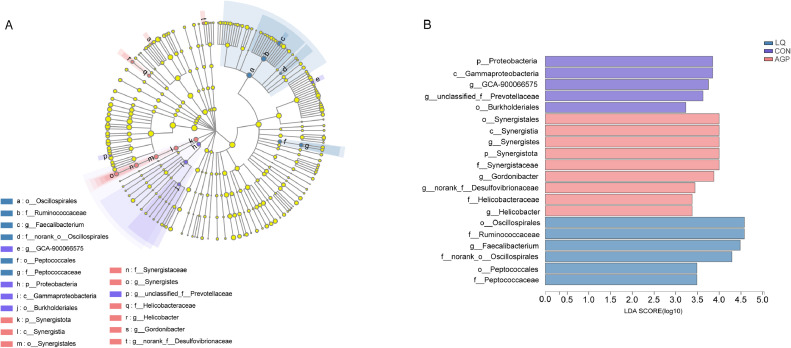
To seek viable alternatives to antibiotics, we determined the combinatorial effects of Lactobacillus and a quorum quenching enzyme (QQE) on broiler growth performance, antioxidant capacity, immune responses, and cecal microbial populations. In total, 360 one-day-old male broilers (Ross 308) were randomly allotted to 3 dietary treatments, with 12 replicate pens/treatment and 10 birds/replicate pen. Dietary treatments lasted 42 d and comprised: corn-soybean meal basal diet (control group, CON); control plus antibiotic growth promoter supplement group (AGP); and control plus Lactobacillus and QQE supplement group (LQ). Dietary LQ supplementation significantly increased final body weight (BW) and average daily gain (ADG) when compared with CON and AGP groups between 22 and 42 d and 1 to 42 d (P < 0.05). No significant differences were observed for serum superoxide dismutase (SOD), glutathione peroxidase (GSH-Px), and malondialdehyde (MDA) levels between treatments (P > 0.05). A higher concentration of total antioxidant capacity (T-AOC) was observed on d 42 in the LQ group (P = 0.06). Feeding LQ significantly increased serum immunoglobulins (IgA and IgG) levels when compared with other treatments (P < 0.05). A statistical trend was also observed for increased cecal butyrate levels (P = 0.06) in the LQ group. Bacterial α-diversity was unaffected by dietary treatments (P > 0.05). However, from principal component analysis (PCoA), the microbial community structure was different between the LQ and AGP groups. Diet supplemented with LQ significantly (P < 0.05) decreased the relative abundance of Synergistota and Proteobacteria and significantly (P < 0.05) increased the proportion of Ruminococcaceae and Faecalibacterium. Thus, supplemental LQ improved growth performance, immune status, and modulated intestinal microbial communities in broilers. We provide a new perceptive on antibiotic substitutes in the poultry industry.
为了寻找抗生素的可行替代品,我们确定了乳酸菌和群体感应淬灭酶(QQE)对肉鸡生长性能、抗氧化能力、免疫反应和盲肠微生物群的组合效应。总共 360 只 1 日龄雄性肉鸡(罗斯 308)被随机分配到 3 种饮食处理中,每个处理有 12 个重复笼/处理和 10 只鸡/重复笼。饮食处理持续 42 天,包括:玉米-豆粕基础日粮(对照组,CON);对照加抗生素生长促进剂补充组(AGP);对照加乳酸菌和 QQE 补充组(LQ)。与 CON 和 AGP 组相比,LQ 组在 22 至 42 天和 1 至 42 天期间,显著提高了末重(BW)和平均日增重(ADG)(P<0.05)。各组间血清超氧化物歧化酶(SOD)、谷胱甘肽过氧化物酶(GSH-Px)和丙二醛(MDA)水平无显著差异(P>0.05)。LQ 组在第 42 天观察到总抗氧化能力(T-AOC)浓度较高(P=0.06)。与其他处理相比,LQ 组血清免疫球蛋白(IgA 和 IgG)水平显著升高(P<0.05)。在 LQ 组,盲肠丁酸水平也呈升高趋势(P=0.06)。饮食处理对细菌 α 多样性无影响(P>0.05)。然而,从主成分分析(PCoA)来看,LQ 和 AGP 组之间的微生物群落结构不同。补充 LQ 显著降低了协同菌和变形菌的相对丰度(P<0.05),并显著增加了瘤胃球菌科和粪杆菌的比例(P<0.05)。因此,补充 LQ 改善了肉鸡的生长性能、免疫状态,并调节了肠道微生物群落。我们为家禽业提供了一种新的抗生素替代品的观点。