Department of Colorectal Surgery, Fudan University Shanghai Cancer Center, 270 Dong'an Road, Xuhui, Shanghai, 200032, China.
Department of General Surgery, Shanghai General Hospital, School of Medicine, Shanghai Jiao Tong University, Shanghai, 200080, China.
J Hematol Oncol. 2022 Jul 16;15(1):95. doi: 10.1186/s13045-022-01294-4.
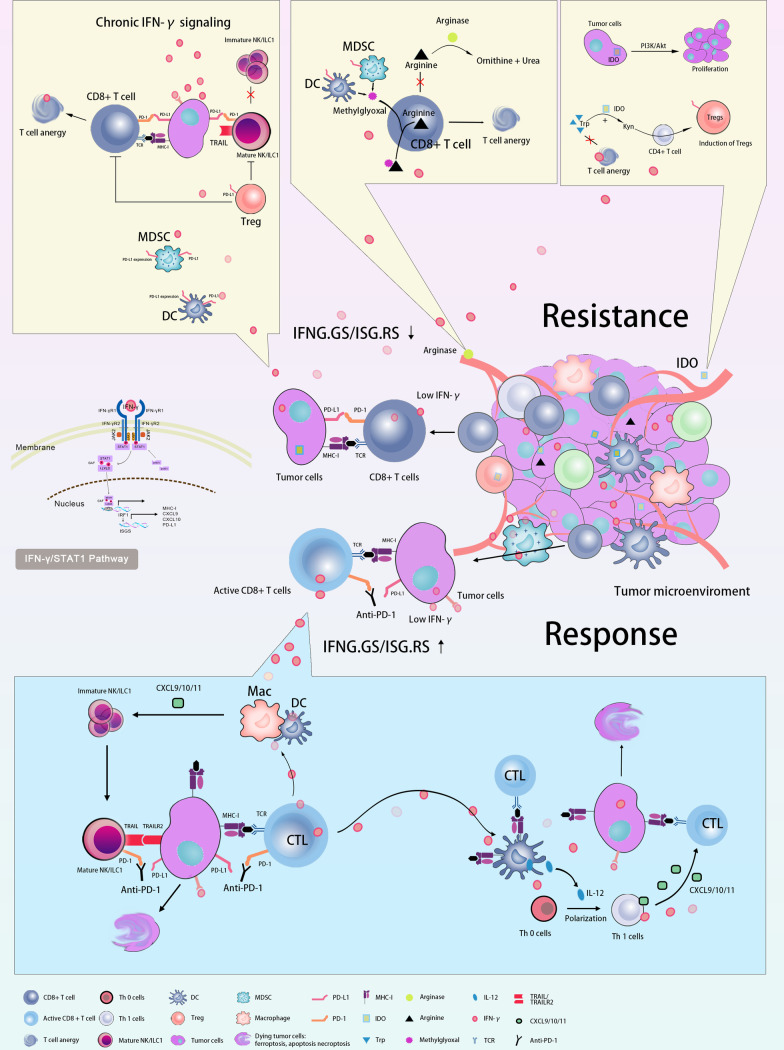
Chemotherapy combined with or without targeted therapy is the fundamental treatment for metastatic colorectal cancer (mCRC). Due to the adverse effects of chemotherapeutic drugs and the biological characteristics of the tumor cells, it is difficult to make breakthroughs in traditional strategies. The immune checkpoint blockades (ICB) therapy has made significant progress in the treatment of advanced malignant tumors, and patients who benefit from this therapy may obtain a long-lasting response. Unfortunately, immunotherapy is only effective in a limited number of patients with microsatellite instability-high (MSI-H), and segment initial responders can subsequently develop acquired resistance. From September 4, 2014, the first anti-PD-1/PD-L1 drug Pembrolizumab was approved by the FDA for the second-line treatment of advanced malignant melanoma. Subsequently, it was approved for mCRC second-line treatment in 2017. Immunotherapy has rapidly developed in the past 7 years. The in-depth research of the ICB treatment indicated that the mechanism of colorectal cancer immune-resistance has become gradually clear, and new predictive biomarkers are constantly emerging. Clinical trials examining the effect of immune checkpoints are actively carried out, in order to produce long-lasting effects for mCRC patients. This review summarizes the treatment strategies for mCRC patients, discusses the mechanism and application of ICB in mCRC treatment, outlines the potential markers of the ICB efficacy, lists the key results of the clinical trials, and collects the recent basic research results, in order to provide a theoretical basis and practical direction for immunotherapy strategies.
化疗联合或不联合靶向治疗是转移性结直肠癌(mCRC)的基本治疗方法。由于化疗药物的不良反应和肿瘤细胞的生物学特性,传统策略难以取得突破。免疫检查点阻断(ICB)治疗在晚期恶性肿瘤的治疗中取得了显著进展,受益于该治疗的患者可能获得持久的反应。不幸的是,免疫疗法仅对微卫星不稳定高(MSI-H)的少数患者有效,并且部分初始应答者随后可能会产生获得性耐药。自 2014 年 9 月 4 日起,FDA 批准首个抗 PD-1/PD-L1 药物 Pembrolizumab 用于二线治疗晚期恶性黑色素瘤。随后,它于 2017 年被批准用于 mCRC 的二线治疗。免疫疗法在过去 7 年中迅速发展。对 ICB 治疗的深入研究表明,结直肠癌免疫抵抗的机制逐渐变得清晰,新的预测生物标志物不断涌现。正在积极开展检查免疫检查点效果的临床试验,以期为 mCRC 患者带来持久的疗效。本综述总结了 mCRC 患者的治疗策略,讨论了 ICB 在 mCRC 治疗中的作用机制和应用,概述了 ICB 疗效的潜在标志物,列出了临床试验的关键结果,并收集了最近的基础研究结果,为免疫治疗策略提供了理论依据和实践方向。