Carnac Tamara
Independent Researcher, Northampton, United Kingdom.
Front Syst Neurosci. 2022 Jul 1;16:844383. doi: 10.3389/fnsys.2022.844383. eCollection 2022.
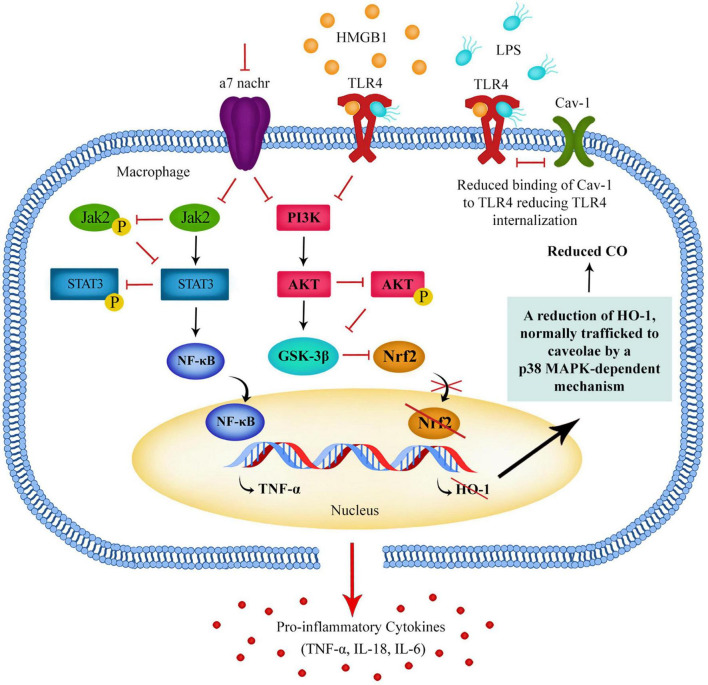
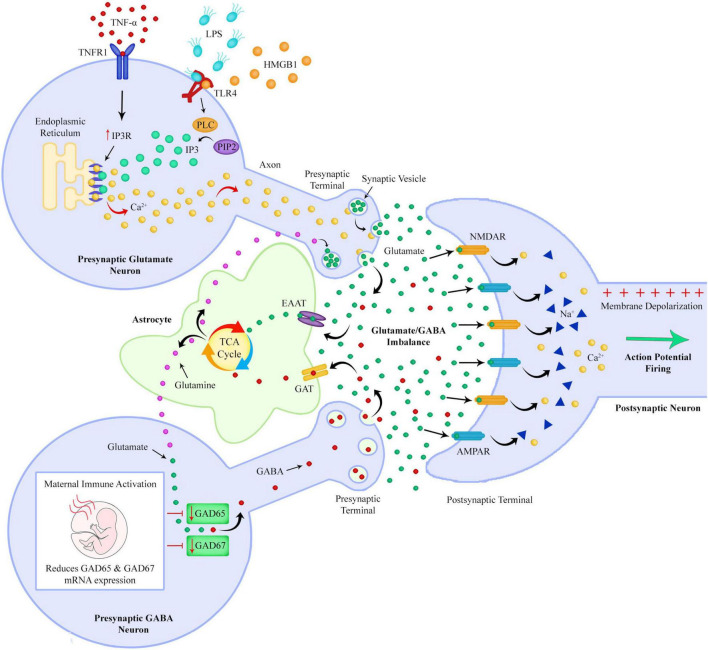
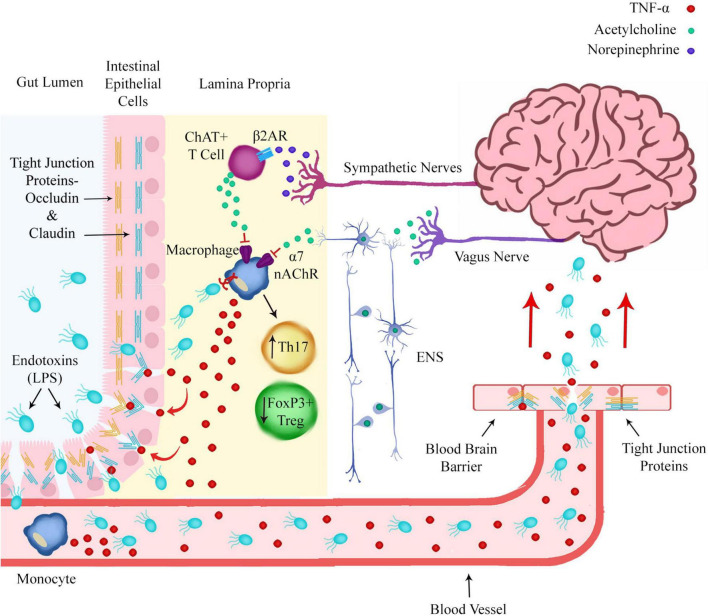
The autonomic nervous system can control immune cell activation via both sympathetic adrenergic and parasympathetic cholinergic nerve release of norepinephrine and acetylcholine. The hypothesis put forward in this paper suggests that autonomic nervous system dysfunction leads to dysregulation of immune tolerance mechanisms in brain-resident and peripheral immune cells leading to excessive production of pro-inflammatory cytokines such as Tumor Necrosis Factor alpha (TNF-α). Inactivation of Glycogen Synthase Kinase-3β (GSK3β) is a process that takes place in macrophages and microglia when a toll-like receptor 4 (TLR4) ligand binds to the TLR4 receptor. When Damage-Associated Molecular Patterns (DAMPS) and Pathogen-Associated Molecular Patterns (PAMPS) bind to TLR4s, the phosphatidylinositol-3-kinase (PI3K)-protein kinase B (Akt) pathway should be activated, leading to inactivation of GSK3β. This switches the macrophage from producing pro-inflammatory cytokines to anti-inflammatory cytokines. Acetylcholine activation of the α7 subunit of the nicotinic acetylcholine receptor (α7 nAChR) on the cell surface of immune cells leads to PI3K/Akt pathway activation and can control immune cell polarization. Dysregulation of this pathway due to dysfunction of the prenatal autonomic nervous system could lead to impaired fetal immune tolerance mechanisms and a greater vulnerability to Maternal Immune Activation (MIA) resulting in neurodevelopmental abnormalities. It could also lead to the adult schizophrenia patient's immune system being more vulnerable to chronic stress-induced DAMP release. If a schizophrenia patient experiences chronic stress, an increased production of pro-inflammatory cytokines such as TNF-α could cause significant damage. TNF-α could increase the permeability of the intestinal and blood brain barrier, resulting in lipopolysaccharide (LPS) and TNF-α translocation to the brain and consequent increases in glutamate release. MIA has been found to reduce Glutamic Acid Decarboxylase mRNA expression, resulting in reduced Gamma-aminobutyric acid (GABA) synthesis, which combined with an increase of glutamate release could result in an imbalance of glutamate and GABA neurotransmitters. Schizophrenia could be a "two-hit" illness comprised of a genetic "hit" of autonomic nervous system dysfunction and an environmental hit of MIA. This combination of factors could lead to neurotransmitter imbalance and the development of psychotic symptoms.
自主神经系统可通过交感肾上腺素能神经释放去甲肾上腺素以及副交感胆碱能神经释放乙酰胆碱来控制免疫细胞的激活。本文提出的假说表明,自主神经系统功能障碍会导致脑内驻留免疫细胞和外周免疫细胞的免疫耐受机制失调,进而导致促炎细胞因子如肿瘤坏死因子α(TNF-α)过度产生。糖原合酶激酶-3β(GSK3β)的失活是一种在巨噬细胞和小胶质细胞中发生的过程,当Toll样受体4(TLR4)配体与TLR4受体结合时就会出现这种情况。当损伤相关分子模式(DAMPs)和病原体相关分子模式(PAMPs)与TLR4结合时,磷脂酰肌醇-3-激酶(PI3K)-蛋白激酶B(Akt)通路应被激活,从而导致GSK3β失活。这会使巨噬细胞从产生促炎细胞因子转变为产生抗炎细胞因子。免疫细胞表面烟碱型乙酰胆碱受体(α7 nAChR)的α7亚基被乙酰胆碱激活会导致PI3K/Akt通路激活,并可控制免疫细胞极化。产前自主神经系统功能障碍导致该通路失调,可能会损害胎儿的免疫耐受机制,并使其更易受到母体免疫激活(MIA)的影响,从而导致神经发育异常。这也可能导致成年精神分裂症患者的免疫系统更容易受到慢性应激诱导的DAMP释放的影响。如果精神分裂症患者经历慢性应激,促炎细胞因子如TNF-α的产生增加可能会造成严重损害。TNF-α会增加肠道和血脑屏障的通透性,导致脂多糖(LPS)和TNF-α转运至脑内,并随之导致谷氨酸释放增加。已发现MIA会降低谷氨酸脱羧酶mRNA表达,导致γ-氨基丁酸(GABA)合成减少,这与谷氨酸释放增加相结合,可能会导致谷氨酸和GABA神经递质失衡。精神分裂症可能是一种“双重打击”疾病,包括自主神经系统功能障碍的遗传“打击 ”和MIA的环境“打击”。这些因素的综合作用可能导致神经递质失衡和精神症状的出现。