Department of Anesthesia, Postgraduate Training Base of Jinzhou Medical University in the General Hospital of Northern Theater Command, Shenyang 110016, China.
Department of Anesthesia, General Hospital of Northern Theater Command, Shenyang 110016, China.
Comput Math Methods Med. 2022 Jul 6;2022:4982047. doi: 10.1155/2022/4982047. eCollection 2022.
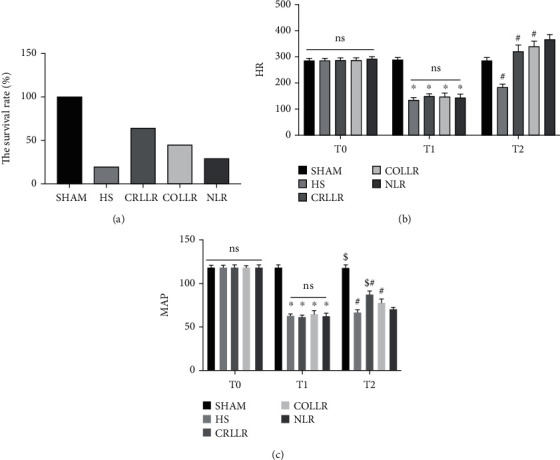
This study was aimed at investigating the effects of different types of fluid restriction fluid resuscitation on the immune dysfunction and organ injury of hemorrhagic shock rats under a hypothermic environment.
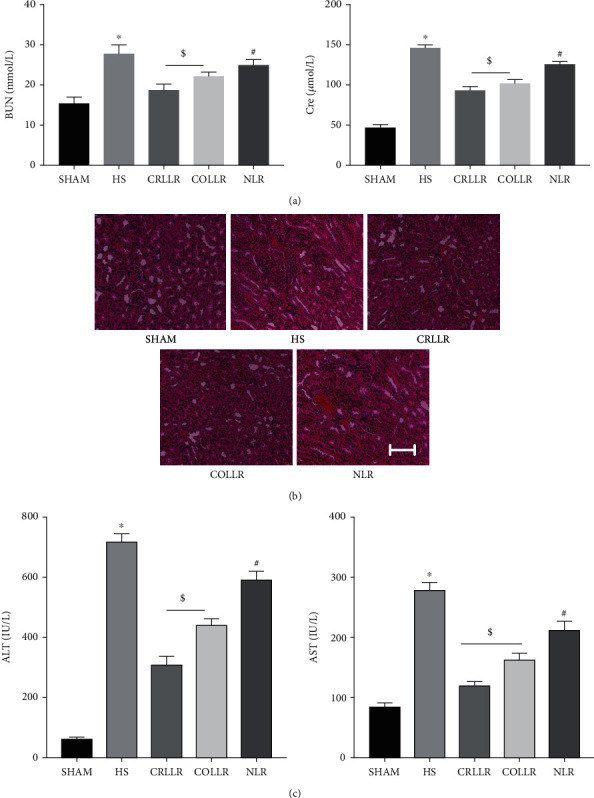
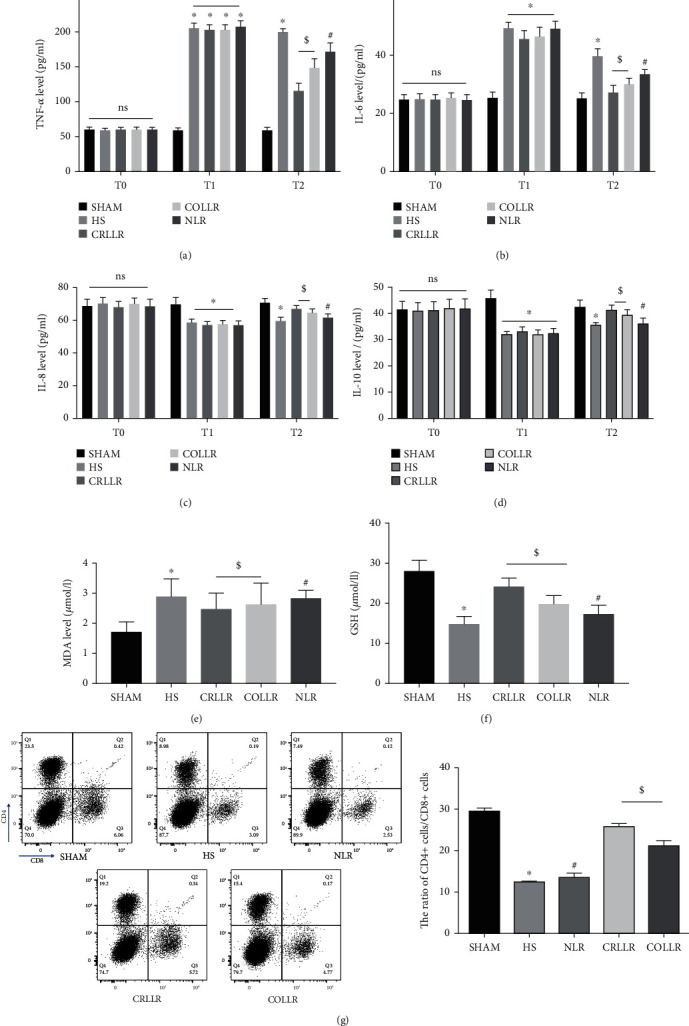
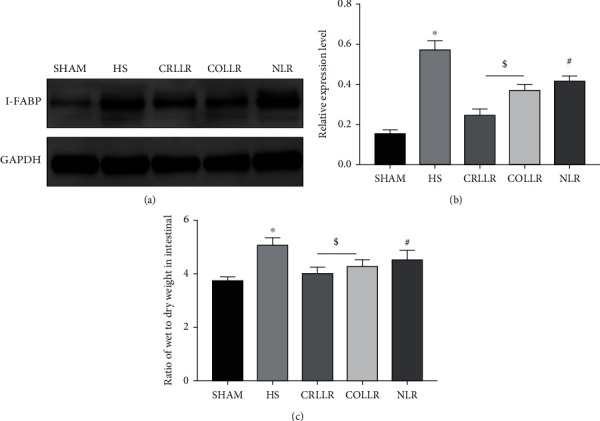
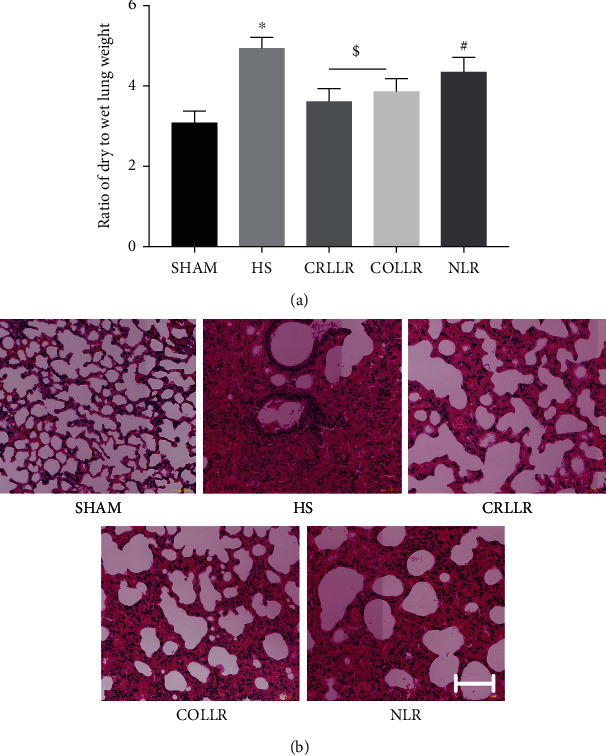
SD rats were divided into sham operation group (SHAM), hemorrhagic shock model group (HS), crystal liquid limited resuscitation group (CRLLR), colloidal liquid limited resuscitation group (COLLR), and nonlimited resuscitation group (NLR); rats in each group were placed in a low-temperature environment of 0-5°C for 30 min, and then, a hemorrhagic shock rat model was prepared. Sodium lactate Ringer's restricted resuscitation solution, hydroxyethyl starch restricted resuscitation solution, and hydroxyethyl starch were used for resuscitation, and hemodynamic examination was performed. The mortality rate, inflammatory factors, oxidative stress factors, and immune function were detected by ELISA. The dysfunction and injury of the intestinal, lung, liver, and kidney were examined by histological methods.
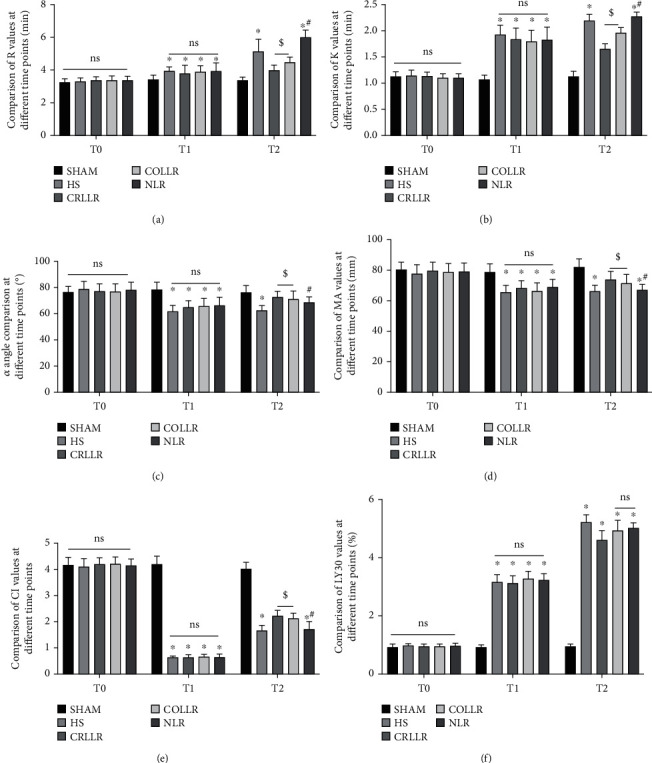
Hemorrhagic shock resulted in decreased immune function and activation of inflammation. Unrestricted fluid infusion further activated the inflammatory response. The crystalloid-restricted fluid infusion performed effectively to regulate inflammatory response, promote antioxidative activity, and reduce the immunosuppressive reaction. Rehydration could regulate the coagulation. The hydroxyethyl starch reduced the expression of platelet glycoproteins Ib and IIb/IIIa and blocked the binding of fibrinogen to activated platelets, thereby inhibiting intrinsic coagulation and platelet adhesion and aggregation. Rats in the CRLLR group showed to relieve the injury of the lung, liver, kidney, and intestine from hemorrhagic shock in low-temperature environment.
The early application of restrictive crystalloid resuscitation in hemorrhagic shock rats in hypothermic environment showed the best therapy results. Early LR-restrictive fluid replacement promotes the balance of inflammatory response and the recovery of immunosuppressive state, resists oxidative stress, stabilizes the balance of coagulation and fibrinolysis, improves coagulation function, and relieves organ injury.
本研究旨在探讨不同类型的液体限制复苏液体对低温环境下失血性休克大鼠免疫功能障碍和器官损伤的影响。
SD 大鼠分为假手术组(SHAM)、失血性休克模型组(HS)、晶体液限制复苏组(CRLLR)、胶体液限制复苏组(COLLR)和非限制复苏组(NLR);每组大鼠置于 0-5°C 的低温环境 30min,然后制备失血性休克大鼠模型。乳酸钠林格液限制复苏液、羟乙基淀粉限制复苏液、羟乙基淀粉复苏,进行血流动力学检查。通过酶联免疫吸附试验检测死亡率、炎症因子、氧化应激因子和免疫功能。通过组织学方法检测肠、肺、肝、肾的功能障碍和损伤。
失血性休克导致免疫功能下降和炎症激活。无限制液体输注进一步激活了炎症反应。晶体液限制液体输注有效地调节炎症反应,促进抗氧化活性,减少免疫抑制反应。补液可调节凝血。羟乙基淀粉降低血小板糖蛋白 Ib 和 IIb/IIIa 的表达,阻断纤维蛋白原与激活血小板的结合,从而抑制内源性凝血和血小板黏附和聚集。CRLLR 组大鼠在低温环境下失血性休克时,肺、肝、肾和肠损伤减轻。
低温环境下失血性休克大鼠早期应用限制性晶体液复苏效果最佳。早期 LR 限制液体替代促进炎症反应和免疫抑制状态的恢复平衡,抵抗氧化应激,稳定凝血和纤溶平衡,改善凝血功能,减轻器官损伤。