Brezestean I A, Tosa N, Falamas A, Cuibus D, Muntean C M, Bende A, Cozar B, Berghian-Grosan C, Farcău C
National Institute for Research and Development of Isotopic and Molecular Technologies, Cluj-Napoca, Romania.
Biomolecular Physics Department, Babes-Bolyai University, Cluj-Napoca, Romania.
Front Chem. 2022 Jun 29;10:915337. doi: 10.3389/fchem.2022.915337. eCollection 2022.
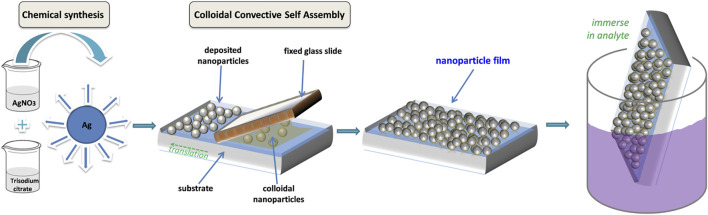
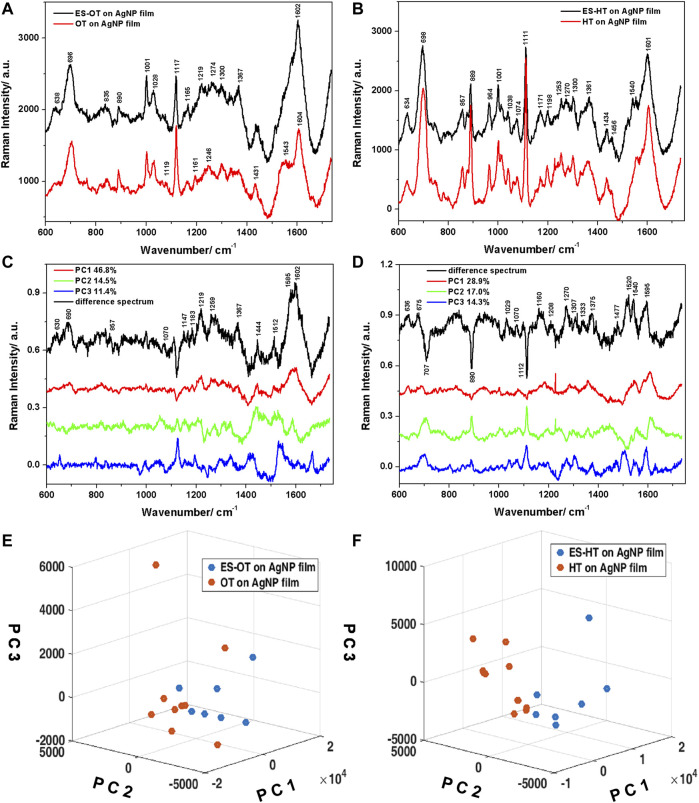
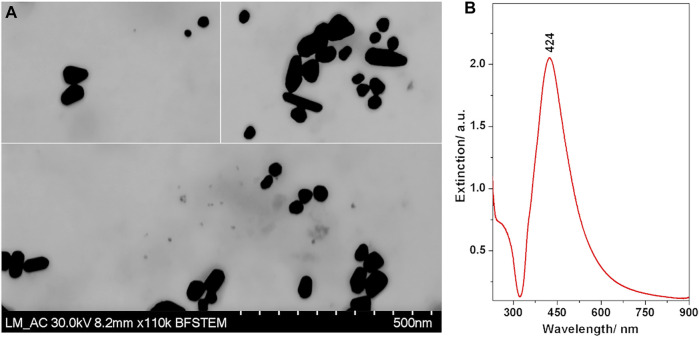
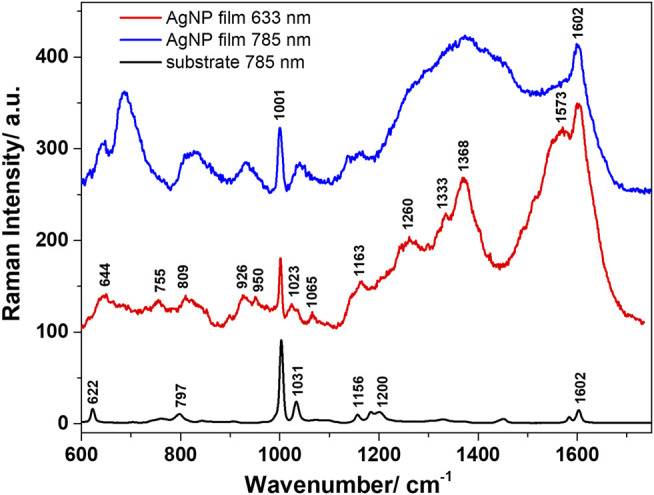
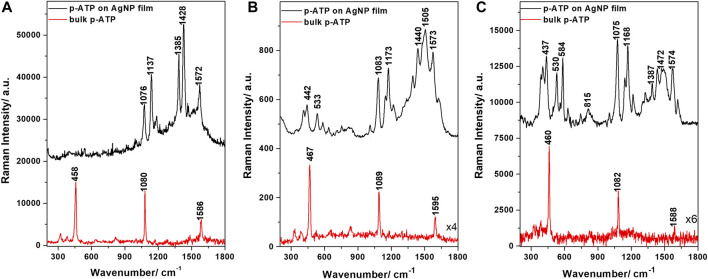
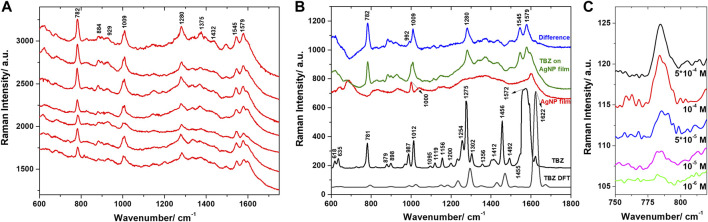
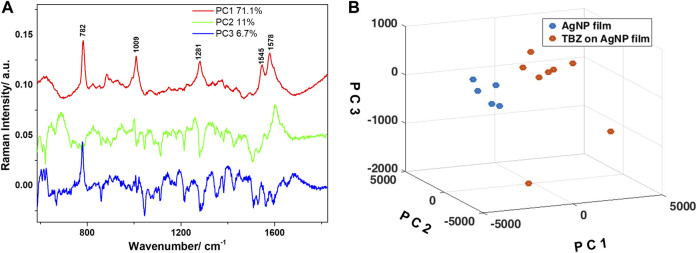
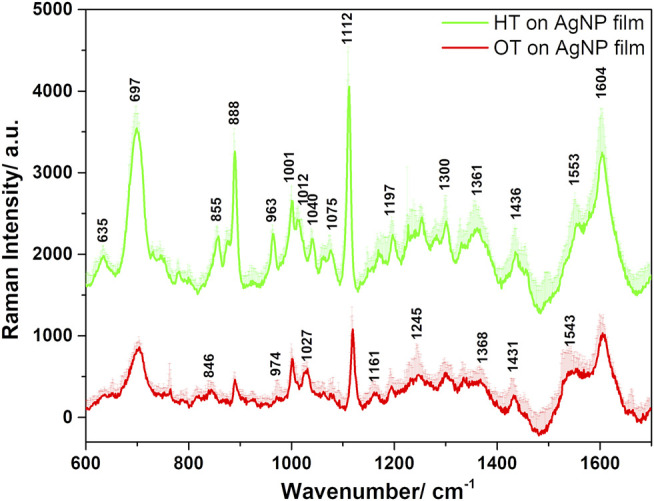
Pesticides pose a great threat to human health and their rapid detection has become an urgent public safety issue engaging the scientific community to search for fast and reliable detection techniques. In this context, Surface Enhanced Raman Spectroscopy (SERS) has emerged as a valuable detection and analysis tool due to its high sensitivity and selectivity, proving its suitability for the food industry and environmental monitoring applications. Here, we report on the fabrication of colloidal silver nanoparticle (AgNP) films by convective self-assembly (CSA) on solid planar substrate and their use for the SERS analyses of two types of pesticides, the fungicide thiabendazole (TBZ) and the insecticide α-endosulfan (α-ES). Electron microscopy shows that these nanoparticle films are dense, highly compact, and uniform across several mm areas. The SERS efficiency of the fabricated AgNP films is evaluated using a well-known Raman probe, p-aminothiophenol, for multiple excitation laser lines (532 nm, 633 nm, and 785 nm). The films exhibit the largest SERS enhancement factors for 785 nm excitation, reaching values larger than 10. Thiabendazole could be readily adsorbed on the AgNPs without any sample surface functionalization and detected down to 10 M, reaching the sub-ppm range. Endosulfan, a challenging analyte with poor affinity to metal surfaces, was captured near the metal surface by using self-assembled alkane thiol monolayers (hexanethiol and octanethiol), as demonstrated by the thorough vibrational band analysis, and supported by density functional theory (DFT) calculations. In addition, principal component analysis (PCA) based on SERS spectra offers significant leverage in discrimination of the molecules anchored onto the metallic nanostructured surface. This present study demonstrates the utility of self-assembled colloidal nanoparticle films as SERS substrates for a broad range of analytes (para-aminothiophenol, thiabendazole, α-endosulfan, and alkanethiols) and contributes to the development of SERS-based sensors for pesticides detection, identification and monitoring.
农药对人类健康构成巨大威胁,其快速检测已成为一个紧迫的公共安全问题,促使科学界寻找快速可靠的检测技术。在此背景下,表面增强拉曼光谱(SERS)因其高灵敏度和选择性,已成为一种有价值的检测和分析工具,证明其适用于食品工业和环境监测应用。在此,我们报告了通过对流自组装(CSA)在固体平面基板上制备胶体银纳米颗粒(AgNP)薄膜及其用于两种农药(杀菌剂噻菌灵(TBZ)和杀虫剂α-硫丹(α-ES))的SERS分析。电子显微镜显示,这些纳米颗粒薄膜致密、高度紧凑且在几毫米区域内均匀。使用一种著名的拉曼探针对氨基硫酚,针对多条激发激光线(532nm、633nm和785nm)评估制备的AgNP薄膜的SERS效率。这些薄膜在785nm激发下表现出最大的SERS增强因子,达到大于10的值。噻菌灵无需任何样品表面功能化即可轻松吸附在AgNP上,检测下限低至10⁻⁶M,达到亚ppm范围。硫丹是一种对金属表面亲和力差的具有挑战性的分析物,通过全面的振动带分析证明,使用自组装烷硫醇单分子层(己硫醇和辛硫醇)将其捕获在金属表面附近,并得到密度泛函理论(DFT)计算的支持。此外,基于SERS光谱的主成分分析(PCA)在区分锚定在金属纳米结构表面的分子方面具有显著优势。本研究证明了自组装胶体纳米颗粒薄膜作为广泛分析物(对氨基硫酚、噻菌灵、α-硫丹和烷硫醇)的SERS底物的实用性,并有助于开发基于SERS的农药检测、识别和监测传感器。