Xiong Shihong, Li Wei, Zhou Yang, Ren Hongwei, Lin Guorong, Zhang Sheng, Xiang Xi
Department of Nephrology, Tianyou Hospital Affiliated to Wuhan University of Science and Technology, Wuhan, China.
Department of Otolaryngology-Head and Neck Surgery, Wuhan Asia General Hospital, Wuhan, China.
Front Psychiatry. 2022 Jun 29;13:950885. doi: 10.3389/fpsyt.2022.950885. eCollection 2022.
Previous studies on brain functional alterations associated with antidepressants for major depressive disorder (MDD) have produced conflicting results because they involved short treatment periods and a variety of compounds.
Resting-state functional magnetic resonance imaging scans were obtained from 25 first-episode drug-free patients with MDD and 25 healthy controls. The patients, who were treated with vortioxetine for 8 weeks, were scanned at two-time points (baseline and week 8 of treatment). The amplitude of low-frequency fluctuation (ALFF) in the imaging data was used to analyze local brain signal alterations associated with antidepressant treatment.
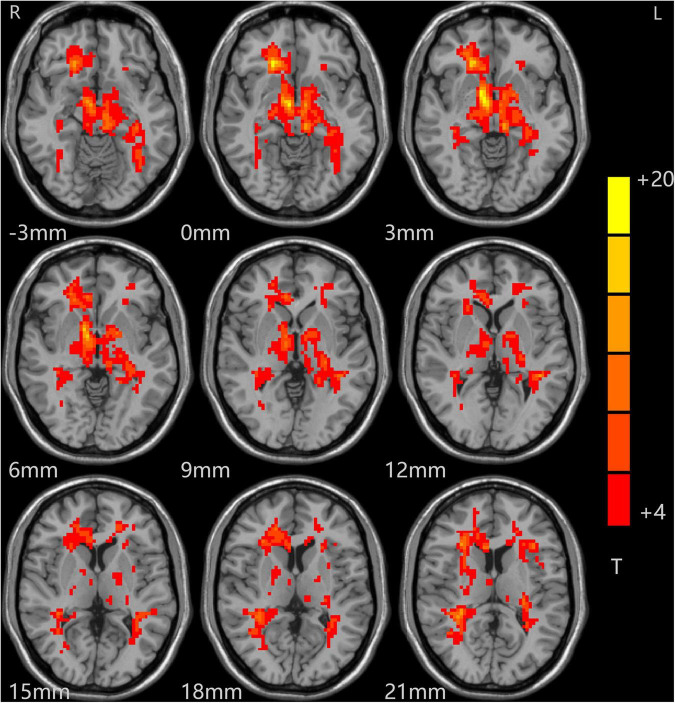
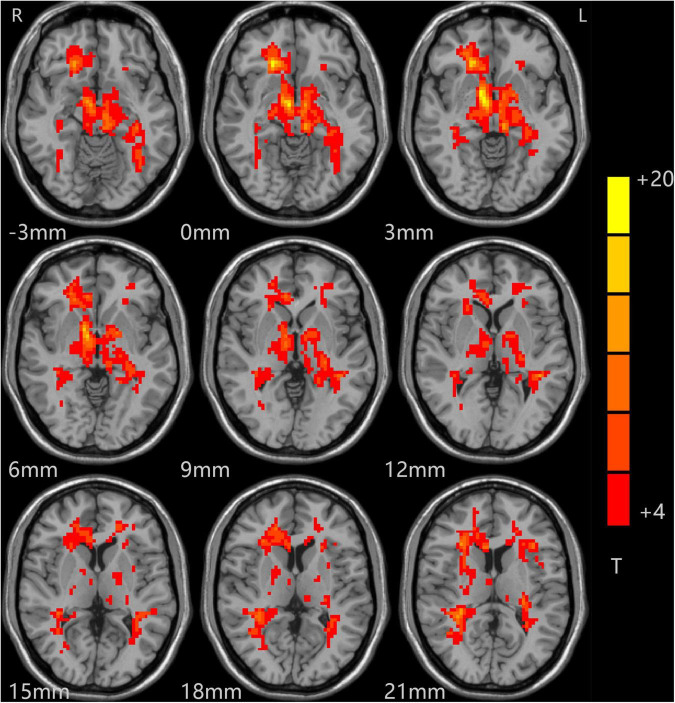
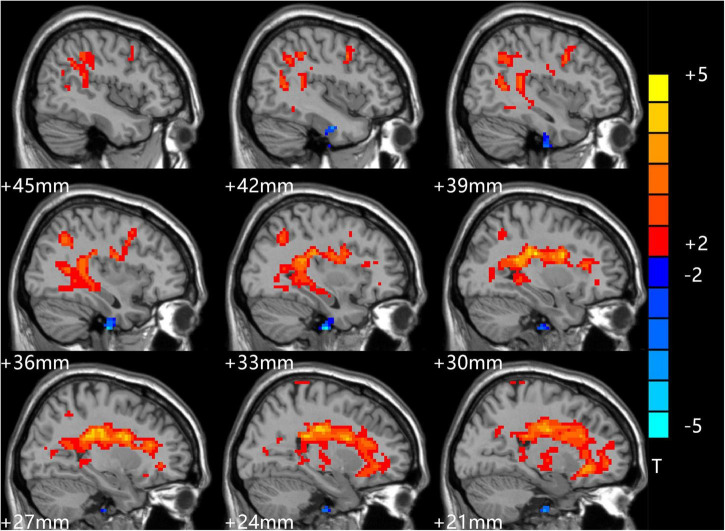
Compared with the controls, the patients at baseline showed decreased ALFF values in the right inferior temporal gyrus and increased ALFF values in the left inferior cerebellum, right cingulate gyrus and postcentral gyrus. After 8 weeks of vortioxetine treatment, patients showed increased ALFF values in the bilateral cingulate gyrus, middle temporal gyrus, medial superior frontal gyrus, and inferior cerebellum.
This study provided evidence that vortioxetine modulates brain signals in MDD sufferers. These findings contribute to the understanding of how antidepressants effect brain function.
先前关于与用于治疗重度抑郁症(MDD)的抗抑郁药相关的脑功能改变的研究产生了相互矛盾的结果,因为这些研究涉及较短的治疗期和多种化合物。
对25名首次发作且未服用过药物的MDD患者和25名健康对照者进行静息态功能磁共振成像扫描。用伏硫西汀治疗8周的患者在两个时间点(基线和治疗第8周)进行扫描。成像数据中的低频波动幅度(ALFF)用于分析与抗抑郁治疗相关的局部脑信号改变。
与对照组相比,基线时患者右侧颞下回的ALFF值降低,左侧小脑下部、右侧扣带回和中央后回的ALFF值升高。伏硫西汀治疗8周后,患者双侧扣带回、颞中回、额上回内侧和小脑下部的ALFF值升高。
本研究提供了证据表明伏硫西汀可调节MDD患者的脑信号。这些发现有助于理解抗抑郁药如何影响脑功能。