Bordignon Francesco, Xiccato Gerolamo, Boskovic Cabrol Marija, Birolo Marco, Trocino Angela
Department of Agronomy, Food, Natural Resources, Animal and Environment (DAFNAE), University of Padova, Padova, Italy.
Department of Food Hygiene and Technology, Faculty of Veterinary Medicine, University of Belgrade, Belgrade, Serbia.
Front Physiol. 2022 Jul 1;13:933235. doi: 10.3389/fphys.2022.933235. eCollection 2022.
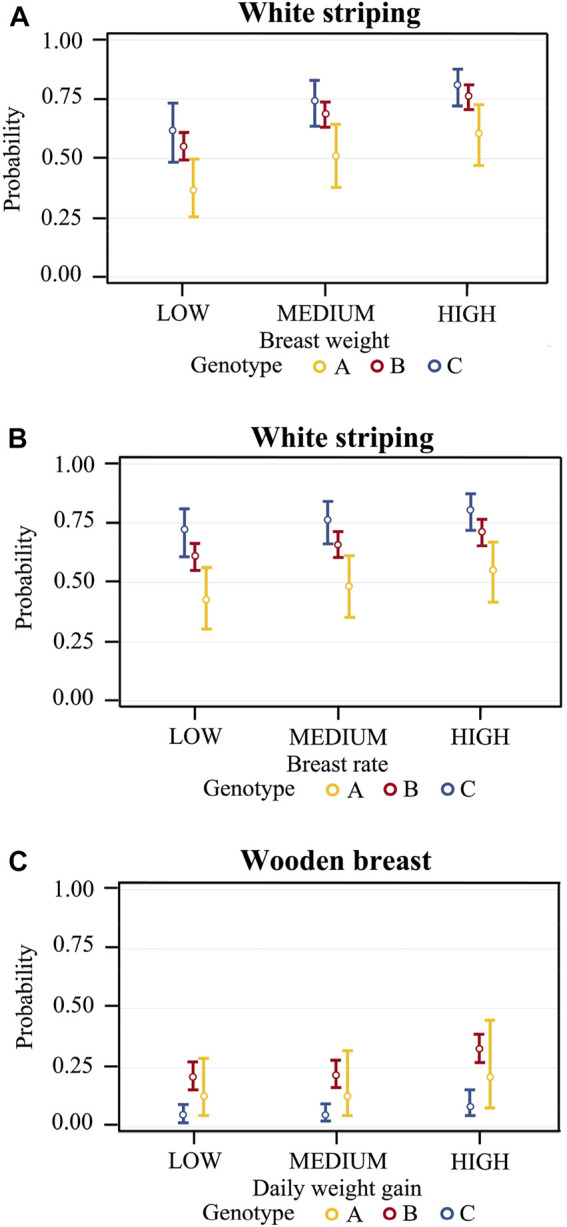
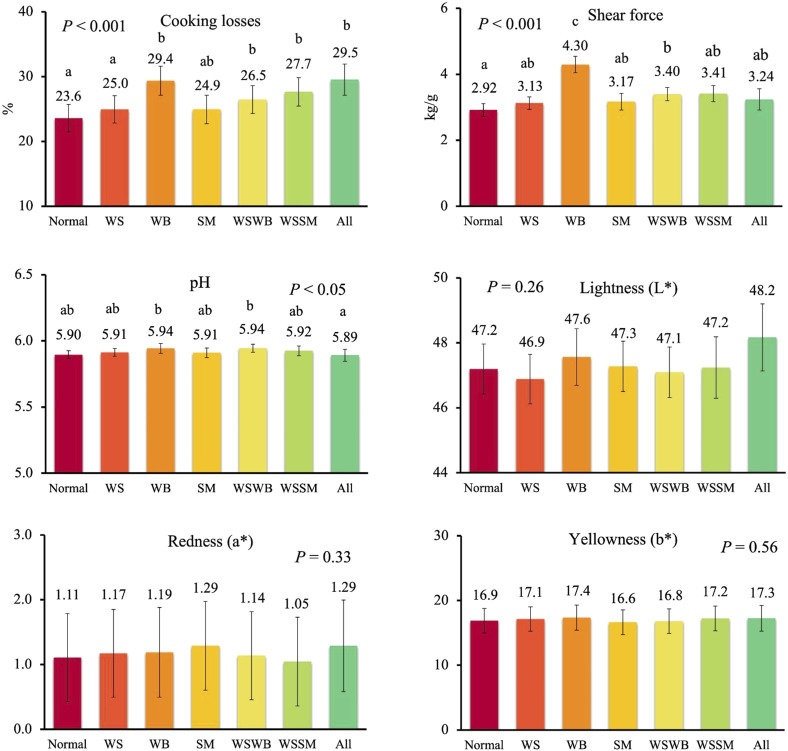
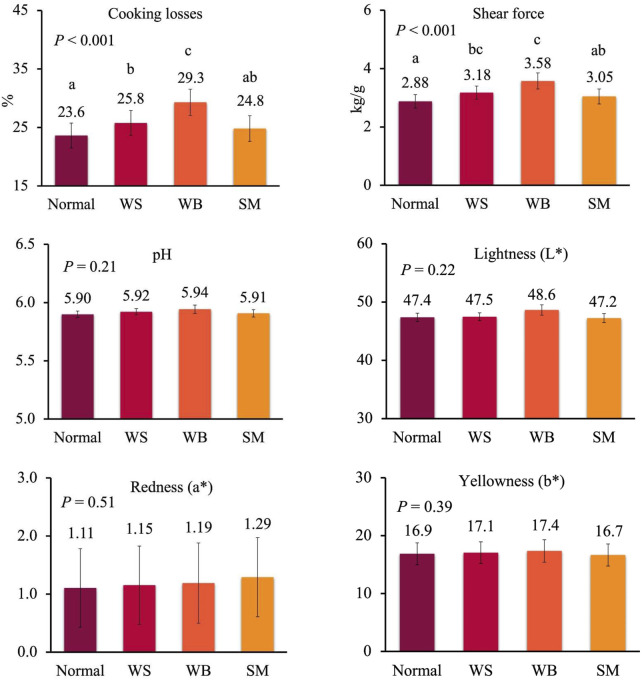
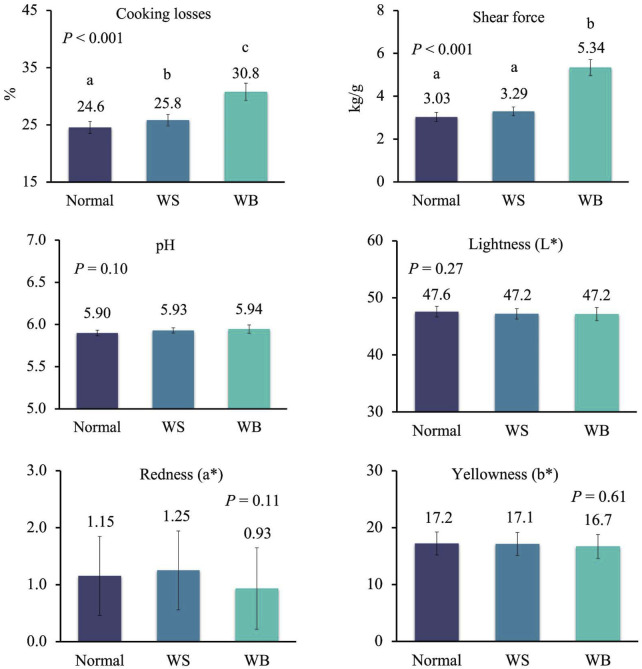
Fast-growing broiler chickens are subjected to breast myopathies such as white striping (WS), wooden breast (WB), and spaghetti meat (SM). Available studies about risk factors for myopathy occurrence often used flock data whereas a few reports evaluated chicken individual data. Thus, the present study aimed to elucidate the effect of growth and slaughter traits, besides sex and genotype on myopathy occurrence. Data were obtained from eight experimental trials, which used a total of 6,036 broiler chickens. Sex, genotype, daily weight gain, slaughter weight, and breast yield were evaluated as potential risk factors by logistic regression analyses. Then, the effects of myopathy and sex were evaluated on meat rheological traits (pH, colour, cooking losses and shear force). Based on a logistic regression, WS occurrence was associated with genotype, breast weight, and breast yield. Compared with chickens with intermediate breast weight and breast yield, higher odds of having WS were found in chickens with high breast weight (OR: 1.49) and yield (OR: 1.27), whereas lower odds were found in those with low breast weight (OR: 0.57) and yield (OR: 0.82). As for WB and SM, females had lower odds of having WB (OR: 0.55) and higher odds of showing SM (OR: 15.4) compared to males. In males, higher odds of having WB were found in chickens with a high daily weight gain (OR: 1.75) compared to those with an intermediate daily weight gain. In females, higher odds of having SM were associated to a high slaughter weight (OR: 2.10) while lower odds to a low slaughter weight (OR: 0.87). As for meat quality, only WB meat was clearly different for some technological and sensorial properties, which can play a major role also in meat processing. In conclusion, our analysis identified breast development as a potential risk factor for WS, while a high growth was the risk factor for WB and SM. A different probability of having WB or SM in females and male was found.
快速生长的肉鸡易患胸部肌病,如白条纹(WS)、木胸(WB)和丝状肉(SM)。关于肌病发生风险因素的现有研究通常使用鸡群数据,而少数报告评估了鸡的个体数据。因此,本研究旨在阐明生长和屠宰性状以及性别和基因型对肌病发生的影响。数据来自八项实验试验,共使用了6036只肉鸡。通过逻辑回归分析评估性别、基因型、日增重、屠宰体重和胸肉产量作为潜在风险因素。然后,评估肌病和性别的影响对肉的流变学特性(pH值、颜色、烹饪损失和剪切力)的影响。基于逻辑回归,WS的发生与基因型、胸肉重量和胸肉产量有关。与胸肉重量和产量中等的鸡相比,胸肉重量高(OR:1.49)和产量高(OR:1.27)的鸡患WS的几率更高,而胸肉重量低(OR:0.57)和产量低(OR:0.82)的鸡患WS的几率更低。至于WB和SM,与雄性相比,雌性患WB的几率较低(OR:0.55),而出现SM的几率较高(OR:15.4)。在雄性中,日增重高的鸡(OR:1.75)患WB的几率高于日增重中等的鸡。在雌性中,屠宰体重高与出现SM的几率较高相关(OR:2.10),而屠宰体重低与出现SM的几率较低相关(OR:0.87)。至于肉质,只有WB肉在一些技术和感官特性上有明显差异,这在肉类加工中也可能起主要作用。总之,我们的分析确定胸部发育是WS的潜在风险因素,而高生长速度是WB和SM的风险因素。发现雌性和雄性患WB或SM的概率不同。